By Staff Reporter
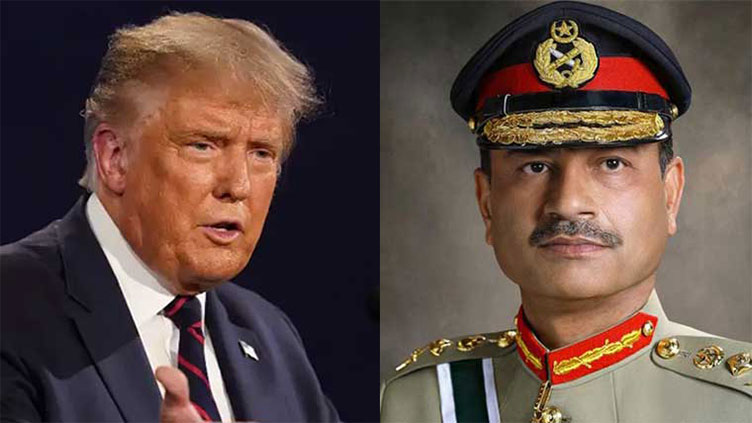
ISLAMABAD: Pakistan’s Chief of Army Staff, Field Marshal Asim Munir, is pushing for a stronger US partnership, anchored by a new trade deal, military collaboration, and strategic talks on regional security. This deepening bond between Washington and Islamabad is gaining momentum since President Donald Trump’s return to office, marks a recalibration of US policy in South Asia.
The two countries sealed a pivotal trade agreement on July 31, slashing US tariffs on Pakistani goods to 19 percent and laying the groundwork to tap into Pakistan’s oil reserves. The deal capped a period of growing rapport, highlighted by Munir’s five-day official visit to the US in June, the first time a serving Pakistani army chief has held a face-to-face meeting with a sitting US president. Over a private White House luncheon with Trump on June 18, Munir underscored the “immense potential for a broader, multidimensional relationship built upon mutual respect,” setting an optimistic tone for the future.
That visit followed a tense four-day military clash with India in May, triggered by New Delhi’s unproven accusation that Islamabad orchestrated the April 22 Pahalgam attack. A US-brokered ceasefire halted the fighting, spotlighting America’s renewed role as a regional mediator. “There he was, enjoying a private lunch with Donald Trump in the White House on June 18, just over a month after Pakistan’s brief conflict with India,” The Economist wrote in its latest issue.
The British magazine framed Munir’s rising stature as a sign of a broader shift in US policy, one with ripple effects for India, China, and the Middle East. In late July, Trump slapped 25 percent tariffs on India, calling it a “dead economy,” while lauding the fresh trade pact with Pakistan, a pointed snub to New Delhi. “To India’s dismay, America and Pakistan are now rebuilding ties with a focus on trade, counter-terrorism, and consultation on Middle Eastern policy,” The Economist noted. The US might even resume arms sales to Pakistan, a nation that currently relies on China for roughly four-fifths of its military hardware.
Pakistan’s military spokesperson, Lieutenant General Ahmed Sharif Chaudhry, told The Economist that Munir is “well versed” with the West, despite never training in the US or Britain, a rarity among Pakistani army chiefs. Chaudhry waved off rumors of Munir eyeing the presidency as “nonsense” and rejected notions that he’s more ideological than his predecessors.
The US-Pakistan thaw comes with tangible gains. In June, United States Central Command commander Army General Michael Kurilla praised Pakistan as a “phenomenal partner” in counter-terrorism, citing its efforts against groups like the Islamic State and insurgents in Balochistan. Pakistan recently won Washington’s applause for taking down leaders of a local Islamic State offshoot, further cementing its value. Meanwhile, Munir has piqued interest from Trump associates in Pakistan’s crypto and mining sectors and pitched his country as a bridge for US goals, easing tensions with Iran and coaxing more Muslim nations to normalize ties with Israel.
Washington has responded in kind. It’s dialed back criticism of Pakistan’s long-range ballistic missile program, once a sore point under President Joe Biden, revived some aid, and is mulling sales of armored vehicles and night-vision goggles to bolster Pakistan’s fight against domestic insurgents. US officials are also reviewing Pakistan’s evidence that India fuels those insurgencies, though they remain unconvinced so far.
This warming marks a sharp reversal from the chill that set in after US forces killed Osama bin Laden in Pakistan in 2011, followed by America’s disengagement after leaving Afghanistan a decade later. In January, before Trump’s inauguration, former White House official John Kirby acknowledged Pakistan’s key role in US counter-terrorism but noted it “has never been a formal ally bound by treaty obligations.” Now, US Attorney General Pam Bondi, speaking at her confirmation hearing, stressed that global alliances, like the one with Pakistan, are vital to counter threats from Afghanistan-based groups such as the Islamic State-Khorasan Province.
At home, Munir’s popularity has surged since the India clash, and the civilian government’s two-thirds parliamentary majority opens the door to constitutional changes. The trajectory of the world’s second-largest Muslim nation, and its ties with America, India, and China, hinges increasingly on Munir’s vision.
The field marshal cuts an unusual figure: son of an imam, madrassa-educated, and able to recite the Quran by heart, he’s the first Pakistani army chief without Western training. Yet allies and observers paint him as both devout and practical, inspired by Saudi Crown Prince Mohammed bin Salman’s economic overhaul. Unlike his predecessor, who leaned on discreet diplomacy with India, Munir’s bolder streak shone through when he defied foreign pressure to retaliate against India’s initial air strikes, earning grudging respect even from critics.
Still, India looms large. Munir seeks talks, but Prime Minister Narendra Modi has dug in, promising military reprisals for any future attacks. Asked how Pakistan would counter that, Chaudhry was blunt: “We’ll start from the east. They also need to understand that they can be hit everywhere.”
Copyright © 2021 Independent Pakistan | All rights reserved