By Staff Reporter
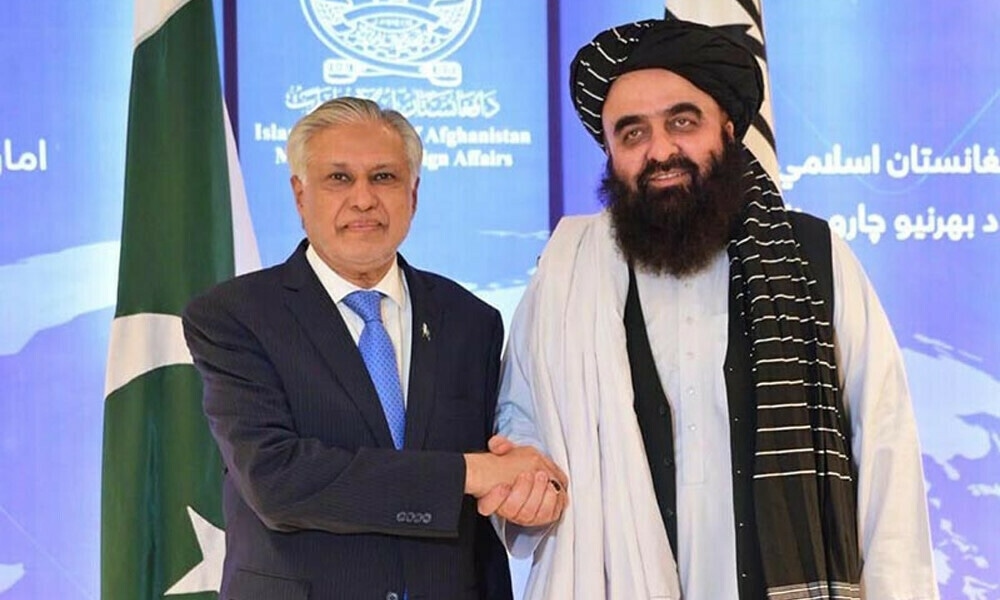
ISLAMABAD: Pakistan on Friday attributed the shelving of a planned visit by Afghanistan’s Taliban foreign minister to “procedural issues”, amid reports that the United States had blocked a UN exemption allowing him to travel due to sanctions.
Afghan Foreign Minister Amir Khan Muttaqi had been expected in Islamabad on August 4, building on recent high-level contacts that began with Deputy Prime Minister and Foreign Minister Ishaq Dar’s trip to Kabul earlier this year, which helped thaw bilateral ties under Chinese brokerage.
“There are certain procedural issues we are working through,” Shafqat Ali Khan, Pakistan’s Foreign Office spokesman told reporters at a weekly briefing.
He stressed that no official dates had been set, adding there was “no question of cancellation or postponement”.
Diplomatic sources told Pakistani newspaper Dawn that Washington had obstructed a UN Security Council waiver needed for Muttaqi, who faces international sanctions including a travel ban. As head of the Taliban-linked government, Muttaqi requires approval from the UN sanctions committee for overseas trips.
The sources said the US delayed its decision until the last minute before refusing the exemption, derailing the visit. The US wields major influence in the UN’s 1988 Sanctions Committee, established under Resolution 1988 (2011) to oversee travel bans, asset freezes and arms embargoes on Taliban figures and entities.
The blockage is thought to stem from US concerns over deepening Taliban ties with China. Tensions have arisen in the committee, where the US frequently differs with China and Russia, who push for more flexible exemptions to aid Afghan stability.
Khan said Islamabad and Kabul were addressing the issues. “Once these procedural matters are resolved, we look forward to welcoming the Afghan foreign minister to Pakistan.”
A US State Department spokesperson, asked about the reports at a recent briefing, refused to make any “comment on rumours”.
In a separate development, Pakistan confirmed it was aiding efforts to ease US-Iran tensions for regional stability. “We want stability in the neighbourhood, and Iran is a very critical element of the stability in the region,” Khan said.
The mediation role has persisted after Iranian President Masoud Pezeshkian’s two-day visit to Islamabad last weekend. While officials did not highlight Pakistan’s involvement publicly during the trip, both Washington and Islamabad had acknowledged such initiatives previously.
Following the visit, Foreign Minister Dar spoke by phone with US Secretary of State Marco Rubio, sparking speculation that Pezeshkian may have relayed messages to Washington.
In an interview with China’s Phoenix Television during the visit, senior Iranian foreign ministry official Saeed Khatibzadeh said Tehran was in no hurry to engage with the United States and warned it would respond strongly if Washington maintained its “aggressive stance”.
He made it clear that Iran would not engage in direct or indirect talks without sufficient guarantees for productive talks. An Iranian diplomat in Tehran confirmed to Dawn that Khatibzadeh’s comments represented the government’s official stance.
Khan described Iran as “a very important country in the region” and said Pakistan would “do all what we can to bring tensions down and work for stability and a diplomatic solution to problems”. “We have been doing that and will continue to do that,” he added.
Copyright © 2021 Independent Pakistan | All rights reserved