By Staff Reporter
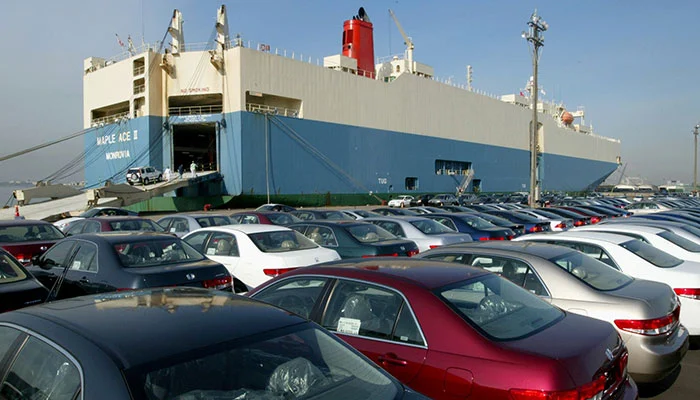
ISLAMABAD: The Economic Coordination Committee of the cabinet on Wednesday approved changes to import rules allowing the commercial shipment of used vehicles, imposing a 40% regulatory duty and initially restricting them to models no older than five years.
The ECC considered a summary regarding the commercial import of used vehicles and, after detailed discussion, accorded approval to the proposals, a statement issued by the Finance Division said. The amendments to the Import Policy Order, 2022, will permit such imports subject to strict compliance with prescribed environmental and safety standards.
The decision comes amid pressure from the International Monetary Fund to rationalise tariffs on the auto industry, and as local manufacturers warn of potential shutdowns if the market is liberalised too aggressively. The ECC’s moves require ratification by the federal cabinet.
Initially, only vehicles not older than five years will be permitted until 30th June 2026, after which the vehicle age limit shall stand removed, the statement said. The committee also approved the imposition of 40 percent regulatory duty in addition to the existing customs duties, on the commercial import of used vehicles (less than five years old). This enhanced duty will remain applicable until 30th June 2026. Thereafter, the duty shall be reduced gradually by 10 percentage points per year, reaching zero by 2029-30, in line with the recommendations of the Tariff Policy Board.
Finance Minister Muhammad Aurangzeb chaired the ECC meeting virtually from New York. The meeting was attended by Minister for Petroleum Ali Pervaiz Malik, Minister for National Food Security and Research Rana Tanveer Hussain, Minister for Power Sardar Awais Ahmad Khan Leghari, federal secretaries and senior officials from concerned ministries and regulatory bodies.
The policy shift follows calls from car dealers for regulated imports to curb informal foreign-exchange outflows. In May, the All Pakistan Car Dealers and Importers Association urged the government to allow the import of used vehicles with certain conditions through banking channels in the budget FY26. This step will eliminate the outflow of foreign exchange through the kerb market and will promote a documented economy as all transactions will be done through banking channels, the association said, adding that this will not only promote tax culture but also make all importers bound to submit sales data to the Federal Board of Revenue to bring transparency in this process.
Local auto-parts makers have pushed back against liberalisation. Last month, they warned of a potential shutdown of local car assembly industry within the next two years if the government proceeded with plans to liberalise the commercial import of used vehicles from September.
Former chairman of the Pakistan Association of Automotive Parts and Accessories Manufacturers, Aamir Allawala, raised concerns during a media briefing at various vending units, stating that used vehicles already account for 25 percent of the market, over 40,000 units annually. In contrast, used car market share stands at zero in India, 0.3 percent in Vietnam, and 1.2 percent in Thailand, he noted.
Allawala said import duties on completely built-up units in Pakistan range from 50–100 percent, compared to 125 percent in India, 52 percent in Vietnam, and 80 percent in Thailand. The negligible used car imports in these countries are the result of both tariff and administrative measures, he added.
Separately, on another summary moved by the Cabinet Division, the ECC considered and approved a technical supplementary grant of Rs800 million in favour of the Pakistan Virtual Asset Regulatory Authority.
Copyright © 2021 Independent Pakistan | All rights reserved