By Staff Reporter
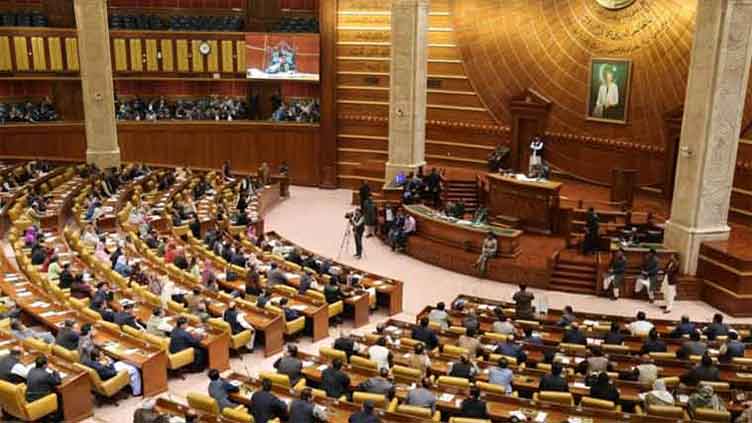
LAHORE: The provincial Punjab Assembly on Tuesday passed a resolution calling for a ban on former prime minister Imran Khan and his Pakistan Tehreek-i-Insaf (PTI) party, labeling them “anti-state” and accusing Khan of acting as a “tool of the enemy state” amid escalating tensions between the opposition and the ruling coalition.
The measure, adopted by treasury members of the Pakistan Muslim League-Nawaz (PML-N)-led government, came days after a sharp rebuke from the military’s top spokesman, who branded Khan’s rhetoric a “national security threat.” PTI lawmakers boycotted the proceedings, underscoring the deepening rift in Pakistan’s fractured political landscape.
The resolution, moved by PML-N lawmaker Tahir Pervaiz, praised the country’s security institutions for their role in defending Pakistan against external threats. “The institutions that safeguard Pakistan on every front and have successfully countered an enemy five times larger, such as India, are vital to the country’s integrity and stability,” it stated. It went on to demand a outright ban on PTI and its founder. “A ban should be imposed on the PTI and its founder Imran Khan for acting as a tool of the enemy state. He is also accused of making statements against the country and spreading chaos,” the text read.
The resolution called for legal action against any leaders, political or otherwise, who undermine national stability, insisting they receive “appropriate punishment.” It also included a tribute to the personnel and leadership of institutions dedicated to Pakistan’s security.
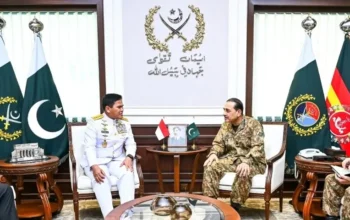
The vote followed a heated exchange sparked by comments from Inter-Services Public Relations Director General Lt. Gen. Ahmed Sharif Chaudhry, who last week accused Khan of fostering an “anti-army” narrative that had crossed into the domain of national security. “Such narratives were now out of the realm of politics and had become a ‘national security threat,’” Chaudhry said in a press briefing. Defence Minister Khawaja Asif, a senior PML-N figure, defended the military’s stance. He argued that Khan had previously used “harsh language” against opposition members and thus had “no right to object to the comments by the military’s spokesman.”
PTI leaders fired back, condemning what they called “ridiculous” remarks by the military spokesperson. They insisted that Khan, who remains incarcerated on various charges, was “not a security threat” and decried the intervention as an overreach into civilian politics.
This latest push to sideline PTI echoes earlier attempts by the federal government. In July, officials announced plans to ban the party and initiate high treason proceedings under Article 6 of the constitution against Khan, former president Arif Alvi and ex-National Assembly deputy speaker Qasim Suri. That move appeared aimed at blocking PTI from claiming reserved parliamentary seats after a Supreme Court ruling that could have positioned it as the single largest party in the lower house. But the government ultimately did not pursue the ban, leaving PTI to continue operating amid ongoing legal battles and protests.
Banning political outfits is hardly novel in Pakistan, where such measures have persisted through eras of military rule and civilian governance alike. In October, the federal government imposed a ban on the religiopolitical group Tehreek-i-Labbaik Pakistan under the Anti-Terrorism Act following violent demonstrations that paralyzed parts of the country.
The resolution’s passage in Punjab, Pakistan’s most populous province and a PML-N stronghold, signals intensifying pressure on Khan’s supporters. PTI has faced a sweeping crackdown since Khan’s ouster in a no-confidence vote in 2022, with thousands of party workers arrested and the former leader convicted in multiple cases ranging from corruption to inciting unrest.
Analysts say the military’s public criticism of Khan reflects broader institutional frustration with his persistent attacks on the establishment, which he has accused of engineering his removal and rigging subsequent elections. The army, long a dominant force in Pakistani politics, has denied such claims. As the war of words rages on, the resolution adds fuel to an already volatile standoff, raising questions about the future of opposition politics in a nation grappling with economic woes and security challenges along its borders. Khan, from behind bars, has continued to rally his base through social media and surrogates, framing the actions against him as a vendetta by the ruling elite.
Copyright © 2021 Independent Pakistan | All rights reserved