By Staff Reporter
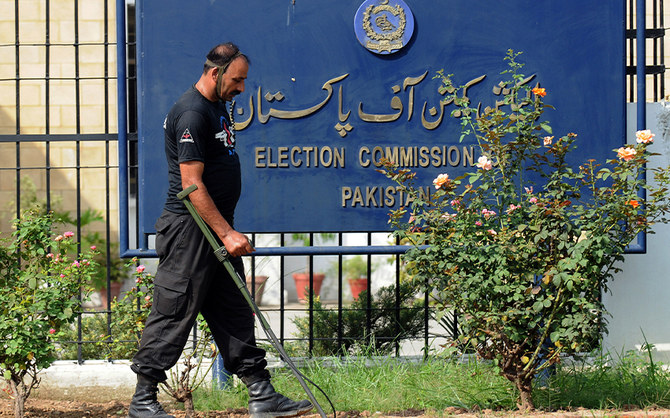
ISLAMABAD: The Election Commission of Pakistan on Wednesday turned down a request from the chief minister of Balochistan province to postpone local government elections in the restive capital of Quetta, dismissing the plea as “devoid of force” and ordering the vote to proceed as scheduled on Dec. 28 despite warnings about deteriorating security and harsh winter weather.
The decision by the ECP came after Balochistan Chief Minister Sarfraz Bugti filed a petition on Monday, citing the precarious law and order situation in Quetta and the suspension of internet services as reasons to delay the Quetta Metropolitan Corporation elections.
In a written order, the ECP directed the Balochistan government to assist the commission and “all other functionaries who have been entrusted responsibilities for the conduct of local government elections in District Quetta in every possible manner.” It also called for “foolproof security arrangements” to protect voters, candidates, the public and polling staff, ensuring the smooth conduct of the polls.
The ruling was not unanimous: One of the six commission members who considered the plea favored postponement, highlighting potential low voter turnout due to cold weather and migration, as well as broader instability in the province. Bugti’s appeal, filed Dec. 8, argued that the elections should be rescheduled to a time “when weather, security, administrative preparedness, constituency demarcation & voter rolls accuracy are ensured,” the ECP order noted. The commission reviewed the matter the following day. Addressing concerns about constituency boundaries, the ECP stated that “the process of delimitation of constituencies was completed after observing all legal processes, i.e. publication of preliminary list of constituencies for inviting proposals, objections on preliminary lists and the same was finalised after hearing and deciding the objections/representations.”
The commission pointed to an Oct. 10 ruling by the Balochistan High Court, which dismissed similar petitions and directed the body to hold the elections “as soon as possible.” On the question of local government terms, the ECP rejected Bugti’s calculations, stating “as per Section 26 of the Balochistan Local Government Act, 2010, the term of local government election is for four [years]. In the present case, the members and chairman/vice chairman of union councils, municipal committees and municipal corporations took oath on February 9, 2023, for which the expiry of term is February 9, 2027. However, the members and chairman/ vice chairman of district councils took oath on July 6, 2023, for which the term of expiry is July 5, 2027.”
The order emphasised that the commission had reconciled electoral rolls “wherever required to adjust voters in accordance with census blocks, wards and delimitation through door-to-door verifications.” “For the purpose, vide publicity was given to facilitate the voters and inspiring contesting candidates for registration and transfer of their votes,” with the election schedule issued only after this process concluded.
The ECP noted it had completed delimitation “twice” and, “after a number of meetings with the provincial government of Balochistan, issued the election programs twice.” Despite these efforts, prior attempts to hold the elections had failed. In rejecting arguments about security and weather, the commission cited a 2021 precedent involving Khyber Pakhtunkhwa province, where the Supreme Court upheld the ECP’s decision to proceed with local polls despite similar pleas. The court directed the provincial government to move forward with the vote.
The order also highlighted practical preparations already underway. “The process of printing of ballot papers has been already started, and [the] maximum number of ballot papers have been printed out.”
In a dissenting note, ECP member Shah Muhammad Jatoi agreed with the majority on delimitation, rolls and terms but warned that harsh December weather could suppress turnout, as “most residents during December migrate from the district (Quetta) to [other] districts.” “I am also of the considered view that the law and order situation in the province of Balochistan is not conducive for [the] conduct of local government elections in the present scenario.”
This was not the first such request from Balochistan authorities. On Nov. 2, the provincial government asked the ECP to delay the Quetta polls for similar reasons, but the commission denied it the next day. The push for elections follows an Oct. 6 decision by a Balochistan High Court bench, which rejected petitions seeking postponement and ordered the provincial election commissioner to conduct the vote promptly. In response, the ECP began preparations and announced the schedule on Nov. 13. The upcoming elections will cover 172 union councils and 641 wards in Quetta district, with 2,710 candidates in the race. Local bodies in Balochistan last elected in 2015 completed their term on Jan. 27, 2019. Under the Elections Act 2017, new polls should have occurred within 120 days, but they were delayed until May 2022, more than three years late, due to disputes among political parties over amendments to the Balochistan Local Government Act, 2010, and constituency delimitation issues.
Elections in two key urban districts, Quetta and Lasbela, faced further holdups over ward boundaries. While Lasbela’s vote went ahead at the end of 2022, Quetta’s remained stalled amid litigation in the high court. Balochistan, Pakistan’s largest but least populous province, has long grappled with insurgencies, sectarian violence and economic marginalisation, complicating governance and electoral processes.
Copyright © 2021 Independent Pakistan | All rights reserved