By Staff Reporter
ISLAMABAD: The government is exploring a major restructuring of its power sector debt, including talks with multilateral lenders to refinance $30 billion owed to China, as it seeks to slash electricity tariffs and boost grid usage hit by a boom in rooftop solar panels, the power minister said on Thursday.
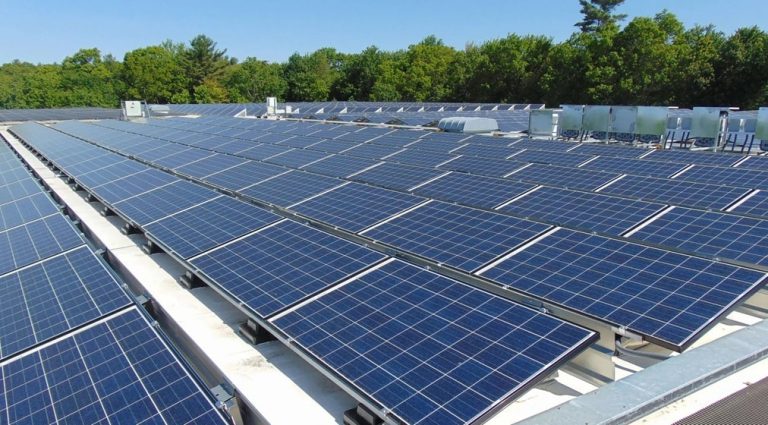
Sardar Awais Leghari, speaking at the launch of a subsidised programme to replace inefficient household fans, said high tariffs had driven consumers off the grid and accelerated solar adoption, posing a “serious challenge” to the national power system. The minister acknowledged that the shift to solar had dipped daytime demand to around 8,000 megawatts while peak-hour loads soared beyond 26,000 megawatts, forcing power plants to remain on standby and raising costs.
Over recent months, Islamabad has engaged the World Bank and Asian Development Bank on debt restructuring, targeting the $30 billion Chinese obligations for longer maturities, alongside a Rs1.6 trillion circular debt and Rs1.225 trillion in recent financing from local commercial banks. Direct appeals to Chinese institutions for repayment extensions have yielded no results over the past five years, prompting authorities to pursue refinancing options, potentially swapping the debts for 15- to 20-year concessional multilateral loans.
Officials estimate such an overhaul could reduce overall tariffs, especially for industry, to 8-9 U.S. cents per unit from the current 11.5 cents, making Pakistani exports more competitive. Leghari said clean energy now accounts for 55% of the national generation mix in fiscal year 2025, projected to exceed 90% by 2035 and described the solar uptake as a “people-led solar revolution” that has drawn international praise for Pakistan’s clean energy transition.
However, he cautioned that unfair pricing mechanisms were turning solarisation into a burden for non-solar consumers, calling for rationalisation to ensure equitable costs. Electricity prices have fallen 20% in the last 18-20 months, Leghari said, with residential tariffs still subsidised by 35-40% despite new fixed charges. Industrial rates have dropped 35% to about 11.5 cents per unit, though further cuts are needed for global competitiveness.
The fan replacement scheme, formally the Prime Minister’s Fan Replacement Programme, aims to curb peak summer demand through energy-efficient upgrades. The managing director of the National Energy Efficiency and Conservation Authority said preparations were completed in 81 days, beating a 90-day target. The initiative involves the State Bank of Pakistan and commercial banks via a tripartite agreement, backed by a Rs2 billion government rolling guarantee to cover potential first-installment defaults.
Separately, Leghari defended recent changes to rooftop solar net-metering rules in the National Assembly, a day after Prime Minister Shehbaz Sharif ordered a review of the policy. The revisions, issued by the National Electric Power Regulatory Authority, mandate full tariffs for grid-drawn power while compensating exports at a lower, market-based rate. Critics have labelled them “anti-solar,” arguing they could slow renewable uptake and strain household budgets.
Leghari countered that only 6,000-7,000 megawatts of Pakistan’s 22,000 megawatts of installed solar capacity are under net-metering, affecting about 466,000 users out of 35.5 million total electricity consumers. “If a net-metering consumer earns a 50% return on his investment because of the savings he gets as a meter user, while IPPs get 17% and bank deposits earn 8%, isn’t a 50% return a good rate,” he said. “I generate electricity at Rs 5 and send it to the grid at Rs27,” Leghari added. “The average price at which we buy electricity from the rest of the grid is Rs8.31. Is buying at Rs27 justified?”
Under the new framework, returns for net-meter users would drop to around 37%, which he said remained attractive. The changes target “fair pricing” and aim to cut cross-subsidies shouldered by the wider consumer base. “Besides them, there are 35.5 million other consumers who do not even use net-metering,” Leghari said, noting that if broader electricity costs fell by up to Rs1.50 per unit, the adjustment would be warranted.
Copyright © 2021 Independent Pakistan | All rights reserved