By Staff Reporter
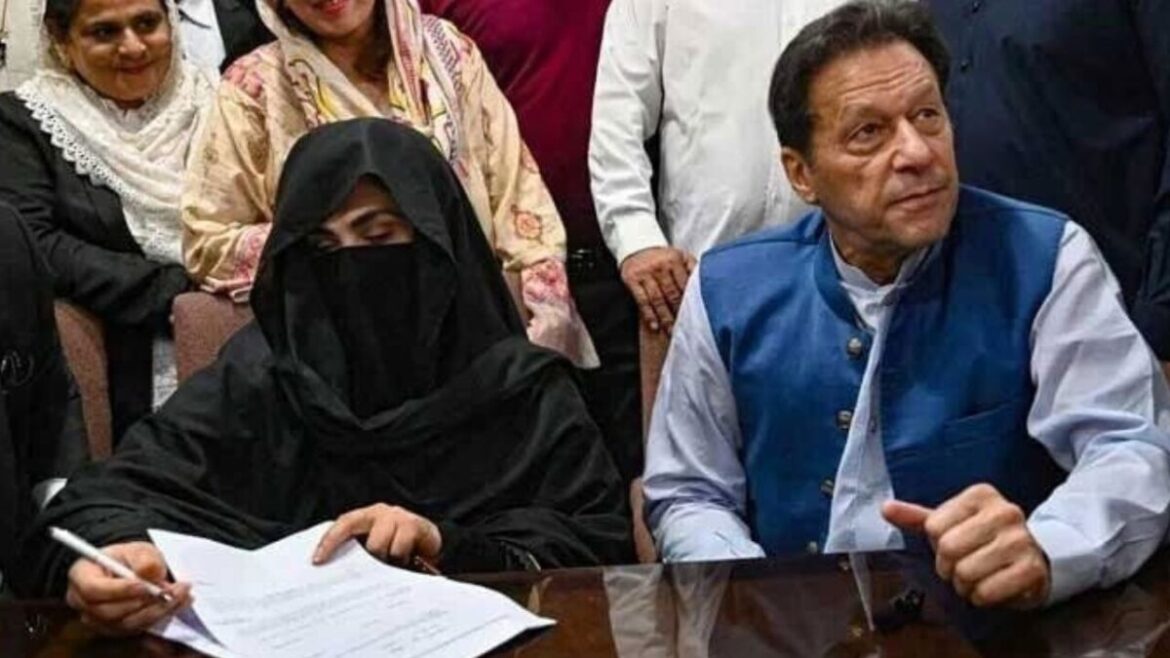
ISLAMABAD: Former Prime Minister Imran Khan’s vision in his right eye has improved substantially after treatment for a serious retinal condition while he has been held in Adiala Jail, according to a detailed medical report released Monday by a team of government-appointed ophthalmologists.
The two-page assessment, signed by Prof. Dr. Nadeem Qureshi, head of the vitreoretinal department at Rawalpindi’s Al-Shifa Trust Eye Hospital, and Prof. Dr. M. Arif Khan, head of the ophthalmology department at the Pakistan Institute of Medical Sciences in Islamabad, described the 73-year-old Khan’s condition as stable and responding well to ongoing care.
But the examination, conducted Sunday at the Supreme Court’s direction, has only deepened the political rift over his treatment, with his Pakistan Tehreek-e-Insaf party and family rejecting the process as opaque and demanding that his personal physicians be allowed direct access.
The report, a copy of which was made available to the media, offered the most comprehensive public accounting yet of Khan’s ocular health since he was diagnosed in January with central retinal vein occlusion, or CRVO, in his right eye — a condition in which a blockage in the main vein draining blood from the retina can lead to swelling, hemorrhaging and vision loss if untreated.
Unaided, Khan’s right eye registered 6/24 partial vision, meaning he could see at 6 meters what a person with normal vision sees at 24 meters. His left eye was 6/9. With corrective glasses, the right eye improved to 6/9 partial, and the left to 6/6 — standard 20/20 vision, the benchmark for normal clarity. A slit-lamp examination found the anterior segments of both eyes normal, with clear corneas and no inflammation in the anterior chamber. In the right eye, the vitreous was mostly clear, though it showed a few fibrillar opacities and a mild intragel hemorrhage at the 6 o’clock periphery. The optic disc was hyperemic with engorged vessels and an obliterated cup, while the retina exhibited moderately dense hemorrhages across all four quadrants, along with four to five cotton-wool spots — small areas of nerve fiber damage often linked to reduced blood flow.
The macula, the central part of the retina responsible for sharp, detailed vision, showed resolving edema, or swelling from fluid buildup, with the foveal contour now visible and the retina fully attached. An optical coherence tomography scan confirmed the improvement: central macular thickness had dropped from 550 microns to 350 microns. The left eye, by contrast, appeared largely unremarkable, with a pink disc, normal cup-to-disc ratio, clear macula and periphery, and no signs of lattice degeneration or detachment.
The board recommended continuing Nevanac eye drops twice daily in both eyes for inflammation, Co-sopt drops twice daily in the right eye to manage intraocular pressure, and Systane Ultra artificial tears three times daily in both eyes for dryness. A second dose of anti-VEGF medication — an injection that targets abnormal blood vessel growth and leakage in the retina — was advised on schedule. The doctors noted that Khan’s vision in the affected eye had already advanced from 6/36 to 6/9 partial, calling it “substantially good vision at this stage.” Further tests, including optical coherence tomography angiography and fundus fluorescein angiography, were suggested after the anti-VEGF course concludes.
The examination followed weeks of mounting alarm. In early February, a Supreme Court-appointed lawyer, Barrister Salman Safdar, visited Khan in jail and reported that the former prime minister had told him his right-eye vision had deteriorated to just 15 percent despite an injection and other treatment. Khan, who said he had enjoyed normal 6/6 vision in both eyes until October, blamed delays by jail authorities. A Feb. 6 report from PIMS had confirmed the CRVO diagnosis after an on-site assessment at Adiala. Khan was then taken to PIMS on the night of Jan. 24 for the initial procedure, though his family said they learned of it only days later. On Sunday, a team of five doctors arrived at the jail for a fuller evaluation, which included blood samples and blood pressure checks.
PTI leaders dismissed it outright, noting the absence of Khan’s family or his longtime physicians, Dr. Asim Yusuf and Dr. Faisal Sultan. The party had pushed for the exam to be conducted at Shifa International Hospital in Islamabad, which they described as better equipped. Yet the medical board took steps to address those concerns. Late Sunday evening, PTI Chairman Barrister Gohar Khan and Senate opposition leader Allama Raja Nasir Abbas met with the two lead doctors at PIMS. The specialists provided a detailed briefing, which was extended by phone for more than 25 minutes — and later 40 minutes, according to Yusuf — to Khan’s personal doctors, including Yusuf in Lahore and retinal specialist Dr. Khurram Mirza.
In a video statement released Monday, Yusuf said the jailhouse doctors described significant progress. “Their latest assessment was yesterday afternoon,” he said. “They told us that, in their view, Imran had shown significant improvement as a result of treatment and his vision had improved significantly as well.” Still, Yusuf stopped short of full endorsement. “I would be extremely happy if I was able to confirm that this was the case,” he said. “Unfortunately, because I have not seen him myself and have not been able to participate in his care or talk to him, I am unable to either confirm or deny the veracity of what we have been told.” He appealed for authorities to let him or Sultan, or both, examine Khan in prison and pressed for his transfer to Shifa International, calling it “appropriately equipped and of a suitable standard.”
Law Minister Azam Nazeer Tarar moved quickly to reassure the public. Speaking to lawyers at the Bar Association in Ferozewala on Monday, he dismissed reports of dire vision loss. “There is nothing as such to worry about,” he said, adding that he had reviewed the report with Attorney General Mansoor Usman Awan. With glasses, Tarar said, one eye was “approximately 70 percent fine” and the other “6/6. There is nothing as such to worry about.”
The Supreme Court, which had ordered the exam by Monday after being briefed on the 15 percent vision claim, appeared satisfied. In an order issued Monday disposing of a related PTI petition, the court noted that Khan had “generally expressed satisfaction” with his confinement conditions in Safdar’s report and that both the amicus and government assessments aligned on the adequacy of care.
That did not satisfy the opposition. PTI leaders and an alliance of smaller parties met Monday to plot their next steps after a four-day sit-in outside Parliament. Sheikh Waqas Akram, the party’s central information secretary, said the family and nominated doctors — including Khan’s sister Dr. Uzma Khan and prominent physician Dr. Nausherwan Burki — had been barred from the exam despite requests. “We reject the examination that has been conducted in the absence of family or their nominated doctor,” Akram said. Khan’s sisters and Burki are scheduled to hold a news conference on Tuesday.
In a letter to Chief Justice Yahya Afridi on Monday, senior PTI lawyer Latif Khosa, representing Khan in the Toshakhana graft case, decried the “secrecy” of the exam. He demanded an attested copy of the report, immediate access for personal physicians and Khan’s transfer to Al-Shifa. “His advancing age and declining health are matters of grave concern not only for his family but for the people of Pakistan at large,” Khosa wrote.
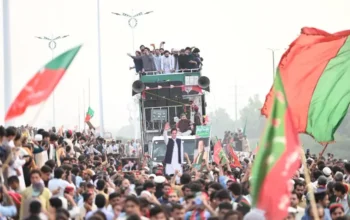
The health saga has rippled across the country. In Khyber Pakhtunkhwa, PTI supporters blocked major roads on Monday, including stretches of the Peshawar-Islamabad motorway, the Hazara motorway and the Karakoram Highway. “We will continue to block these points until our demand is accepted,” said Saleem Irfan, the party’s Peshawar president. Khan has been in custody since August 2023, first in Attock and then Adiala, on a raft of charges his supporters call politically motivated. Meetings with family have been curtailed for months, adding to the unease.
Copyright © 2021 Independent Pakistan | All rights reserved