By Staff Reporter
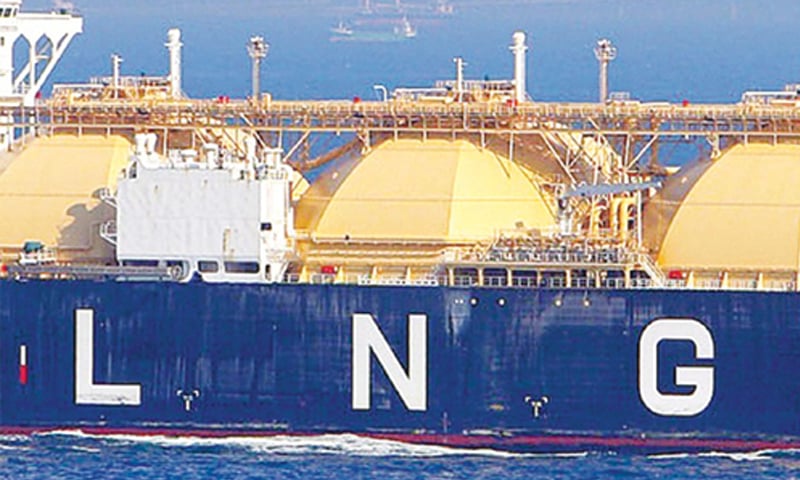
ISLAMABAD: Pakistan will exhaust its liquefied natural gas stocks after April 14, with imports from Qatar fully suspended since early March because of shipping disruptions tied to escalating tensions in the Middle East, officials told a Senate committee on Monday.
The halt threatens gas supplies for the power sector, which relies heavily on imported LNG to meet peak electricity demand. Qatar, the world’s second-largest LNG exporter after the United States, provides the bulk of Pakistan’s cargoes under two long-term contracts.
Ministry of Petroleum officials briefed the Senate Standing Committee on Petroleum, chaired by Senator Manzoor Ahmed, that only two of eight scheduled cargoes reached Pakistan in March. The six cargoes due in April are unlikely to arrive, they said. As a result, LNG will no longer be available domestically after mid-month, and power-sector gas demand will not be met in full during April.
The disruptions followed the US-Israeli conflict with Iran, which has brought shipping through the narrow waterway to a near standstill. That route accounts for roughly one-fifth of global oil and LNG exports, pushing international crude prices to levels last seen in 2022 and forcing the federal government to raise petrol and diesel prices by 55 rupees a liter.
Officials warned that alternative supplies will be needed to cover the shortfall. Spot purchases or potential cargoes from Azerbaijan are under consideration, but at a steep cost: around $24 per unit versus $9 under the Qatari deals. That premium would raise the cost of electricity generation, they noted.
Sui Southern Gas Co. has already cut deliveries by 50% to one fertilizer plant. Supplies to the power sector have fallen to 130 million cubic feet a day from 300 mmcfd. Domestic households will continue to receive gas, the committee was assured.
Petroleum Secretary Mirza Nasir-ud-Din Ahmad told lawmakers that about 70% of Pakistan’s petroleum imports originate in the Middle East, where shipping movements have been severely disrupted. Global benchmark prices have surged, with high-speed diesel climbing to $187 a barrel from $88 and petrol to $130 from $74. The spillover into local markets prompted the recent domestic price increases. According to the Oil and Gas Regulatory Authority, diesel prices have risen about 100% and petrol about 70% since March 7.
Senator Manzoor Ahmed pressed the government on the timing of the hikes, pointing to reserves that would last up to 28 days. Senator Saadia Abbasi alleged the administration stood to gain by lifting prices on existing inventory. Ahmad responded that petroleum products remain available nationwide and that imports are continuing. The price adjustments were intended to discourage hoarding and safeguard supply continuity, he said. They do not benefit oil marketing companies but instead help maintain the flow of imports, he added.
Current inventories stand at 11 days for crude oil, 21 days for diesel, 27 days for petrol, nine days for LPG and 14 days for JP-1 aviation fuel, the secretary reported. The government is preparing a relief package for motorcycle and rickshaw users while promoting fuel-saving measures, Ahmad said. It has also temporarily allowed imports of oil that does not meet Euro-5 quality standards to relieve immediate pressure.
Energy Minister Awais Leghari said earlier that Pakistan’s growing shift toward domestic energy sources — solar, wind, nuclear, coal and hydropower — has reduced its vulnerability to global LNG swings. The country recently canceled 21 LNG cargoes scheduled for delivery in 2026-27 under a long-term contract with Italy’s Eni after power and solar expansion lowered overall gas demand.
Copyright © 2021 Independent Pakistan | All rights reserved