By Staff Reporter
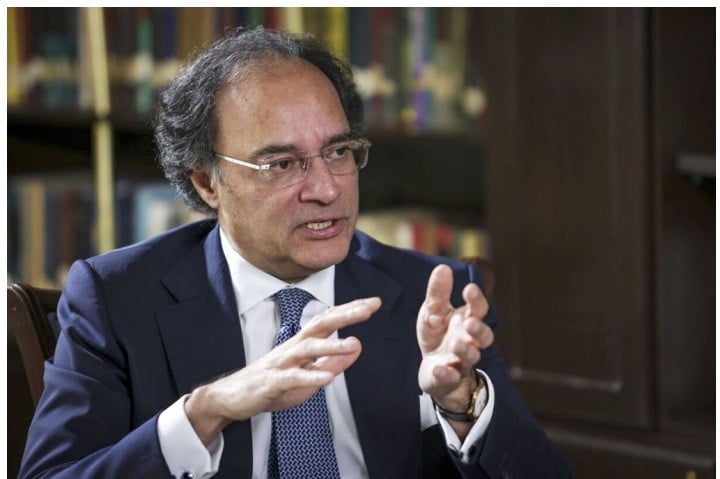
ISLAMABAD: The government is preparing to limit fuel subsidies to only the neediest while ramping up conservation and demand-management steps, Finance Minister Muhammad Aurangzeb said, as global oil prices climb on supply risks from the US-Israeli war on Iran.
In a televised address on Sunday, Aurangzeb said the country is “in a good place until April in terms of the supply situation,” thanks to daily government meetings tracking procurement sources, logistics, maritime routes and diplomatic channels. He credited Petroleum Minister Ali Pervaiz Malik for detailed assurances that efforts are focused on preventing any disruption in the chain for petrol, diesel and other petroleum products.
The remarks come after Prime Minister Shehbaz Sharif told the nation Friday night that the government had already shouldered Rs69 billion of the burden using its own fiscal resources to shield consumers from the full impact of higher global prices.
Aurangzeb recounted a recent cabinet discussion involving himself, Malik and Information Minister Attaullah Tarar. “All our efforts are focused on making sure we have supplies, so that we have no supply disruption,” he quoted Malik as saying.
Daily meetings now also include the ministers of commerce and maritime affairs as well as the State Bank governor, the finance minister added. Those sessions are examining the potential drag on trade, industry, the current account, balance of payments and foreign-exchange reserves if the conflict drags on. “Hope is not a strategy,” Aurangzeb said, repeating a line he first used in talks with Deputy Prime Minister and Foreign Minister Ishaq Dar and Malik. While the government is hopeful the war and regional tensions will end soon, he warned the situation “may carry on for weeks or, God forbid, months” given strikes on energy infrastructure.
That reality has prompted a pivot to longer-term fixes. On Sharif’s instructions, ministries including petroleum, information technology and finance are now working on “structural solutions” that combine demand management, conservation and “targeted relief so that the benefit is passed onto the deserving,” Aurangzeb said.
Pakistan’s resources “are not infinite,” he noted. “This is why we need to pursue a structural solution and take firm, lasting steps to move this situation toward permanence, given our resources.”
The minister thanked citizens for “brilliant recommendations” received over the past seven to 10 days on fuel rationing and price transmission. Some ideas are “very well thought through” and will be incorporated into upcoming measures, he pledged. “As we say, never let a good crisis go to waste.”
The immediate focus remains supply security and pricing, Aurangzeb said, “but this does not mean that the wider economic situation is being ignored.” He invited further public suggestions, promising they would be weighed in the weeks and months ahead.
He also issued a direct appeal to the private sector, which has yet to match the austerity steps already imposed on federal and provincial governments and state-owned enterprises. “I again request my friends, brothers and sisters in private sector leadership, please step up,” Aurangzeb said. “We have only spoken in an advisory capacity thus far, but we have to come together and lift this country out of this crisis. I am very, very confident that if the public sector and private sector come together, we will come out of this crisis stronger as a nation and as an economy.”
The measures follow a fresh round of petroleum-price increases announced in early March that lifted petrol above Rs320 a litre and diesel close to Rs336 a litre — a jump of nearly Rs55 a litre. Two weeks ago, the government unveiled unprecedented austerity steps, including a 50% cut in fuel allowances for official vehicles, a four-day work week for ministries, and a requirement that 50% of public-sector staff work from home (essential services exempted).
On Thursday, the administration appealed to the public to adopt fuel-conservation habits to “avert the risk of petroleum products’ supply getting affected in the coming days.” Sharif said Friday he had rejected proposals for another round of price hikes but had ordered ministries to design a mechanism restricting any relief to the deserving and needy.
Pakistan’s headline inflation has cooled to around 6-7% in recent months after peaking at 38% in 2023, yet fuel costs continue to feed into broader price pressures across the economy.
The global price spike stems from supply disruptions in the Strait of Hormuz, the narrow waterway between Iran and Oman, triggered by the ongoing US-Israeli strikes on Iran and Tehran’s counterattacks on US interests in Gulf countries.
Aurangzeb said the petroleum and information ministers had already flagged the shift toward demand management and targeted relief in recent public comments. Ministries are now cooperating to turn those ideas into concrete policy, he added, while continuing to monitor the evolving situation on a daily basis.
Suggested headlines (Bloomberg style):• Pakistan Targets Fuel Subsidies to Deserving Only as Iran War Risks Supplies Until April
Copyright © 2021 Independent Pakistan | All rights reserved