By Staff Reporter
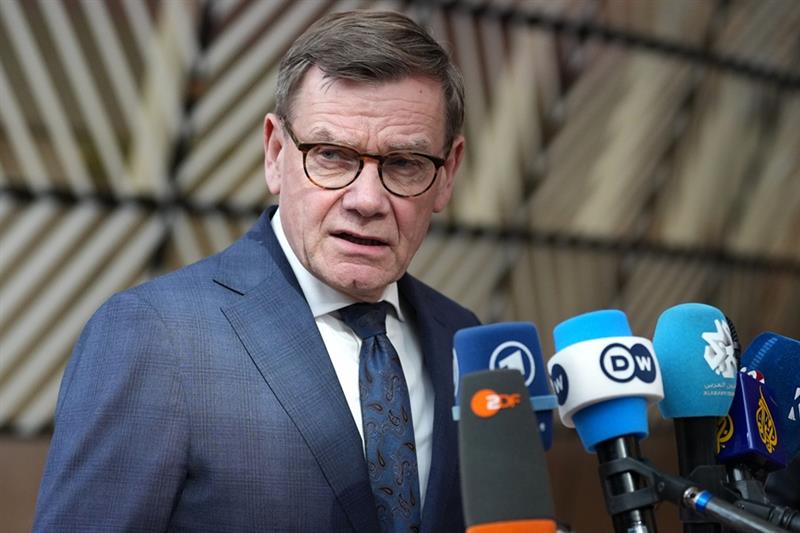
ISLAMABAD: The United States and Iran are preparing for direct negotiations “very soon” in Pakistan, German Foreign Minister Johann Wadephul said on Friday, as back-channel diplomacy intensifies to halt a Middle East war that has killed thousands, disrupted global energy supplies and driven oil prices above $110 a barrel.
“Based on my information, there have been indirect contacts, and preparations have been made to meet directly,” Wadephul told public broadcaster Deutschlandfunk. “That would be very soon in Pakistan, apparently.”
The statement came hours before Wadephul was to join US Secretary of State Marco Rubio and other Group of Seven foreign ministers near Paris, where the agenda is expected to focus on the conflict’s widening costs and the prospects for a negotiated end. It also followed confirmation on Thursday by Steve Witkoff, President Donald Trump’s special envoy, that Pakistan had delivered a detailed 15-point American peace proposal to Tehran.
Trump, who has repeatedly threatened to strike Iranian energy infrastructure if the strategic Strait of Hormuz remains closed to oil tankers, has now extended his deadline twice. On Thursday, during a White House Cabinet meeting, he described the talks as “going very well” and announced a fresh 10-day pause in threatened attacks on power plants and other energy sites, pushing any action to April 6 at 8 p.m. Eastern time. “Talks are ongoing and, despite erroneous statements to the contrary by the Fake News Media, and others, they are going very well,” Trump wrote on his Truth Social platform.
Trump told the Cabinet on Thursday that Iran had allowed 10 oil tankers to transit the strait as a goodwill gesture. He initially described the number as eight “big boats” and suggested some were Pakistan-flagged. The fighting has already sent energy prices soaring. Brent crude, the global benchmark, climbed to about $110 a barrel on Friday, up more than 50 percent since the war began. West Texas Intermediate settled just under $96. Shipping through the Strait of Hormuz — normally the route for one-fifth of the world’s oil and liquefied natural gas — has been effectively halted.
Witkoff told the Cabinet there were “strong signs” that Tehran was prepared to negotiate. For the first time, he publicly confirmed that Washington had transmitted a 15-point “action list” to Iran through Pakistani intermediaries. “We will see where things lead,” he said, “and if we can convince Iran that this is the inflection point with no good alternatives for them, other than more death and destruction.”
Iranian state media, citing the Tasnim news agency, said Tehran had replied to the American proposal and was awaiting Washington’s response. Iranian officials have publicly denied holding direct talks but have acknowledged conveying counter-proposals. An Iranian official told Reuters that senior leaders had reviewed the 15-point U.S. proposal and concluded it served primarily American and Israeli interests, though diplomacy had not been abandoned. The proposal, according to sources familiar with it, includes demands for Iran to dismantle its nuclear program, curb its missile development and effectively cede operational control of the Strait of Hormuz.
Pakistan’s emergence as an intermediary marks a departure from past US-Iran diplomacy, which has usually been routed through Gulf states such as Oman and Qatar. Islamabad, however, possesses both geographic proximity to Iran and functional working relations with Washington, qualities that have taken on new importance since the fighting began.The war erupted on Feb. 28 when the United States and Israel launched strikes on Iran during what had been nuclear negotiations. Among the early casualties was Supreme Leader Ayatollah Ali Khamenei. Iranian retaliatory actions, including attacks on shipping and support for Hezbollah’s campaign against Israel, quickly spread the conflict across the region. The violence has displaced a fifth of Lebanon’s population and caused the largest disruption to global energy flows in history.
Pakistani officials have described weeks of quiet diplomacy preceding the public phase of their mediation effort. They say Islamabad is prepared to host direct talks and has relayed both the original US proposal and Iranian responses. Foreign Minister Ishaq Dar noted this week that Turkey and Egypt are also working behind the scenes.
Analysts in Islamabad say Pakistan’s motives are rooted in self-interest as much as altruism. The country imports the bulk of its oil and gas from the Middle East, most of it through the Strait of Hormuz. Roughly five million Pakistanis work in Gulf states, sending home remittances that roughly equal the country’s total export earnings each year. Rising global oil prices have already forced fuel increases of about 20 percent inside Pakistan, squeezing Prime Minister Shehbaz Sharif’s government.
The conflict has also inflamed domestic tensions. Protests erupted across the country after the initial US and Israeli strikes, with clashes in Karachi and northern cities leaving at least 22 dead and more than 120 injured. In Karachi, demonstrators breached the perimeter of the US Consulate and tried to set it ablaze; at least 12 people were killed in the violence. Analysts described the war as presenting “the biggest economic and energy security challenges” in Pakistan’s history.
Pakistan’s track record as an occasional broker lends the current effort modest credibility. In 1971, then-President Gen. Yahya Khan helped open secret channels that led to President Richard M. Nixon’s groundbreaking 1972 trip to China. Pakistan played a central role in the 1988 Geneva Accords that facilitated the Soviet withdrawal from Afghanistan. More recently, it helped shepherd contacts between the Afghan Taliban and Washington that produced the 2020 Doha agreement and the eventual US troop withdrawal.
Islamabad maintains no diplomatic relations with Israel because of its stance on Palestinian statehood, a position that has not prevented closer ties with Washington. Relations with the United States have warmed over the past year, with expanded diplomatic and economic engagement. Pakistan also joined Trump’s Board of Peace initiative aimed at Gaza, despite domestic Islamist opposition.
Despite the diplomatic movement, Trump administration officials continue to weigh aggressive military steps. The president has publicly mused about seizing Kharg Island, Iran’s primary oil-export terminal, which handles 90 percent of the country’s crude shipments. The island lies 16 miles off Iran’s coast at the northern end of the Gulf, in waters deep enough for supertankers.
US forces already struck military targets on Kharg in mid-March. Trump described those attacks as having “totally obliterated” Iranian defences. Pentagon planners are now considering whether to insert ground troops — potentially two Marine contingents arriving by the end of the month, backed by thousands of airborne soldiers — to seize and hold the facility, US media reported.
Analysts caution that such an operation, while tactically feasible in the short term, could backfire strategically. Ryan Brobst and Cameron McMillan of the Foundation for Defense of Democracies wrote that occupation of the island would more likely expand and prolong the war than deliver a decisive victory. US troops would be vulnerable to missile and drone barrages, including the low-cost, camera-equipped “first-person view” drones now common in Ukraine. Iranian forces could respond by mining the Gulf more heavily, further endangering shipping.
Copyright © 2021 Independent Pakistan | All rights reserved