By Staff Reporter
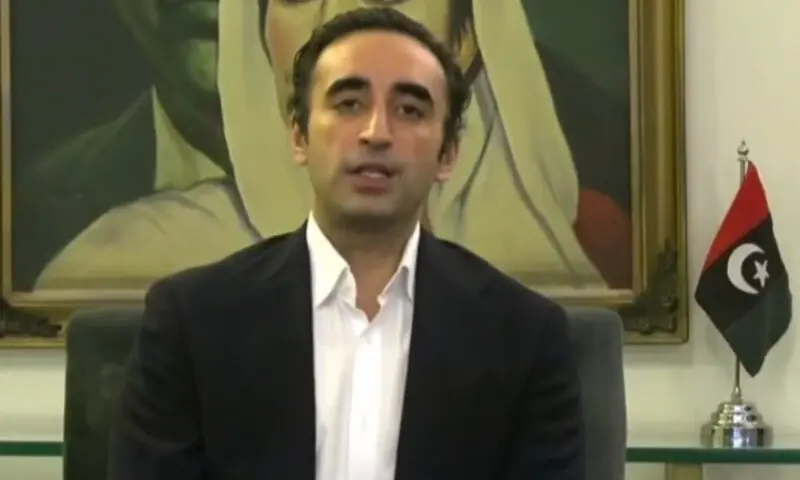
ISLAMABAD: Former Pakistani foreign minister Bilawal Bhutto Zardari said on Friday that the international community has no fallback strategy if weekend peace negotiations between the United States and Iran collapse, urging both sides to seize the current two-week ceasefire and forge a lasting resolution to the conflict that has roiled the Middle East and sent economic shock waves worldwide.
Speaking in a Sky News interview on the eve of the talks scheduled to open in Islamabad on Saturday, Bhutto Zardari, who chairs the collation Pakistan Peoples Party, framed the moment as one with no margin for failure. “I think the international community doesn’t have a plan B,” he said. “Our Plan A needs to be achieving a peaceful resolution to this conflict and a more permanent peace. I think the way this conflict has played out has proven that a war of this nature, a war of this scale, is not an option.”
Pakistan brokered the fragile truce that has paused direct hostilities between Washington and Tehran, and Islamabad will now serve as host for the first face-to-face talks between the two delegations since the ceasefire took hold. Bhutto Zardari said the eyes of the world — and particularly of countries already bearing the war’s costs — are fixed on the visiting American and Iranian teams. “Pakistan, London, New York and many other countries in the Middle East have been affected by this war,” he told Sky News. The toll, he added, can be measured “not only in the loss of human lives but the economic cost that is borne by the people in my country and in yours.”
He expressed hope that the breathing room created by the ceasefire could be transformed into something more enduring. “We all are hopeful that this space that has been achieved, this ceasefire that has been achieved, is now built upon towards a more lasting and permanent peace for the benefit of the international community.”
Pakistan’s diplomatic role has been both delicate and pivotal. As host, Islamabad’s task is simply “to play the host to both these parties that will be directly negotiating here in Islamabad,” Bhutto Zardari said. He acknowledged the steep obstacles ahead, chief among them “the wide trust deficit that exists between the two warring parties.” Yet he voiced confidence that the negotiations could produce confidence-building steps capable of widening the narrow path for dialogue. “It’s up to us, up to the disputing parties, up to all countries, to push all sides to agree to that peace so that we don’t get drawn into potentially broader conflict than what we have seen over the course of last month.”
The remarks come amid quiet but persistent chatter in diplomatic circles about a possible Nobel Peace Prize nomination for Pakistan’s leadership in engineering the ceasefire. Bhutto Zardari dismissed such talk as new to him — and irrelevant. “The first I heard about the Nobel Peace Prize for Pakistan is from you,” he told the Sky News interviewer, “and this criticism about focusing on the image also.”
Pakistan’s motivations, he insisted, are rooted in cold national interest and bitter experience. Iran is a neighbour; so is Afghanistan, where two decades of war have left enduring scars that Pakistan still manages. Tensions with India remain perpetual. “We absolutely do not want the conflict in Iran to be exacerbated,” he said. “The people of Pakistan can’t afford it. I would argue that people all across the world can’t afford it.”The economic stakes, he added, stretch far beyond South Asia. Reports from Australia, the Philippines and Europe have underscored fears of a major global shock. “It’s a particularly hairy situation for us here economically,” Bhutto Zardari said. “As far as the peace prize is concerned, I think Pakistan and everyone would settle just to achieve peace.”
In a separate interview with the BBC, Bhutto Zardari addressed lingering questions about Washington’s view of Pakistan, including pointed criticism once leveled by President Donald Trump during his first term. Trump had accused Pakistan of “lying and deceit.” Bhutto Zardari described those remarks as belonging to the past. “The ground realities are now very different,” he said. “I believe Pakistan has managed to change its perception, internationally, geopolitically, and, of course, in the context of Washington.”
He pointed to Pakistan’s longstanding and evolving relationships as assets in the current crisis. The country maintains “good, substantive neighbourly relations with China” while preserving historic ties to the United States. Pakistan, he noted, once served as the secret bridge that helped establish diplomatic relations between Washington and Beijing during the Nixon administration.
That bridging role appears to have continued in recent weeks. Pakistan’s foreign minister traveled to Beijing, where officials jointly endorsed a five-point framework supporting the ceasefire. Bhutto Zardari described China’s input as valuable and worthy of note in the broader diplomatic effort. The talks opening Saturday will test whether the momentum of the ceasefire can survive the deep suspicions that have defined US-Iran relations for decades. For Pakistan, success would not only ease immediate regional dangers but also validate its emergence as a credible interlocutor in one of the world’s most volatile flashpoints. Failure, as Bhutto Zardari made clear, offers no second act.
Copyright © 2021 Independent Pakistan | All rights reserved