By Staff Reporter
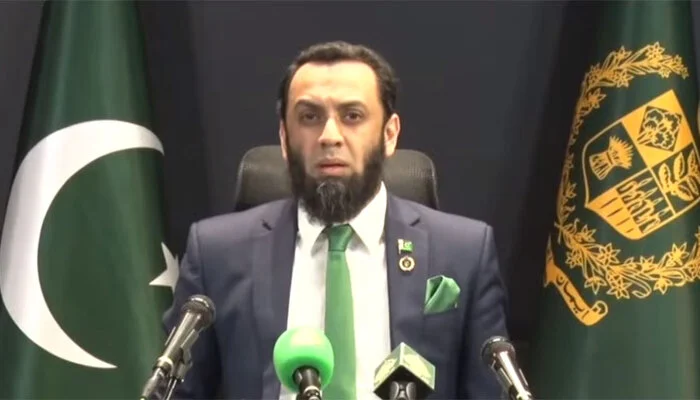
ISLAMABAD: Information minister Ataullah Tarar accused India on Wednesday of still failing to produce any credible evidence linking Islamabad to last year’s deadliest attack in the disputed Himalayan region of Kashmir, repeating Pakistan’s charge that the assault was a “false flag” operation orchestrated by New Delhi to justify military escalation against its neighbour.
The April 22, 2025, attack in Pahalgam, in Indian-occupied Kashmir, killed 26 people, most of them tourists, in what officials described as the bloodiest armed assault in the region since 2000. India immediately blamed Pakistan-backed militants. Pakistan denied any involvement and offered to join a neutral, transparent international investigation — an offer New Delhi rejected, Tarar said in a televised address marking the first anniversary. “To this day, India has not presented any solid evidence or proof regarding the Pahalgam incident, nor has it offered satisfactory explanations,” Tarar said.
He described the swift registration of a first-information report just 10 minutes after the shooting, the absence of adequate security at the site and the immediate attribution of blame to Pakistan as evidence that the episode was stage-managed. “The false flag operation in Pahalgam reflects a mindset that is hollow — driven by false pride, arrogance and greed,” he said.
Tarar went further, saying that the Pahalgam attack would be “the last false flag operation that India carried out.” “It will not dare to carry out such false flag operation again.” The minister’s remarks came two days after India’s chief of defence staff, Gen. Anil Chauhan, spoke publicly about the need for Indian forces to prepare for a “future Sindoor,” a reference to the code name India gave its May 2025 military operation against Pakistan.
Tarar responded with a direct warning: “India should remember that any misadventure of any kind will be met with a firm, decisive and swift response.” The anniversary statement revived the bitter sequence of events that nearly brought the two nuclear-armed rivals to full-scale war last spring. Two days after the Pahalgam killings, India suspended the 1960 Indus Waters Treaty, a critical water-sharing agreement that has survived three wars. Pakistan retaliated by halting all trade, closing its airspace to Indian flights and sealing the Wagah border crossing.
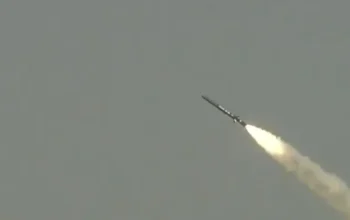
On May 6, Indian aircraft conducted overnight strikes inside Pakistan. Islamabad said its air force shot down five Indian jets, later revising the total to seven. Both sides then traded missile and drone attacks on air bases. The fighting ended on May 10 after urgent American diplomacy; President Donald Trump announced the ceasefire from the White House.
Tarar used Wednesday’s address to portray Pakistan as the aggrieved party. He noted that Islamabad itself has suffered heavily from terrorism and expressed “full sympathy” for the civilians killed in Pahalgam. Yet he questioned how, “without evidence, without investigation and without proper inquiry, the blame was immediately placed on Pakistan.” He said Indian officials had handled the matter “through empty slogans and in a very crude manner,” and that “baseless and fabricated propaganda” had proved difficult for New Delhi to sustain.
The minister also accused India of systematically blurring the distinction between its internal and external problems. “Terrorism is India’s internal issue, yet it portrays it as an external problem,” he said. “Similarly, the Kashmir issue is an international issue but India presents it as an internal one.” He criticised what he called the “ugly face” of Indian news media for spreading propaganda and said Indian institutions had been politicized to suppress minorities.
Tarar repeated long-standing Pakistani allegations that India has conducted transnational terrorism, including the killings of Sikh leaders abroad, and said New Delhi’s support for attacks inside Pakistan — including the recent Jaffar Express train hijacking by Baloch separatists — is “part of India’s state policy.” Islamabad, he said, possesses evidence that it shares periodically with the international community and is “strongly countering” such efforts. At the same time, Tarar sought to cast Pakistan as the more responsible actor. While India faces “global isolation” because of its policies, he said, Pakistan is advancing “its mission of peace” and remains committed to defending itself “by taking every possible step.”
Copyright © 2021 Independent Pakistan | All rights reserved