By Staff Reporter
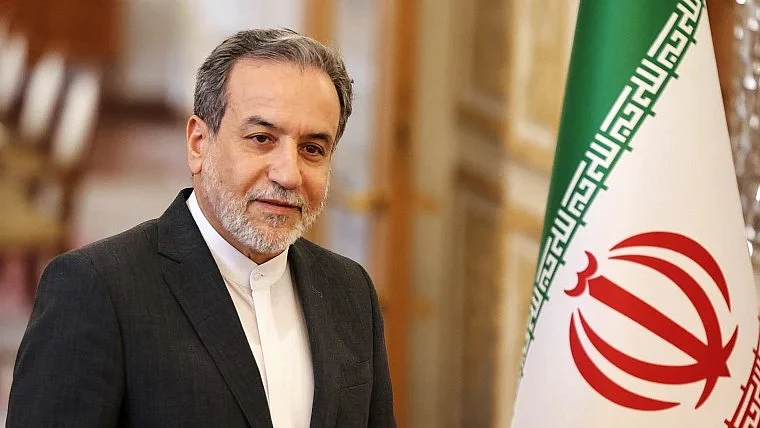
ISLAMABAD: Iranian Foreign Minister Abbas Araghchi is expected to arrive in Pakistan’s capital late on Friday with a small negotiating team, officials said, in a development that could clear the way for a second round of direct peace talks with the United States aimed at ending the two-month-old war.
The visit comes hours after Araghchi held a telephone conversation with the deputy prime minister and foreign minister Ishaq Dar, in which the two men discussed the shaky US-Iran ceasefire and Islamabad’s mediation efforts. Pakistan’s Foreign Office said both sides agreed to remain in close contact, with Dar stressing the need for “sustained dialogue and engagement to address outstanding issues, in order to advance regional peace and stability at the earliest.” Araghchi, according to the readout, praised Islamabad’s “consistent and constructive facilitation role.”
Iranian state media confirmed Araghchi’s travel but cast the trip in narrower terms. The official Islamic Republic News Agency reported that the foreign minister would begin a regional tour on Friday evening, stopping first in Islamabad before continuing to Muscat and Moscow. The purpose, IRNA said, was to hold “bilateral consultations,” discuss “ongoing developments in the region” and review “the latest situation regarding the war imposed by the United States and the Israeli regime against Iran.” The Iranian account made no reference to negotiations with Washington.
Two senior Pakistani government sources said Araghchi’s arrival signals a renewed push to restart the talks, though they cautioned that nothing is yet finalised. A US logistics and security team is already on the ground in Islamabad, the sources said, preparing for the possibility that American negotiators could return quickly. One Pakistani official described a “high likelihood of a breakthrough” after days of brinkmanship, but added that the precise timing and composition of any US delegation remain unclear.
The first round of direct US-Iran negotiations took place in Islamabad on April 11 and 12, following a ceasefire brokered by Pakistan on April 8. Those talks, which ended without agreement but also without collapse, were led on the Iranian side by Parliament Speaker Mohammad Baqer Qalibaf and on the American side by Vice President JD Vance, Trump special envoy Steve Witkoff and Jared Kushner.
A second round that had been tentatively scheduled for Tuesday never materialised. Iran cited the ongoing US naval blockade of its ports as the reason it was not prepared to return to the table. President Donald Trump responded by unilaterally extending the two-week ceasefire at the 11th hour on Tuesday to buy more time for diplomacy. On Thursday, Trump told reporters he was “in no rush” to reach a deal and wanted any agreement to be “everlasting,” while insisting that the United States held the upper hand in the confrontation over the Strait of Hormuz.
That narrow waterway, through which roughly one-fifth of global oil trade normally passes, has been largely paralysed since the war began eight weeks ago. Iran has blocked nearly all traffic except its own vessels and this week seized two large cargo ships to demonstrate its control. The Trump administration imposed its own blockade on Iranian shipping last week, with US forces boarding several Iranian-linked vessels in international waters. Iran has said it will not reopen the strait until Washington lifts its measures.
Shipping data released on Friday showed only five vessels transiting the strait in the previous 24 hours, compared with an average of about 130 daily before the conflict. Those included a single Iranian oil-products tanker and one container ship operated by Germany’s Hapag-Lloyd; none of the giant crude-carrying supertankers that usually supply Asian markets made the journey.
The impasse has placed growing pressure on the Trump administration. Republican lawmakers are defending narrow majorities in Congress ahead of November midterm elections, even as US gasoline prices have climbed and broader inflation concerns have weighed on the president’s approval ratings.
Pakistani officials have worked intensely in recent days to revive the process. On Thursday, senior Pakistani interior minister Mohsin Naqvi met with US Chargé d’Affaires Natalie Baker in Islamabad to discuss prospects for the second round. Dar’s call with Araghchi on Friday continued that effort. Pakistani authorities have neither confirmed nor denied a separate reported conversation between Araghchi and army chief Field Marshal Asim Munir.
Security in Islamabad has been tightened for days. Large sections of the city remain under lockdown, with major roads closed and public transportation curtailed as authorities maintain a security perimeter originally established for the talks that were to have resumed earlier this week. Araghchi’s visit does not guarantee that negotiations will resume immediately. One Pakistani source familiar with the planning said the Iranian minister would first hold bilateral meetings with Pakistani officials and that any US-Iran session might not occur this weekend.
The key sticking points remain unresolved: Iran’s nuclear program, the future of US sanctions and control of the Strait of Hormuz. Still, the arrival of the Iranian delegation, coupled with the presence of American support personnel, represents the most concrete sign in days that the fragile diplomatic track remains alive. US Defense Secretary Pete Hegseth, speaking at a briefing roughly simultaneous with the reports of Araghchi’s travel, said Iran still had an opportunity to strike what he called a “good deal” with Washington.
Copyright © 2021 Independent Pakistan | All rights reserved