By Staff Reporter
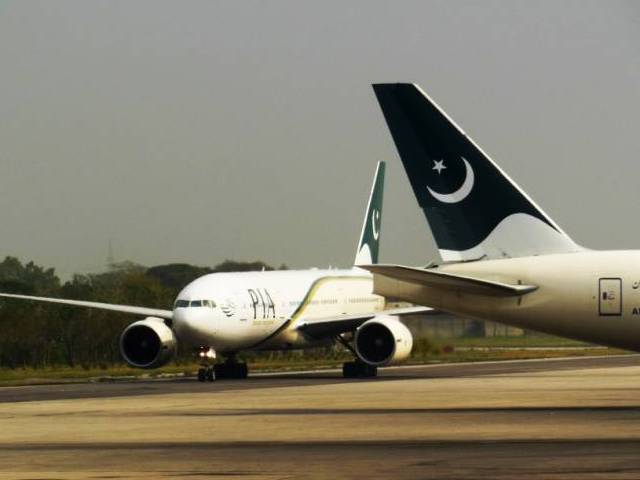
ISLAMABAD: The Arif Habib-led consortium has acquired the remaining 25% stake in Pakistan International Airlines from the government, taking private ownership of the national carrier to 100% and clearing the way for a complete operational overhaul.
Aqeel Karim Dhedhi, founding chairman of AKD Group, which holds a 10.25% stake in the consortium, said the buyers deposited a bank guarantee covering the Rs45 billion payment on Monday, the deadline to exercise the option on the final slice of the airline. The consortium now has 12 months to complete the payment, with interest accruing at 12% on the guaranteed amount. The sooner the cash is paid, the lower the interest cost, Dhedhi said.
The transaction, which values the entire airline at Rs180 billion, comes less than five months after the same group paid Rs135 billion for a 75% stake in December. Under that deal, Rs125 billion is to be reinvested in the carrier, with the government retaining the balance of Rs10 billion.
Dhedhi detailed the final shareholding structure: Arif Habib Corporation and Fatima Fertilizer Co. together hold 34.1%, making them the largest shareholder bloc. Fauji Fertilizer Co. Ltd. owns 34%, Lake City Holdings 14%, AKD Group 10.25% and City Schools 7.65%.
Shahid Ali Habib, chief executive officer of Arif Habib Ltd., confirmed the move in interviews with local media on Sunday. “Their stated position is that they intend to acquire the 25 percent from the government,” he said. The government had given the buyers a 90-day window ending in late April. Once the formal notification is made, the consortium will have until April 2027 to settle the full amount. The change of sponsors is expected in late April or early May, at which point the new owners can install their own board and management team and run PIA as a purely private entity free of government-appointed directors.
The buyers’ immediate priority is fleet expansion. Dhedhi said the airline aims to grow to 50 aircraft by September 2026 from 21 operational planes now. It has already received offers for 120 aircraft from suppliers worldwide, needed to support Hajj operations and add capacity on both domestic and international routes.
Habib said the group will focus first on improving customer service, tightening safety and security standards, lifting staff performance and modernizing the airline’s antiquated ticketing systems. One quick win, he added, would be increasing flight frequencies on commercially viable routes. Services that now operate only two flights every two weeks could be ramped up to as many as six flights a week, materially improving passenger convenience.
PIA currently flies 18 aircraft, some of which require capital spending to return to service. Habib said six or seven additional planes could be made operational relatively quickly. The medium-term target is a fleet of 38 aircraft, though no firm timetable has been set. Leasing brand-new planes is not feasible in the short term because manufacturer delivery slots are booked through 2030-2032. Instead, the airline will seek relatively modern eight-to-10-year-old Boeing and Airbus models already in the secondary market.
The privatization marks the latest chapter in PIA’s long struggle. The carrier has posted more than $2.8 billion in cumulative losses, weighed down by chronic mismanagement, political interference, overstaffing and heavy debt. Successive governments tried and failed to turn it around. PIA was converted into a public limited company in 2016 under the Pakistan International Airlines (Conversion) Act and was formally delisted from the Pakistan Stock Exchange in May 2024 after the Securities and Exchange Commission of Pakistan gave its approval. It became a wholly owned subsidiary of the newly formed PIA Holding Co. Ltd., established in March 2024 specifically to handle the sale.
Founded in 1955, PIA was once among Asia’s most respected airlines. Its reputation suffered a severe blow from a 2020 pilot licensing scandal that triggered flight bans by the European Union, Britain and the United States. The bans were later lifted, giving the carrier a chance to rebuild. The new owners believe that full private control — unencumbered by bureaucratic oversight — will finally allow them to restore the airline that for decades symbolized national pride but more recently came to embody Pakistan’s broader economic challenges.
Copyright © 2021 Independent Pakistan | All rights reserved