By Staff Reporter
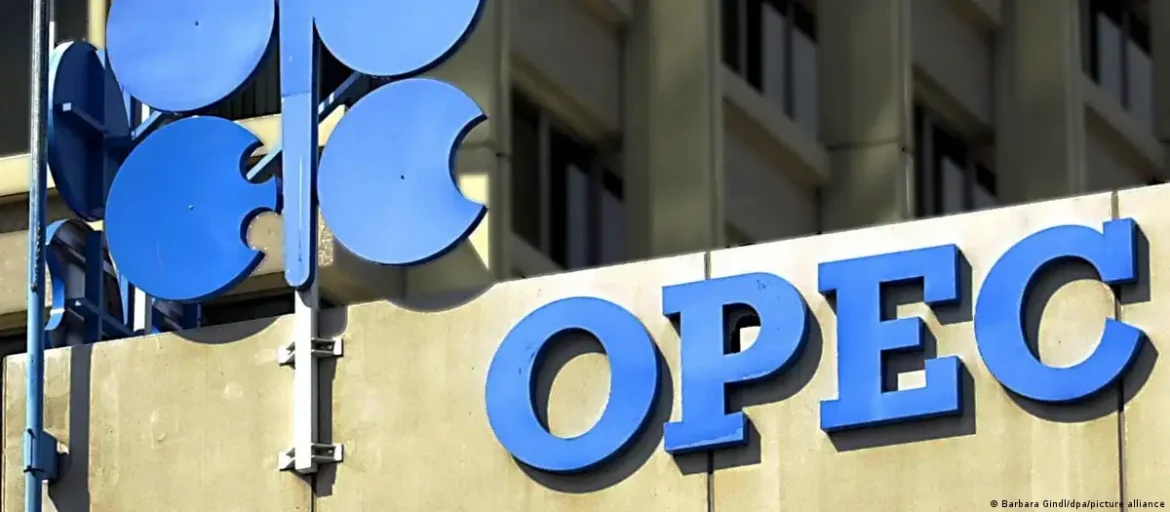
ISLAMABAD: The United Arab Emirates said on Tuesday it will withdraw from OPEC and the broader OPEC+ alliance, effective May 1, removing the cartel’s third-largest producer and one of its few members with significant spare capacity at a moment when the US-Israeli war with Iran has already triggered a historic energy shock and disrupted global oil flows.
The decision reflects Abu Dhabi’s determination to pursue its own production goals rather than remain constrained by group quotas, according to a statement carried by the state-run WAM news agency. “This decision reflects the UAE’s long-term strategic and economic vision and evolving energy profile, including accelerated investment in domestic energy production,” it said. The UAE will bring “additional production to market in a gradual and measured manner, aligned with demand and market conditions,” the statement added.
UAE Energy Minister Suhail Mohamed al-Mazrouei described the move as a policy decision taken after a detailed review of current and future production strategies. He told Reuters the UAE had not consulted Saudi Arabia or any other country beforehand. In a separate interview with CNBC, al-Mazrouei said the UAE and Saudi Arabia had worked together for years and that Abu Dhabi held the kingdom in the “highest respect” for leading OPEC.
The UAE first joined OPEC in 1967 through its emirate of Abu Dhabi and became a full member when the country was founded in 1971. Before the war with Iran began on Feb. 28, it was producing about 3.4 million barrels a day. Analysts estimate its capacity at roughly 4.8 million to 5 million barrels, well above the 3 million to 3.5 million barrels a day it has been allowed under recent OPEC quotas. The group has long limited UAE output to preserve market balance, even as the emirates invested heavily in expanding fields.
OPEC, based in Vienna, and the wider OPEC+ pact that includes Russia have seen their influence wane for years as US shale production climbed above 13 million barrels a day. Saudi Arabia, the cartel’s de-facto leader, has shouldered much of the burden of supporting prices, often producing more than 10 million barrels daily before the latest conflict. The loss of the UAE removes one of the few remaining “shock absorbers” in the group, said Jorge Leon, head of geopolitical analysis at Rystad Energy. “Losing a member with 4.8 million barrels per day of capacity, and the ambition to produce more, takes a real tool out of the group’s hands,” Leon said in a statement. “With demand nearing a peak, the calculation for producers with low-cost barrels is changing fast, and waiting your turn inside a quota system starts to look like leaving money on the table. Saudi Arabia is now left doing more of the heavy lifting on price stability.”
The timing of the exit comes as the Gulf remains under severe pressure from the Iran conflict. OPEC’s Gulf members have struggled to move exports through the Strait of Hormuz — the narrow chokepoint that normally carries about one-fifth of the world’s crude and liquefied natural gas — because of threats and attacks on vessels. Brent crude traded above $111 a barrel on Tuesday, more than 50% higher than before the war began.
Analysts said the withdrawal is unlikely to have an immediate effect on oil markets because supplies are already sharply constrained by the fighting. Still, the move underscores deepening strains within the cartel. Qatar left OPEC in 2019, and ties among remaining members have continued to loosen, Capital Economics noted in a research note. “The UAE has been itching to pump more oil,” the firm wrote. “The ties binding OPEC members together have loosened.”
Regional rivalries are also playing a role. The UAE and Saudi Arabia have competed more openly in recent years over economic diversification plans and influence across the Middle East, particularly in the Red Sea region. The two countries fought together against Iran-backed Houthi rebels in Yemen starting in 2015, but that alliance fractured in late December when Saudi forces bombed what Riyadh described as a weapons shipment headed to Yemeni separatists supported by the UAE. In recent months, Saudi broadcasters that had long operated from Dubai have quietly pulled back to the kingdom.
The UAE sent its foreign minister — rather than its ruler — to a meeting of Gulf Arab leaders hosted on Tuesday in Jeddah by Saudi Crown Prince Mohammed bin Salman. Karen Young, a senior research scholar at Columbia University’s Center on Global Energy Policy, said the exit gives the UAE greater flexibility in its energy relationships, including potential ties with major buyers such as China, while allowing it to compete more aggressively with Saudi Arabia.
US President Donald Trump, now in his second term, has repeatedly criticised OPEC, accusing the group of “ripping off the rest of the world” by keeping oil prices high. He has also linked continued US military support for Gulf states to the price of crude, arguing that Washington defends OPEC members while they exploit that protection with elevated prices.
The UAE has nevertheless continued to expand its oil-production capacity even as it hosted the COP28 climate summit in Dubai in 2023, which for the first time ended with a global pledge to move away from fossil fuels. Saudi Arabia and OPEC had no immediate public reaction to the UAE’s announcement. The cartel now faces fresh questions about its long-term coherence as it contends with both the fallout from the Iran war and the shifting economics of a world where demand growth is slowing. For the UAE, the decision marks a clear pivot: after decades of contributions and “even greater sacrifices” for the collective good, as its statement put it, Abu Dhabi has concluded that its national interests lie outside the quota system.
Copyright © 2021 Independent Pakistan | All rights reserved