By Staff Reporter
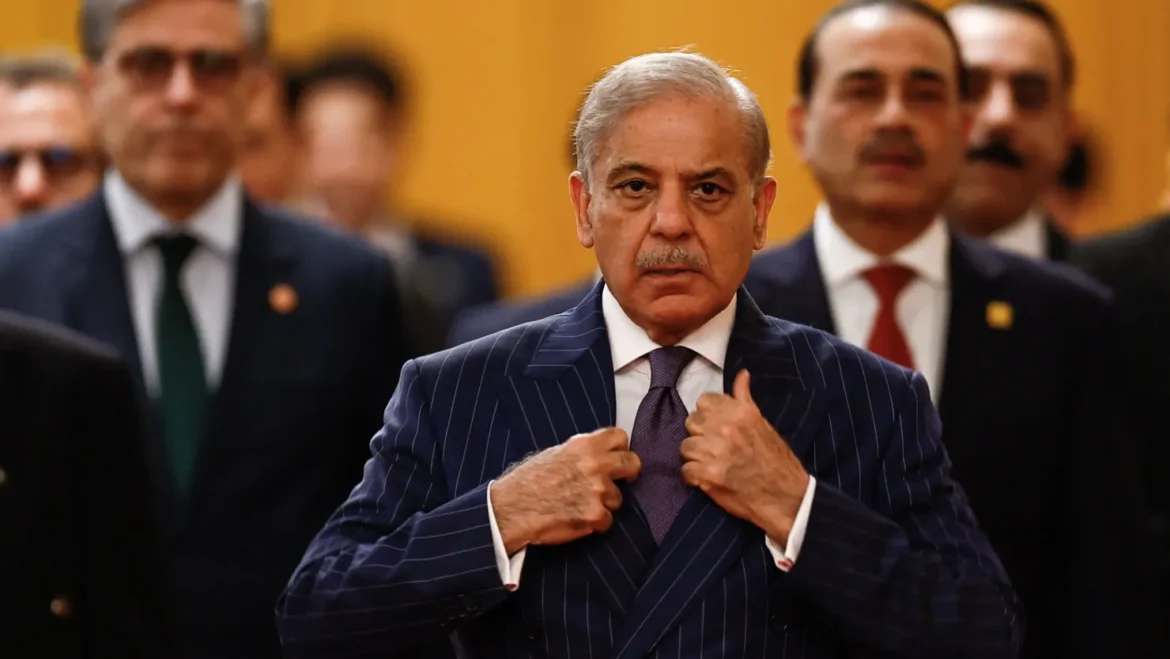
ISLAMABAD: Prime Minister Shehbaz Sharif will travel to Iran this week to attend the funeral of assassinated Supreme Leader Ayatollah Ali Khamenei before continuing to Turkey for talks on trade and regional security, the Pakistani foreign ministry said on Thursday.
Sharif’s two-nation itinerary, running from July 3 to July 5, underscores Islamabad’s expanding diplomatic role in the aftermath of the war between Iran, the United States and Israel, in which Khamenei was killed in strikes on February 28.
“The prime minister will convey condolences on behalf of the people and the government of Pakistan to the Iranian leadership and the bereaved families while reaffirming solidarity with the brotherly nation in their hour of profound grief,” foreign ministry spokesperson Tahir Andrabi told reporters at a weekly briefing in Islamabad.
Deputy Prime Minister and Foreign Minister Ishaq Dar will accompany Sharif to Tehran, along with cabinet members and senior officials, Andrabi said.
Khamenei, who led Iran for 37 years, was killed alongside several family members when the United States and Israel struck a gathering of Iranian leaders on the opening day of the war. His funeral, delayed for more than four months by the conflict and the security concerns it left behind, is due to unfold in stages across Tehran, Qom and Mashhad in Iran and Najaf and Karbala in Iraq, with burial in Mashhad on July 9. Officials from dozens of countries are expected to attend a Tehran ceremony for foreign dignitaries on Friday.
From Tehran, Sharif will travel to Istanbul at the invitation of Turkish President Recep Tayyip Erdogan, Andrabi said, for discussions covering “the entire gamut of bilateral relations with a special focus on giving impetus to bilateral trade and investment cooperation between the two brotherly countries.”
“The leadership meeting will also reflect on issues concerning regional peace and security,” he said.
Sharif is also due to address a business conference in Istanbul aimed at promoting Pakistani investment opportunities in special economic zones, energy, trade, information technology and privatisation, according to Andrabi, who said the event would draw Turkish business leaders and investors alongside senior officials from both governments.
The visits, Andrabi said, reflect Pakistan’s “deep-rooted, historic, cultural and fraternal ties” with Iran and Turkey.
PAKISTAN’S MEDIATION ROLE
Sharif’s trip to Tehran comes as Pakistan continues to position itself as an intermediary between Iran and the United States, working alongside Qatar to sustain a fragile framework for ending their conflict.
Pakistan hosted direct talks between American and Iranian officials in Islamabad in April, the first high-level contact between the two sides after weeks of fighting. Those talks did not yield a final settlement, but Islamabad continued shuttle diplomacy with Doha in the weeks that followed, narrowing differences over the Strait of Hormuz, sanctions relief, frozen Iranian assets and Iran’s nuclear programme.
That effort produced the Islamabad Memorandum of Understanding, signed electronically by Washington and Tehran on June 18, with Sharif signing as mediator. The 14-point accord established a 60-day ceasefire, a framework to reopen the Strait of Hormuz to commercial shipping, the lifting of a U.S. naval blockade and a commitment to further negotiations on a broader settlement.
The memorandum was later endorsed as the basis for a first High-Level Committee meeting in Burgenstock, Switzerland, where the United States and Iran, with Pakistan and Qatar as mediators, agreed on a roadmap toward a final agreement within 60 days and launched technical talks on nuclear issues, sanctions and monitoring. The parties also agreed to set up a communication channel to prevent incidents in the Strait of Hormuz and a “de-confliction cell” for Lebanon, facilitated by the mediators.
Andrabi said Islamabad had “stepped up its diplomatic engagement with key regional and international stakeholders as well as the principal interlocutors to facilitate earnest follow-up and implementation” of the memorandum, and that Dar had held a series of phone calls with counterparts in recent days as part of that effort.
He said Pakistani and Qatari officials met the U.S.-Iran negotiating team in Doha this week for talks that ran into the following morning, and that “positive progress” had been made on aspects of the memorandum. Pakistan, he said, would “continue to play a facilitative and mediatory role in the negotiation process along with our Qatari partners.”
INDUS WATERS DISPUTE WITH INDIA
Andrabi used the briefing to renew Pakistan’s objections to India’s decision to hold the Indus Waters Treaty in abeyance, a move New Delhi has linked to allegations of Pakistani-backed terrorism.
“Let this be very clear: the real issue is not terrorism,” Andrabi said. “The real issue is the growing disposition within the Indian leadership to treat a shared international river system as a strategic asset that can be controlled, withheld or diverted at will.”
He described the approach as “fundamentally incompatible” with international law and the treaty itself, and said water was “not a tool of coercion or political pressure.” Any move to withhold Pakistan’s share of the Indus waters, he said, would breach India’s international legal obligations and undermine confidence in its treaty commitments.
Andrabi pointed to a seminar held in Islamabad on Tuesday, titled “International Seminar on Indus Waters Treaty: An Instrument of Peace and Regional Stability,” where Dar and a number of international scholars called for the dispute to be resolved through legal and diplomatic channels rather than unilateral action. Participants warned that depriving Pakistan of shared water resources would carry serious consequences for regional stability, he said.
Dar, addressing the same seminar, said the six-decade-old treaty could not be suspended or terminated unilaterally and described India’s abeyance as “illegal, unilateral and without any basis,” according to Andrabi.
Asked whether the seminar could prevent Pakistan from being “converted into barren land,” Andrabi said: “No country can do that. Not India, not any other country has the power to do that.”
OTHER ISSUES RAISED AT BRIEFING
Andrabi was also asked about a recent open letter from civil society figures in Pakistan and India, including former Pakistani ambassador Ashraf Jehangir Qazi and politician Farhatullah Babar, alongside Indian signatories Farooq Abdullah, Mirwaiz Umar Farooq and Mehbooba Mufti, calling for renewed dialogue between the two countries. He said private individuals were free to write as they wished but that the government neither endorsed nor rejected the letter and had no specific comment on it.
On a discrepancy in prisoner lists exchanged between Islamabad and New Delhi this week, Andrabi said Pakistan’s list of 753 Pakistani nationals held in India was “meticulously compiled” and considered authentic, drawing on newspaper reports, family notifications and official channels. India’s list, by contrast, named 439 people described as “Pakistani or believed to be Pakistani.”
Andrabi also addressed Indian criticism over work carried out on a gurdwara in Farooqabad, Punjab, saying the building had not been used for worship in years and had fallen into a dilapidated state that posed a safety risk, particularly after the collapse of a tuition centre roof in Lahore raised local concern about ageing structures. He said tenants had begun unauthorised work on two of the building’s seven sections on June 24 without permission from the Evacuee Trust Property Board, prompting authorities to halt the work the same day, cancel the tenancy and order the tenants to vacate.
“We would ensure that the building stays and some renovation work is also possible,” Andrabi said, adding that there was no longer a Sikh community in the area to use the gurdwara for religious purposes.
Copyright © 2021 Independent Pakistan | All rights reserved