By Staff Reporter
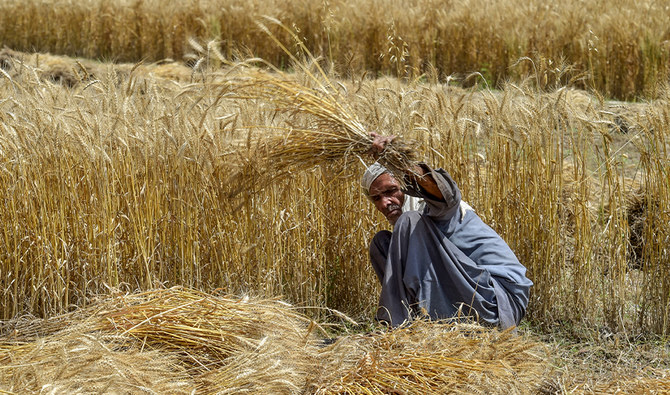
ISLAMABAD: The government approved the supply of 175,000 tonnes of fresh, wholly domestic wheat to the Pakistan Army for the 2026-27 crop year, ending a four-year arrangement under which troops were fed flour milled partly from imported grain that soldiers had repeatedly complained about.
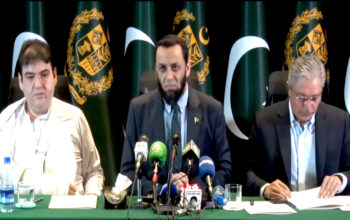
The decision, taken at a meeting of the Economic Coordination Committee (ECC) of the cabinet on Thursday, followed a request from the Ministry of Defence that cited wheat flour’s status as the army’s main staple food and its bearing on the morale of soldiers serving in terrain ranging from glaciers to deserts, according to an official statement.
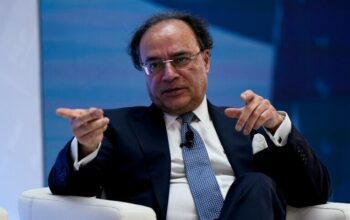
The ECC, chaired by Finance Minister Muhammad Aurangzeb, also approved a definition of “forced labour” for Pakistan’s import rules, bringing the country’s trade regime into closer alignment with international labour standards, and cleared a severance package worth 4.188 billion rupees ($15.1 million) for employees of the state grain agency being wound down.
For the past four years, the Pakistan Agricultural Storage and Services Corporation (Passco) supplied the army’s 175,000-tonne annual requirement on a 50:50 split of imported and local wheat, at government-set rates, under an earlier ECC ruling. Soldiers found fault with the taste, texture and appearance of chapatis made from the imported grain, generating persistent complaints through military channels.
The ECC revisited the ratio in November 2024 and again settled on a 50:50 split. In response, the army began procuring indigenous wheat directly through private firms to secure the quality its troops preferred, a workaround that the military’s finance wing estimated would save an additional 2.8 billion rupees in costs tied to imported grain. Thursday’s decision goes further, shifting the army’s entire annual allocation to fresh local produce and formally closing out the imported-wheat arrangement.
FORCED LABOUR DEFINITION TIED TO TRADE COMPLIANCE
The committee approved a proposal from the Ministry of Commerce to amend the Import Policy Order 2022 by inserting a definition of forced labour drawn from the International Labour Organisation’s Forced Labour Convention of 1930, known as Convention No. 29. Officials said the change would tighten the legal framework governing imports, reinforce Pakistan’s international labour commitments and strengthen its broader trade governance.
Under the amendment, forced or compulsory labour is defined as any work or service exacted from a person under threat of penalty, and for which that person has not offered themselves voluntarily. The definition carries specific carve-outs: it does not extend to compulsory military service, comparable forms of national service, or work required for normal civic obligations as recognised by a court of law.
The move comes as Pakistan defends its trade practices before U.S. authorities. Washington’s trade representative opened a Section 301 investigation this year into the practices of dozens of economies, Pakistan among them, following the withdrawal of earlier reciprocal tariffs, and Islamabad has been working to show its import regime screens out goods made with forced labour as part of that process.
PASSCO WIND-DOWN CONTINUES
The ECC approved the 4.188-billion-rupee severance package for Passco staff, structured on the same terms as compensation previously extended to employees of the Utility Stores Corporation, to cover terminal benefits as the corporation’s orderly closure proceeds.
The committee also cleared the auction of 8,197.989 tonnes of flood-damaged Passco wheat through open, competitive bidding, subject to third-party validation, a step officials said was intended to limit financial losses, ensure transparent disposal of the damaged stock and support the corporation’s continuing restructuring.
Separately, the ECC took up a summary from the Ministry of Federal Education and Professional Training on a financial sustainability and governance plan for Quaid-i-Azam University in Islamabad.
Copyright © 2021 Independent Pakistan | All rights reserved