By Staff Reporter
ISLAMABAD: The United States on Thursday reaffirmed its support for Pakistan’s right to defend itself against terrorist attacks, as a UN vote this week exposed rare discord over the world body’s flagship counterterrorism strategy, with Washington breaking two decades of consensus to vote against the text.
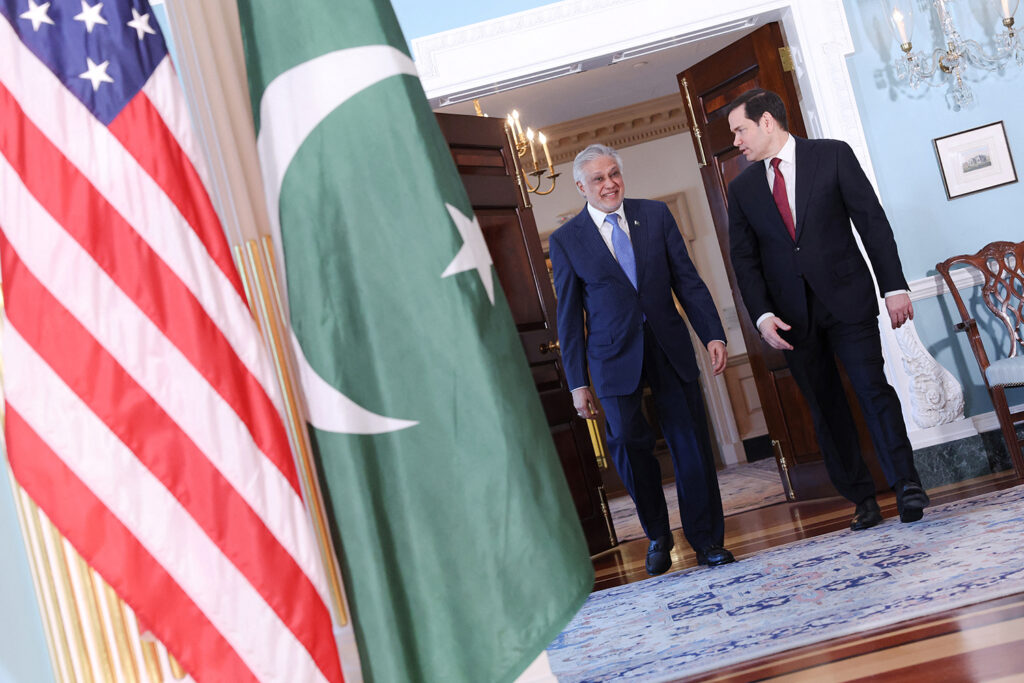
“The Pakistani people have suffered greatly at the hands of terrorists,” the State Department said in a statement, adding that Washington “supports Pakistan’s right to defend itself against terrorist attacks” amid an intermittent conflict between Pakistan and neighbouring Afghanistan.
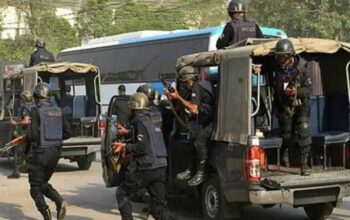
The statement followed a wave of cross-border strikes between the two countries after gunmen stormed the headquarters of the paramilitary Rangers force in Karachi’s Gulistan-i-Jauhar neighbourhood on June 27, killing three soldiers. Jamaat-ul-Ahrar, a faction of the Pakistani Taliban, claimed responsibility. Security forces killed three of the attackers and captured a fourth, whom the military identified as an Afghan national.
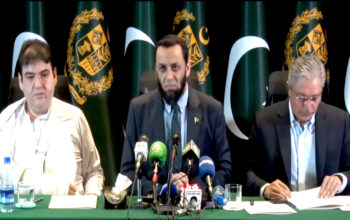
Pakistan responded two days later with a ground operation and air strikes it said targeted militant hideouts in Afghanistan’s Paktia, Paktika and Kunar provinces, killing 29 fighters, according to Information Minister Attaullah Tarar. Afghanistan’s Taliban administration said the strikes killed 36 civilians and wounded more than 160.
Afghanistan’s Taliban later said they had launched retaliatory strikes into Pakistani territory. Pakistan said its forces intercepted and shot down four drones over the southern province of Balochistan.
The exchange was the latest in a series of clashes between the neighbours since February, when the US Under Secretary of State for Political Affairs, Allison Hooker, offered similar backing for Islamabad, saying Washington was monitoring the situation and supported Pakistan’s right to defend itself against Taliban attacks.
Pakistan is nuclear-armed and outmatches Afghanistan militarily, but the Taliban, hardened by decades of guerrilla warfare against US-led forces before retaking power in 2021, have continued to strike back mostly through militants groups like Pakistani Taliban. Islamabad accuses Kabul of sheltering militants who plan attacks on Pakistani soil, an accusation the Taliban reject; they say militancy is Pakistan’s internal problem and accuse Islamabad of deflecting blame for its own security failures.
Washington regards the Afghan Taliban as a terrorist organisation and has cultivated closer ties with Islamabad, a major non-NATO ally, since President Donald Trump returned to the White House. Pakistan has also served as a mediator in efforts to end the war between the United States, Israel and Iran.
Consensus breaks at the UN
The State Department’s statement came two days after the General Assembly adopted the ninth review of the UN Global Counter-Terrorism Strategy by a recorded vote of 140 in favour to three against, with one abstention, breaking a run of consensus adoptions dating to the strategy’s creation in 2006.
The United States, Israel and Argentina voted against the resolution, formally titled “The United Nations Global Counter-Terrorism Strategy: ninth review.” Japan abstained, but its delegate said afterward that the vote had been cast in error and that Japan had intended to support the text.
It was Washington, breaking with the tradition of adopting the strategy by consensus, that forced the recorded vote. U.S. delegates called the draft “bloated, outdated, and lacking focus,” saying its more than 170 paragraphs diluted core counterterrorism priorities with excessive, non-operational language, and that it “ignores numerous U.S. redlines and policy concerns.” Israel’s delegate described the text as “outdated, long and repetitive,” saying it failed to embrace institutional modernisation. Argentina said it voted against the resolution to underscore the importance of reviewing the strategy, while noting its longstanding support for the framework.
General Assembly President Annalena Baerbock told delegates that the international response to terrorism must confront “terrorism itself and the conditions that allow it to take root,” calling the strategy an important framework for cooperation even as the threat landscape evolves. The strategy, adopted without a vote in 2006, is reviewed every three years; this year’s review marked its 20th anniversary.
Several Muslim-majority states voiced frustration that the text fell short of their expectations. Pakistan, Egypt and Iran said proposals from Islamic countries had gone unaddressed. Turkey said the resolution should have more forcefully condemned the targeting of Muslims, including the desecration of mosques and burning of the Quran. Saudi Arabia’s delegate, speaking on behalf of the 57-member Organisation of Islamic Cooperation, said the bloc had pressed unsuccessfully for language condemning acts by “racist and extremist right-wing elements” that incite violence against Muslims.
Separately, India’s ambassador, P. Harish, used the debate to renew New Delhi’s three-decade push for a Comprehensive Convention on International Terrorism, a broader treaty that has stalled largely over disagreement on how to define terrorism. Harish said the absence of a universally agreed legal framework had hindered global counterterrorism efforts and said there could be no distinction between “good or bad terrorists,” a veiled reference to countries, including Pakistan, that have resisted the convention over how it would treat groups engaged in self-determination movements.
Pakistan cites mounting losses
Speaking at the same plenary session, Pakistan’s Permanent Representative to the UN, Ambassador Asim Iftikhar Ahmad, said terrorism had become “increasingly interconnected yet decentralised” and now transcended national borders. He described the strategy as a “living document” that must keep pace with emerging threats.
Ahmad said Pakistan had remained at the forefront of global counterterrorism efforts, including operations against al Qaeda, while absorbing heavy losses of its own; he said more than 1,200 Pakistanis had been killed in terrorist attacks over the past year. He said he was disappointed that the ninth review process had failed to close longstanding gaps in the strategy or reflect concerns raised by the Organisation of Islamic Cooperation, whose membership includes some of the countries most affected by terrorism.
A lasting end to terrorism, he said, would require a comprehensive multilateral approach addressing both physical and online threats, unresolved conflicts, respect for human rights and the rule of law, and recognition of the right to self-determination under international law. He rejected any equivalence between what he called the legitimate struggle for self-determination and terrorism, and called for firmer condemnation of state actions against populations living under foreign occupation.
Ahmad also urged coordinated global action against xenophobia and racism, including stronger responses to far-right, neo-fascist and supremacist groups that target minority communities and places of worship. He called for the UN’s counterterrorism architecture and sanctions regime to be made more transparent and insulated from political influence, for tighter regulation of social media platforms to curb online radicalisation and extremist propaganda, and for stronger oversight of digital financial systems, virtual assets and cryptocurrencies to prevent their exploitation by terrorist networks. Bodies such as the Financial Action Task Force, he said, needed to remain impartial and free from political misuse by any state.
Ahmad said that despite three years of negotiations and flexibility shown by Pakistan and the wider Organisation of Islamic Cooperation, the review process had produced no meaningful improvements to the strategy. He called the lack of agreement a “wake-up call” that should spur renewed international cooperation against terrorism.
Copyright © 2021 Independent Pakistan | All rights reserved