By Staff reporter
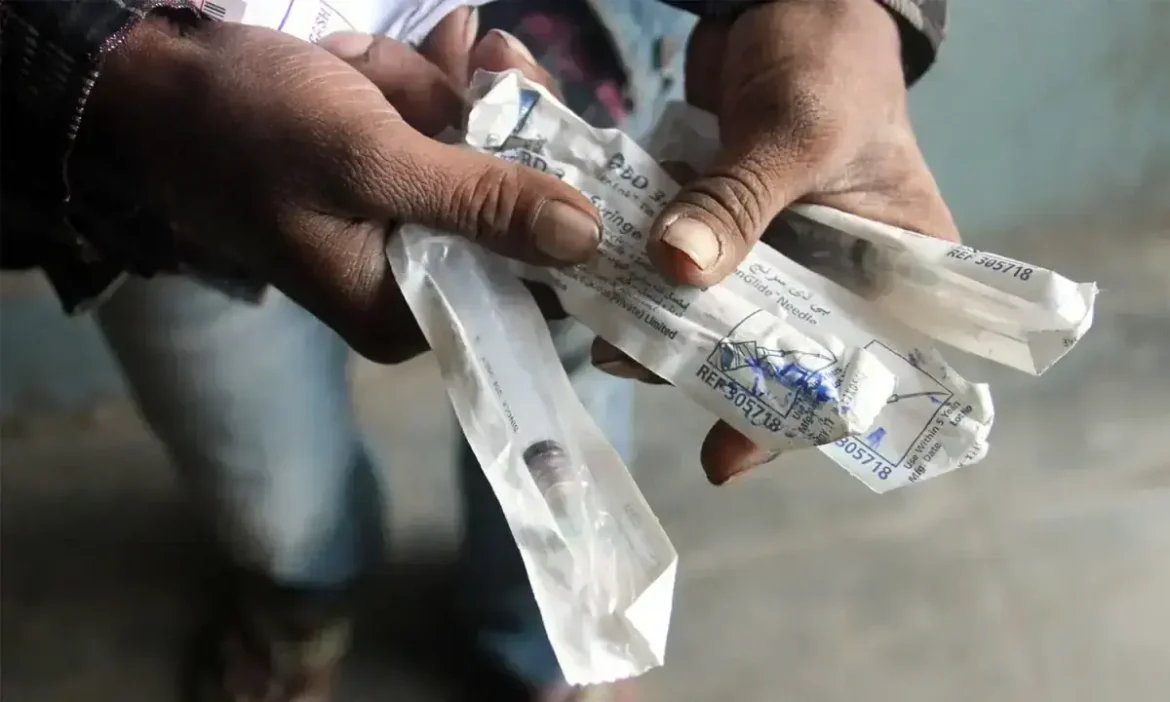
ISLAMABAD: Prime Minister Shehbaz Sharif on Friday ordered a nationwide ban on the manufacture and use of substandard syringes, acting a day after parents of children infected with HIV at a Karachi hospital took their case to court seeking criminal charges against those responsible.
Sharif directed that legal action be taken against individuals and hospitals found using non-compliant syringes or guilty of criminal negligence in preventing their use, according to a statement from the prime minister’s office issued after he chaired a review meeting on efforts to curb HIV and Hepatitis C.
The meeting was attended by Law Minister Azam Nazeer Tarar, Minister of State for Health Mukhtar Ahmad Bharath, Attorney General Mansoor Awan, a representative of the Global Fund, and senior officials from the health ministry and the Drug Regulatory Authority of Pakistan, the statement said.
Pakistan has recorded a string of HIV outbreaks tied to healthcare facilities in recent years, most involving young children and blamed on the reuse of contaminated syringes, a practice health officials describe as one of the country’s most persistent drivers of transmission.
The latest has centred on Kulsum Bai Valika Hospital, a public facility in Karachi’s Sindh Industrial Trading Estate that operates under the Sindh Employees Social Security Institution. A petition filed this week in the Sindh High Court accused the provincial government of gross negligence, alleging that reused disposable syringes at the hospital infected more than 200 children and killed at least nine.
A two-judge bench heard the petition on Thursday and ordered the provincial health secretary and police chief to submit a detailed report within two weeks, adjourning the case to July 20. Government lawyers asked for the extra time to prepare their response.
The petitioner, Advocate Tariq Mansoor, told the court that eight months had passed since the first child deaths were reported without any criminal case being registered, since only the provincial health secretary is empowered to authorise such filings under current law. He said preliminary details of the affected children had already been placed on the court record, with the final toll likely to run higher than 200.
A separate letter to Sindh’s chief secretary, dated March 31, put the initial number of infected children at 84 between November 2025 and February 2026, before the figure climbed through the following months.
Sharif ordered the formation of a committee of health experts to draw up recommendations for controlling infectious diseases, instructing it to consult provincial governments before finalising proposals, and told the law ministry to work with relevant institutions on amendments to the legal and regulatory framework.
“A comprehensive national strategy and its effective implementation are the only solution to this issue,” Sharif told the meeting, according to the statement.
He also directed the drug regulatory authority to consult the medical devices industry on measures to permanently prevent the spread of infectious disease through syringe use, and called for healthcare workers to be trained to international standards. Sharif said support from international partners remained important to the government’s efforts, without elaborating.
Officials briefed the meeting on the work of a special task force Sharif set up earlier this year after a BBC investigation found children were still being infected with HIV at a hospital in Punjab’s Taunsa months after authorities had promised to address the problem.
That investigation, broadcast in April, reported that at least 331 children tested positive for HIV between November 2024 and October 2025 at Taunsa’s Tehsil Headquarters Hospital, with new infections continuing after officials said they had intervened. The broadcaster said secret filming showed staff reusing syringe bodies and drawing medication from shared multi-dose vials.
Karachi has faced its own recurring cases. An outbreak in the city’s SITE Town was first reported in November, when more than 15 children in the neighbourhood were diagnosed with HIV, most of them traced back to Valika Hospital. Three Karachi hospitals separately recorded sharp increases in paediatric HIV admissions over a nine-month period, according to figures reported in April.
The country’s largest recorded outbreak occurred in 2019 in Ratodero, a town in Sindh province, where hundreds of children were infected, prompting the government to request help from the World Health Organization. A WHO-led team was dispatched to identify the source of the outbreak, expand HIV testing and paediatric treatment, and secure supplies of rapid diagnostic tests and antiretroviral medicines. Investigators later concluded that repeated use of injections was the main cause.
Health Minister Mustafa Kamal said in May that Pakistan had about 84,000 registered HIV cases, of which roughly 61,000 patients were in treatment while nearly 23,000 remained untraceable, warning that people who went untreated could further spread the virus.
Copyright © 2021 Independent Pakistan | All rights reserved