By Staff Reporter
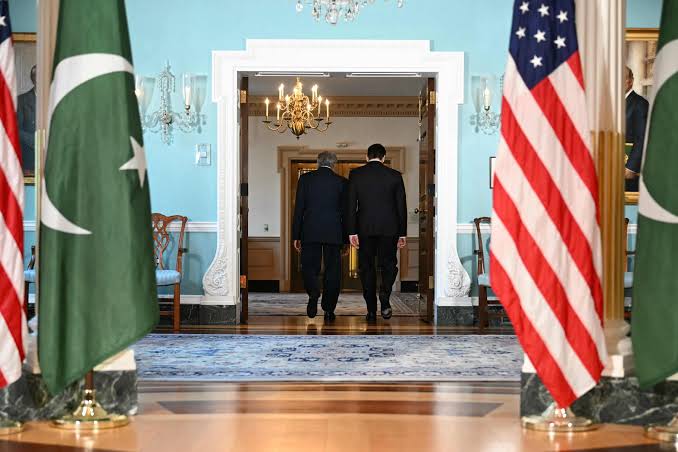
ISLAMABAD: Pakistani and US officials are meeting in Washington for a second day of trade talks, with Islamabad pushing to secure relief from American tariffs and pin down the terms of a broader bilateral trade agreement before a key exemption lapses later this month.
The negotiations, which began Wednesday and continue Thursday and Friday, mark the latest round in a year-long tariff dispute that has forced Pakistan to repeatedly send delegations to Washington to defend access to its largest single-country export market. Pakistan’s team is led by Commerce Secretary Jawad Paal and includes Foreign Office spokesperson Tahir Andrabi, according to people familiar with the discussions.
At stake is not just the tariff rate Pakistani exporters pay to sell into the US, but the shape of a longer-term trade framework the two governments are trying to finalise this week.
The dispute traces back to April 2025, when President Donald Trump invoked the International Emergency Economic Powers Act to impose a 29% tariff on Pakistani goods as part of a sweeping reset of US trade relationships. Pakistani officials who travelled to Washington that July persuaded the Office of the US Trade Representative to bring the rate down to 19%, a level Islamabad’s finance ministry at the time called a “balanced and forward-looking” outcome that kept the country competitive against regional textile rivals.
That arrangement has since been complicated by a US Supreme Court ruling earlier this year that struck down the IEEPA tariffs as exceeding presidential authority. The Trump administration responded by invoking Section 122 of the Trade Act to impose a temporary 10% tariff on goods from most trading partners — a stopgap measure that expires July 24 under the statute’s 150-day limit, adding urgency to this week’s talks.
A separate and potentially more consequential threat has emerged from a set of Section 301 investigations the USTR opened in March into roughly 60 economies over alleged failures to prohibit and enforce bans on goods made with forced labour. The agency’s findings, released last month, put Pakistan among a smaller group of countries — along with Canada, Ecuador, the European Union, Indonesia and Mexico — facing a proposed 10% additional duty because they maintain a forced-labour import ban that Washington judges is not effectively enforced. The remaining economies under investigation, including India and China, face a steeper proposed rate of 12.5%.
Islamabad has filed written submissions defending its record, including one Wednesday ahead of this week’s talks, arguing that it has already moved to tighten its Import Policy Order to bar forced-labour imports. The USTR is still working through public hearings on the proposal, and the tariffs have not been finalized.
Trump has cast Pakistan as a potential partner in developing its energy resources. In a post on his Truth Social platform, the president pointed to Pakistan’s oil and gas reserves and said US teams would be dispatched to explore opportunities there, floating the possibility that Pakistan could eventually export oil and gas to India — countries that fought a brief military conflict last year before a US-brokered ceasefire.
The framing echoes the pitch that helped Pakistan secure its 19% rate last summer, when officials in Islamabad emphasised potential American investment in the country’s oil, gas and mining sectors, including the Reko Diq copper and gold project, as part of the broader economic case for a lower tariff.
The US is Pakistan’s largest single-country destination for exports, and Pakistan is the second-largest buyer of American cotton, a trade relationship that underpins Islamabad’s leverage in pressing its case even as Washington negotiates separately with dozens of other governments before its own tariff deadlines.
Copyright © 2021 Independent Pakistan | All rights reserved