By Staff Reporter
KARACHI: Pakistan moved on Thursday to secure an emergency cargo of liquefied natural gas after attacks on commercial tankers in the Strait of Hormuz this week halted a Qatari shipment bound for Karachi mid-voyage, deepening a supply crunch that has weighed on the country since Iranian strikes crippled Qatar’s main export terminal in March.
State-owned Pakistan LNG Ltd issued a tender to buy a single cargo for delivery on July 15-16 at Port Qasim in Karachi, according to a notice on the company’s website. Bids are due Friday. The government approved the emergency purchase on Wednesday after the scheduled Qatari shipment was cancelled, according to traders with knowledge of the matter, who spoke on condition of anonymity because the information has not been made public. The vessel carrying that cargo turned back earlier this week without completing its transit of the strait.
It is Pakistan’s fourth spot-market purchase this year and comes just two days after it agreed to buy a separate cargo from TotalEnergies SE for July 10-11 delivery at $17.37 per million British thermal units, roughly double what Islamabad pays under its long-term contract with QatarEnergy.
The new tender follows the most serious breach yet of a ceasefire the United States and Iran struck in April after a war that began in late February. Shipping through Hormuz, the narrow waterway between Iran and Oman through which about a fifth of the world’s seaborne oil and LNG passes, had picked up considerably since the truce but remained well below pre-war levels even before this week’s violence.
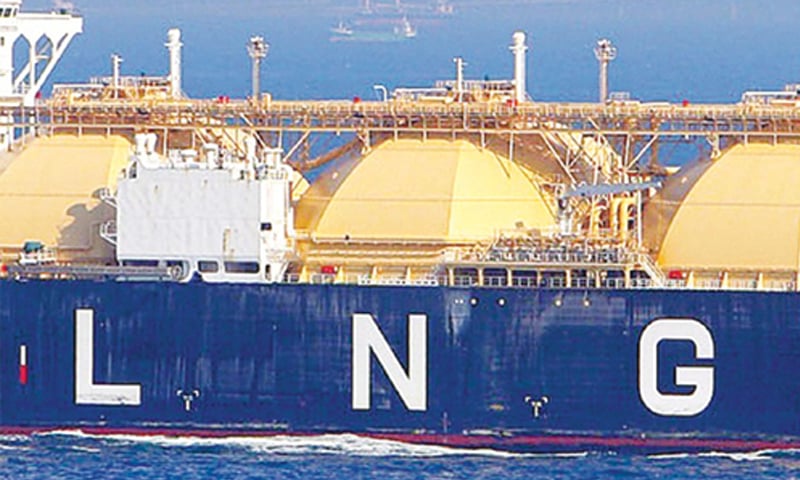
Iran’s Islamic Revolutionary Guard Corps attacked three commercial tankers transiting the strait on Tuesday. One of them, the Qatari-flagged LNG carrier Al Rekayyat, caught fire and was evacuated after being struck by a projectile off the coast of Oman, according to Britain’s UK Maritime Trade Operations centre. Qatar’s foreign ministry blamed Iran for the attack and called on Tehran to stop endangering global energy supplies.
The United States responded with strikes on Iranian military targets near the strait on Tuesday and again on Wednesday, when US Central Command said its forces had hit coastal radar stations, anti-ship missile positions and air defence systems to degrade Iran’s ability to threaten freedom of navigation in the waterway. Iranian state media reported explosions at Bandar Abbas, Sirik, Chabahar and Lavan Island. Kuwait’s armed forces said they intercepted hostile missile and drone attacks, and air raid sirens sounded in neighbouring Bahrain.
Pakistan, which draws nearly all of its LNG from a long-term, government-to-government contract with Qatar, has been exposed to the disruption since Iranian strikes damaged Qatar’s Ras Laffan export terminal on March 18-19, prompting QatarEnergy to declare force majeure on contracts with several countries, including Pakistan. Qatar’s energy minister, Saad al-Kaabi, said at the time that the attacks knocked out about 17% of the country’s LNG export capacity and that full repairs could take three to five years.
Pakistan’s petroleum minister, Ali Pervaiz Malik, has said QatarEnergy has since extended that force majeure by a further month, to the end of August, and that Islamabad expects term deliveries to resume in September if the restriction is lifted as anticipated. Pakistan received five term cargoes from Qatar between May and June under arrangements that were negotiated despite the force majeure, priced at a rate linked to 13.37% of the Brent crude benchmark, before those pre-loaded shipments were exhausted.
In the absence of further contracted cargoes, Pakistan has turned repeatedly to the more expensive spot market, paying between $16 and $17 per million British thermal units for spot cargoes compared with roughly $10 to $12 under its Qatari contract. Officials said Pakistan typically needs four to five LNG cargoes a month between April and August to supply its power sector, with five required in July alone, and that Islamabad would buy at least four more spot shipments if no further Qatari cargoes materialise.
Gas-fired power accounts for about 17% of Pakistan’s electricity generation, with roughly 6 percentage points of that coming from imported LNG, the official said. The country’s own gas production has been declining for years, deepening its reliance on imports even as those imports become costlier and less reliable.
The reliance on costlier spot cargoes has already fed through into domestic energy prices. Pakistan’s energy regulator, Ogra, has raised the transmission-stage price of regasified LNG for Sui Northern Gas Pipelines, which supplies Punjab and Khyber Pakhtunkhwa, by nearly 15% to $17.94 per million British thermal units, with the distribution-stage price rising by a similar margin; Sui Southern Gas Company, which serves Sindh and Balochistan, has seen an even sharper increase. The cost of RLNG-based power generation more than doubled between April and May as a result, according to regulatory data.
Brent crude futures, which are also sensitive to shipping risk in the strait, rose nearly 5% on Wednesday to $77.30 a barrel after the tanker attacks, still well below the peaks above $100 a barrel reached earlier in the war.
Copyright © 2021 Independent Pakistan | All rights reserved