By Staff Reporter
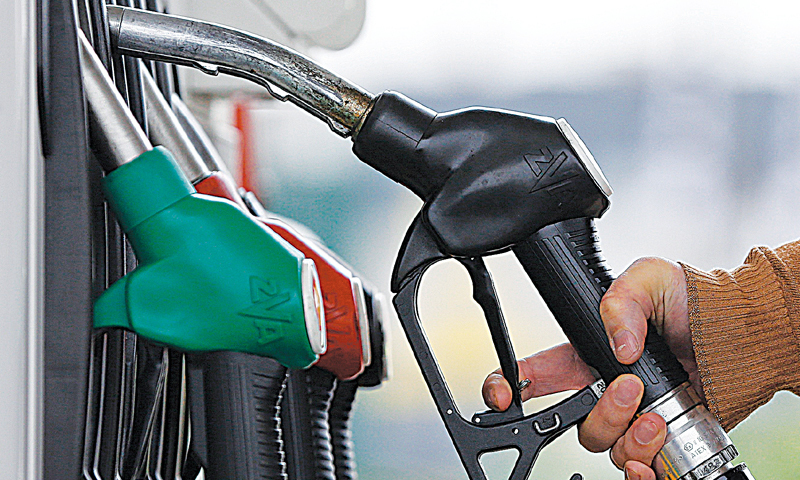
ISLAMABAD: Pakistan raised gasoline and diesel prices for a second straight day on Thursday, deepening the burden on consumers already grappling with some of the highest fuel costs in the country’s history as the fallout from renewed fighting between Iran and the US sends crude prices surging.
The Petroleum Division said petrol will rise 4.40 rupees to 331.52 rupees a litre, while high-speed diesel will climb 3.62 rupees to 378.66 rupees, effective Friday. Taxes and duties account for 110 rupees of the petrol price and 96 rupees of the diesel price, according to the notification.
The increase comes a day after Islamabad raised petrol prices by 6.39 rupees and diesel by 7.83 rupees, as the government abandons the weekly price-review system it had relied on since early March in favor of daily adjustments tied directly to global crude swings.
Petroleum Minister Ali Pervaiz Malik said the shift reflects instructions from the prime minister and the federal cabinet, which handed the Oil and Gas Regulatory Authority the authority to set prices each day based on a seven-day rolling average of international benchmarks — a mechanism the regulator will now publish directly.
The move has drawn immediate pushback from fuel retailers. The All Pakistan Dealers Association rejected the daily pricing system and signaled it may organize protests in the coming days, arguing the frequent changes complicate operations for the thousands of stations that sell petrol and diesel nationwide.
Prices Have Nearly Doubled Since War Began
Thursday’s increase adds to a run-up that has unfolded in fits and starts since late February, when the US and Israel launched strikes on Iran, prompting Tehran to shut the Strait of Hormuz. Petrol has climbed from 266 rupees in the first week of March to Friday’s 331.52 rupees, while diesel has risen from 281 rupees to 378.66 rupees over the same stretch.
Both fuels touched their highs of the conflict on April 3, when petrol reached 458.41 rupees a litre and diesel hit 520.35 rupees. Prices then retreated as an initial ceasefire took hold and the government rolled out targeted subsidies for motorcyclists, small farmers and public transport operators that same month. Fighting later resumed, however, and Thursday’s Red Sea escalation marks the latest flare-up in a conflict that has now run for nearly five months.
Petrol is the fuel of choice for private cars, motorcycles and rickshaws, making price swings a direct hit to household budgets among the middle and lower-middle classes. Diesel carries broader economic weight, powering the trucking fleets, buses, power plants and generators that keep goods and electricity moving. Together, the two products dwarf Pakistan’s other refined fuels in volume, with combined monthly sales of roughly 700,000 to 800,000 tons, versus about 10,000 tons of kerosene demand.
Crude Surges Past $100 on Fresh Red Sea Attack
The increases in Islamabad tracked a sharp move in global oil markets, where Brent crude broke above $100 a barrel on Thursday for the first time since late May after Yemen’s Houthi movement said it struck two Saudi oil tankers in the Red Sea — opening a second front in a war that has already choked off traffic through the Strait of Hormuz.
Brent futures jumped $6.64, or 7%, to $100.71 a barrel as of 10:52 a.m. in New York, extending a rally that has pushed the benchmark up nearly 40% this month. The contract has traded in technically overbought territory for nine consecutive sessions, the longest such stretch since September 2023. West Texas Intermediate crude rose $5.18, or 6%, to $92.01 a barrel, its first close above $90 since June 11. Both benchmarks have now risen for five straight sessions.
“The attack has sent world crude oil prices higher and into a higher gear as the ramifications of yet another chokepoint for crude oil trade originating from the Middle East is constricting trade,” said Tim Snyder, chief economist at Matador Economics.
The renewed attacks underscore how the conflict continues to threaten energy flows well beyond the Persian Gulf itself, with the Red Sea emerging as a parallel danger zone for tankers seeking to route around the Strait of Hormuz. For import-dependent economies like Pakistan, which pays for crude in dollars and passes swings almost directly to consumers, the widening geography of the conflict points to further volatility at the pump in the weeks ahead.
Copyright © 2021 Independent Pakistan | All rights reserved