By Staff Reporter
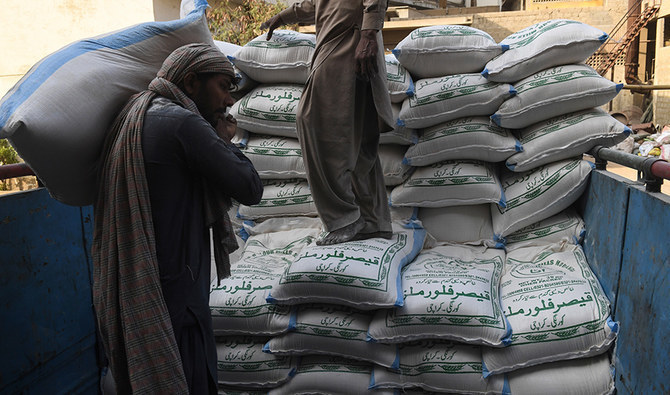
KARACHI: Pakistan will import one million tons of wheat and release existing government stockpiles to its provinces, as the South Asian nation grapples with a supply shortfall that has driven up flour prices and squeezed household budgets.
The decision followed a meeting between federal and provincial officials to review the country’s wheat stocks, pricing and supply situation.
“The government will immediately import one million tons of wheat to meet the provinces’ requirements,” Rana Tanveer Hussain, the minister for national food security and research, was quoted as saying in local media. The imports, he said, would help meet domestic needs and support price stability.
The government will also direct the Pakistan Agricultural Storage and Services Corporation, the state grain handler known as PASSCO, to release its existing wheat stocks to provinces according to their needs. Punjab has requested one million tons from federal reserves, while Sindh has sought at least 220,000 tons from stocks held in government warehouses in the province, according to officials who attended the meeting.
The move underscores mounting strain on Pakistan’s wheat supply chain less than three months into the 2026-27 marketing year. Average wheat prices climbed to 4,611 rupees per 40 kilograms in the first week of July, equivalent to roughly 115 rupees a kilogram, up from 4,516 rupees a week earlier. Prices varied sharply by province, ranging from 4,423 rupees in Punjab to 5,100 rupees in Khyber Pakhtunkhwa.
Flour prices climbed in tandem. The national average reached 1,288 rupees per 10 kilograms, up from 1,268 rupees, with Khyber Pakhtunkhwa and Balochistan recording the steepest costs at 1,356 rupees and 1,378 rupees, respectively.
Production Estimates Diverge
The scale of the shortfall remains disputed among government bodies, millers and farmer groups, complicating the policy response.
Pakistan’s Federal Committee on Agriculture had targeted wheat production of 29.68 million tons for the 2025-26 Rabi season. But the Space and Upper Atmosphere Research Commission, the country’s satellite agency, estimated output at just 27.48 million tons in May, citing smaller cultivated areas and lower yields than initially projected.
Separately, the government’s Economic Survey 2025-26 put wheat output at 29.61 million tons, a 4.3% increase from 28.40 million tons the previous year, with cultivated area expanding 4.4% to 9.48 million hectares. Provincial estimates presented to the Federal Committee on Agriculture in April showed a projected total of 29.31 million tons — about 1.24% below target — with Punjab contributing 22.04 million tons, Sindh 4.4 million tons, Khyber Pakhtunkhwa 1.41 million tons and Balochistan 1.45 million tons.
Official demand projections paint a tighter picture. With a population of 268.13 million and per-capita consumption estimated at 115 kilograms annually, total wheat demand for the 2026-27 marketing year is pegged at 34.33 million tons, comprising 30.83 million tons for human consumption, 1.5 million tons for feed and seed, and 2 million tons for strategic reserves. Against total availability of 31.78 million tons — domestic production plus a 2 million-ton carryover — officials estimate a shortfall of roughly 2.55 million tons.
The Progressive Flour Millers Group has offered a starker assessment, projecting a shortfall of 2.5 million tons in Punjab alone this season. Majid Abdullah, the group’s president, said the estimate is based on Punjab output of about 19.5 million tons and a marketable surplus of 30%, or 5.85 million tons, against a market size of 4.3 million tons that includes flour mills, aggregators, seed companies and prior consumption. That leaves 1.55 million tons available in the open market against a requirement of 4 million tons over the next eight months, he said.
Local media reported in April that a supply-demand gap was already emerging for the 2026-27 marketing year, projecting a shortfall of 1.2 million tons.
Farmers Blame Policy Shift
The wheat squeeze has drawn criticism from farmer groups, who trace the crisis to the removal of the government’s wheat support price two years ago, a change made under conditions tied to Pakistan’s International Monetary Fund program.
In a joint statement issued this week, Chaudhry Zulfiqar Ali Olakh, chairman of the Markazi Kisan League, and Muhammad Ashfaq Warraich, the group’s president, said provincial governments compounded the policy shift by failing to procure sufficient wheat from farmers this season. Punjab purchased only 480,000 tons against a three million-ton target, they said, while Sindh bought about 200,000 tons, leaving national reserves under pressure.
The farmer leaders said Pakistan spent more than $1 billion last year importing roughly 3.5 million tons of wheat, and still faces an estimated shortfall of the same magnitude. They warned that prices could climb to 6,000 rupees per maund — a traditional South Asian unit equal to about 37 kilograms — if the government fails to act, making flour and bread increasingly unaffordable for consumers. Without corrective measures, they said, further imports will likely be needed, adding pressure to foreign exchange reserves already under strain.
Pakistan is among the world’s largest wheat producers but imports the grain periodically to supplement domestic supply when production falls short of consumption or market conditions tighten. Annual consumption is estimated at around 31 million tons.
Copyright © 2021 Independent Pakistan | All rights reserved