By Staff Reporter
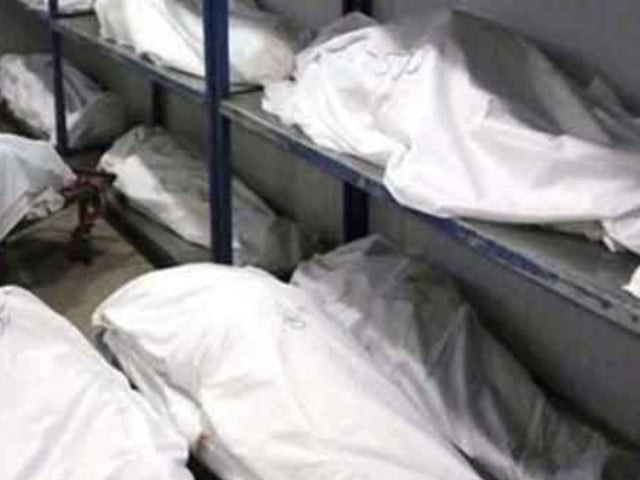
QUETTA: The bodies of six kidnapped labourers were recovered in south-western Pakistan on Thursday, four days after gunmen ambushed their vehicle and dragged them away in an attack that has renewed alarm over the deteriorating security situation in Balochistan province.
The men were found dumped in the Nasirabad area on the outskirts of Turbat, the main town in Kech district, bearing what officials described as torture marks and bullet wounds consistent with having been shot at close range.
They had been abducted on Monday when armed men intercepted their vehicle near Kalatak, on the Turbat-Mand road, according to Turbat police. One labourer, named as Javed Khan, a resident of Swabi in Khyber Pakhtunkhwa, was shot dead at the scene and his body left on the highway. The remaining six men were taken to an undisclosed location, where they were later killed.
A passer-by, identified as Abdul Razzaq of Solband, was also killed after being caught in the crossfire during the initial attack, police said.
Babar Yousafzai, media adviser to the Balochistan Home Department, confirmed that the six bodies recovered on Thursday were those of the abducted labourers. He said four of the victims were from Punjab and two from Khyber Pakhtunkhwa.
Turbat police named the dead as Arshad, son of Muhammad Rafiq, of Lodhran; Muhammad Taimur, son of Muhammad Rafiq, of Bahawalpur; Muhammad Wazir, son of Muhammad Ramzan, of Bahawalpur; and Muhammad Parvaiz, son of Muhammad Bashir, also of Bahawalpur. The two men from Khyber Pakhtunkhwa were identified as Amjad, of Buner, and Yahya, son of Nawroz Khan, of Swabi.
The labourers had been working on a development project in Kech district. Their bodies were taken to Teaching Hospital Turbat for post-mortem examinations. Police have since cordoned off the area where the bodies were found, begun collecting evidence and launched an operation to trace those responsible.
‘No leniency’ vowed for attackers
Interior minister Mohsin Naqvi condemned the killings, attributing them to a group the Pakistani state refers to as Fitna al-Hindustan — terminology used by officials to describe militant networks they allege are backed by India to carry out attacks on Pakistani territory. New Delhi has consistently denied sponsoring militant activity in Pakistan.
Naqvi offered his condolences to the victims’ families, saying the government stood with them, and accused the attackers of having “not only taken innocent lives by targeting labourers, but also attacked Balochistan’s development and the livelihoods of its people.”
He said militants were increasingly targeting “innocent and defenceless civilians” and that “no amount of condemnation is enough” for such acts. “The beasts who mercilessly killed six non-local labourers deserve no leniency,” he said, describing the killings as an assault on “Balochistan’s progress and employment for the public.”
A province under growing strain
The killings add to a mounting toll of violence in Balochistan, Pakistan’s largest and most sparsely populated province, which has for years contended with a separatist insurgency alongside sectarian and militant violence.
A monthly security assessment published in early June by the Pakistan Institute for Conflict and Security Studies found that the country’s overall security situation deteriorated sharply in May after two consecutive months of improvement, driven largely by escalating violence in Khyber Pakhtunkhwa and Balochistan. Balochistan was the worst-affected province, the report found, recording 71 terrorist attacks during the month compared with 34 in April — an increase of 109 per cent.
The report also pointed to a sharp rise in abductions. Of 54 kidnappings recorded nationwide in May, 52 took place in Balochistan, a pattern the researchers said reflected the growing reach and confidence of militant groups operating in the province.
The abduction of the seven labourers on Monday was not an isolated case. Four employees of a private construction company — a project manager, a surveyor and a technical lab assistant among them — were kidnapped the same day from Khuzdar district, where they had been working on a flood protection project in the Karkh area.
Days earlier, three excise officials were abducted at gunpoint after roughly 30 armed men surrounded a checkpost on the Dalbandin-Taftan Highway in Chagai district that had been set up for routine inspections, according to security sources. The attackers also made off with two official vehicles and a quantity of weapons, the sources said.
The violence has continued in the days since. On Tuesday, three people were killed — among them Deputy Superintendent of Police Murid Bugti — in separate attacks across Barkhan and Chagai districts, while a truck driver was injured and five trailers and two gas bowsers were set alight. The same night, gunmen blocked the N-40 highway at Padag in Chagai, opened fire near a roadside hotel and torched several vehicles.
On 23 July, District and Sessions Judge Abdul Hakeem Kakar and his security guard were shot dead when gunmen opened fire on their vehicle on the national highway in Mastung. Additional Sessions Judge Tariq Lashari and another passenger were seriously wounded in that attack.
And on 12 July, five labourers from Punjab were shot dead in Mashkail, in Washuk district, after armed men stormed the shops where they were working and opened indiscriminate fire, according to Balochistan government spokesperson Shahid Rind.
Copyright © 2021 Independent Pakistan | All rights reserved