By Staff Reporter
ISLAMABAD: Security forces in Balochistan province killed 15 militants over the weekend in a series of raids across eight districts, the interior ministry and state media said, as the country’s largest province by area continues to record its bloodiest period of violence in more than a decade.
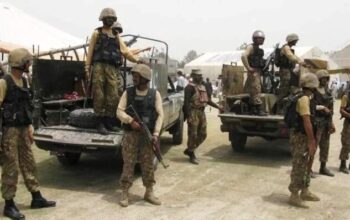
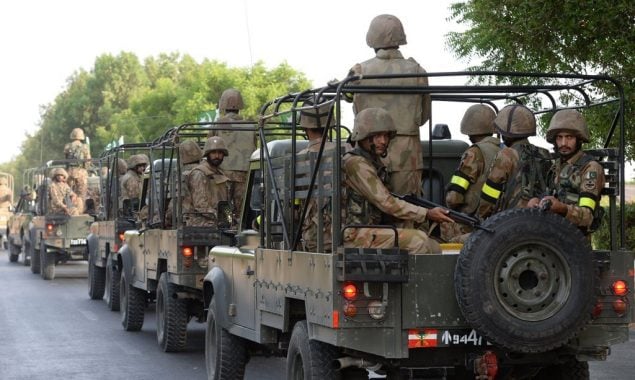
The operations, described by officials as intelligence-based and carried out under the banner “Operation Radd-ul-Fitna 3”, targeted what authorities called militant hideouts in Mastung, Bolan, Washuk, Awaran, Sibi, Khuzdar, Harnai and Nushki. Security sources said troops recovered a substantial quantity of weapons and ammunition during the raids, though no breakdown of what was seized has been made public.
Interior minister Mohsin Naqvi praised what he called the “professionalism” of the forces involved, saying they had thwarted the “nefarious designs” of two networks the government blames for the bulk of the violence in the province: the outlawed Balochistan Liberation Army, which the state now refers to in official statements as “Fitna al-Hindustan”, and the Pakistani Taliban, referred to as “Fitna al-Khawarij”. Islamabad has increasingly folded separatist and jihadist violence into a single official narrative that casts India as the hidden hand behind both movements — an allegation New Delhi has repeatedly and firmly denied, along with Kabul’s denial that it shelters militants plotting attacks inside Pakistan.
“The brave soldiers of security forces fighting against terrorism are the pride of the nation,” Naqvi said in a statement issued by his ministry, adding that the government remained committed to eliminating both networks from the province entirely.
One of the operations, in the Gresha area of Khuzdar district, reportedly turned into a sustained exchange of fire after troops moved on a location where they believed militants were gathered. Security officials said eight of those killed in that clash, including a senior commander, died during the firefight, and claimed the group had been preparing propaganda material to present the encounter as a victory for their side. None of these details have been independently verified.
The raids follow a smaller operation two days earlier in the Kambela and Asimabad areas of Mastung district, in which security forces said they killed three militants and detained twelve suspects during what was described as a search and clearance operation.
A province under mounting strain
The latest killings come against the backdrop of what independent analysts have called the deadliest month for security-related violence in Pakistan in more than ten years. According to the Pakistan Institute for Conflict and Security Studies, a security situation deteriorated sharply across the country in July, but nowhere more so than in Balochistan, where the overall death toll rose 241 per cent, from 109 in June to 372 in July. The toll among security personnel alone climbed from six to 62 — an increase of 933 per cent — while 238 alleged militants were reported killed, up from 75 the previous month. Civilian deaths rose by 93 per cent to 54, and 18 members of local peace committees were also killed.
Separate figures from the Centre for Research and Security Studies found that Balochistan and the neighbouring province of Khyber Pakhtunkhwa together accounted for roughly 96 per cent of all violence-related deaths recorded nationally in the second quarter of the year, with Khyber Pakhtunkhwa the worst affected of the two, recording 475 deaths against Balochistan’s 265.
Much of the current escalation traces back to an attack on 6 July on a police post at the Mangi Dam pumping station in Ziarat, in which armed assailants kidnapped and killed 27 police officers. The assault, along with a wave of coordinated strikes across the province in the days that followed, prompted the army, paramilitary Frontier Corps and provincial police to launch a joint offensive, Operation Shaban, aimed at both the Pakistani Taliban in the north of the province and the Balochistan Liberation Army further south.
Three days after the Ziarat attack, prime minister Shehbaz Sharif convened a meeting of the Provincial Apex Committee on the National Action Plan in Quetta, attended by the country’s most senior military officer, Field Marshal Asim Munir. Sharif told the gathering that the civilian and military leadership had reached what he called a “mutual and singular decision” to bring terrorism in the province to an end.
A long-running insurgency
Balochistan, which borders both Afghanistan and Iran, is Pakistan’s largest province by land area but its least populous, and has been the site of a low-level separatist insurgency for decades. In recent years, however, attacks have grown more frequent and more ambitious, with militants increasingly targeting security convoys, infrastructure and economic projects tied to Chinese-backed trade and connectivity schemes that run through the province.
Separatist groups have long accused Islamabad and the security establishment of shutting local communities out of the profits from Balochistan’s mineral wealth, even as the province remains one of the country’s poorest by most social indicators. The federal government rejects that charge, pointing to a series of infrastructure and livelihood schemes it says have been rolled out for residents.
None of the casualty figures released by the military’s media wing or the interior ministry in relation to Sunday’s operations can be independently verified, and reporting from the areas concerned remains heavily restricted.
Copyright © 2021 Independent Pakistan | All rights reserved