By Staff Reporter
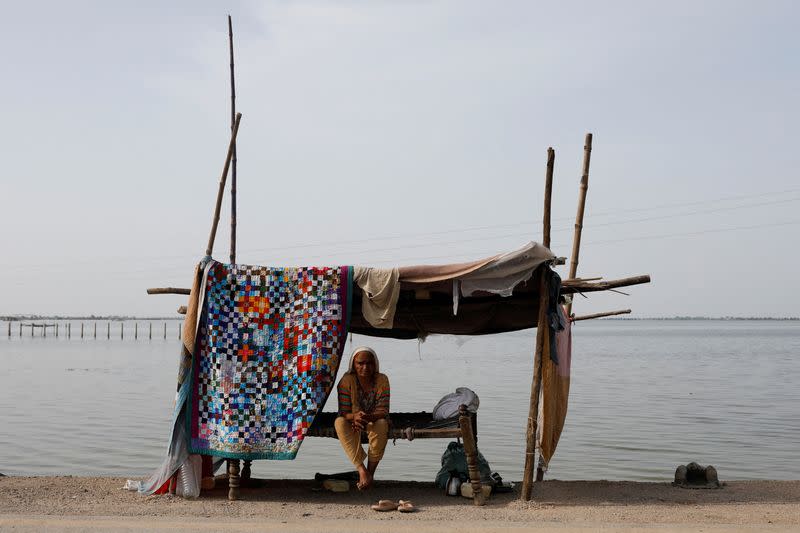
ISLAMABAD: The government has scaled back a World Bank-backed program to rebuild homes for families displaced by the 2022 floods, leaving more than 65,000 verified households in Balochistan province without the housing they were promised, after investigations into record tampering and duplicate payment claims stalled the project.
The Project Steering Committee overseeing the effort capped the housing component at roughly 69,000 units, down from a target that would have covered all 134,000 registered families, according to meeting minutes and officials familiar with the matter. The World Bank responded by withdrawing a proposed $180 million in additional financing that would have funded construction for the remaining households.
The committee, co-chaired by Planning Minister Ahsan Iqbal and Balochistan Chief Minister Sarfraz Bugti, voted unanimously at a June 22-23 meeting to redirect the unused housing funds toward roads and irrigation projects instead, and formally turned down the World Bank’s extended financing offer.
The reversal unwinds a commitment Prime Minister Shehbaz Sharif made publicly after the floods, when he pledged a resilient home for every family that lost one. It also comes despite more than 134,000 families having been surveyed, verified and registered for assistance under the program.
Investigation Into Inflated Figures
The housing initiative was part of the $400 million Integrated Flood Resilience & Adaptation Project, itself a piece of the broader reconstruction effort Pakistan launched after floods that killed more than 1,700 people and caused an estimated $30 billion in damage. The country secured more than $9 billion in pledges from international donors at a Geneva conference in January 2023, with the housing program designed around a community-led, owner-driven rebuilding model.
According to committee minutes, Iqbal raised concerns during the meeting about discrepancies in reported progress, noting that officials had told the prime minister 15,000 houses were complete while internal reports showed only 8,694 finished. A parliamentarian first raised the discrepancy, and a subsequent inquiry confirmed the higher figure had been misreported, the planning commission said.
Accounts of what went wrong differ sharply. Some officials allege the housing figures were deliberately understated to justify shifting funds toward infrastructure projects that would benefit contractors. Others point to genuine delays — citing four years of slow construction tied to unresolved land titles, limited access to beneficiaries’ financial accounts, and weak oversight mechanisms. The planning commission has proposed using satellite imagery to independently verify construction progress going forward.
Iqbal and Bugti have ordered an independent, high-level inquiry into the matter. The steering committee also flagged corruption allegations against unnamed officials, though investigators assigned to the fact-finding effort said they were denied access to relevant records held in Balochistan.
Agencies at Odds
The dispute has exposed friction between federal agencies overseeing the project. The Economic Affairs Division noted that the World Bank had raised concerns over changes to the project’s leadership structure, pointing to a divide between the bank and the planning commission over who should run it.
Planning Minister Iqbal and World Bank Country Director Bolormaa Amgaabazar have met at least twice to try to resolve the dispute, according to a person familiar with the discussions, though the person said the issues remain unresolved.
The planning commission, in response to questions, said the broader reconstruction program had been “damaged in a coordinated manner for vested interests” by attempts to shift financing away from sectors including education, health, public health engineering, irrigation, bridges, roads, livelihoods and youth skills training toward housing, which it said was done to inflate the project’s disbursement rate.
The commission disputed characterizations that the housing project had been halted. It said roughly 75,000 fully damaged houses remain under construction, with 26,000 completed, and that the original scope approved by the Executive Committee of the National Economic Council — 68,922 units — would be preserved. Of the full $400 million allocated under the flood resilience project, $245 million has already been contractually committed, the commission said.
Contrast With Sindh Program
The dispute stands in contrast to a similar reconstruction effort in Sindh province, the Sindh People’s Housing for Flood Affectees program, which involves roughly $3 billion in funding and is targeting more than 2 million home reconstructions. That program continues without the disruptions seen in Balochistan, although the planning commission said it remains dissatisfied with the absence of third-party verification for the Sindh effort as well.
The commission said the two programs are not directly comparable. The Balochistan project is structured as a federal budget initiative financed through a single World Bank loan to the federal government, subject to standard budgetary disbursement and compliance rules. The Sindh program, by contrast, is financed directly by multiple lenders through a Section 42 nonprofit entity, which operates under non-binding disbursement schedules.
Pakistan Cuts Flood-Housing Pledge for 65,000 Families Amid Fraud Probe
World Bank Pulls Funding as Pakistan Housing Project Unravels in Balochistan
Fraud Allegations Derail Pakistan’s Flood Housing Promise to 65,000 Families
Pakistan Scales Back Flood Rebuilding Pledge After Record-Tampering Claims
Balochistan Flood Victims Left Without Homes as Pakistan Redirects World Bank Funds
Copyright © 2021 Independent Pakistan | All rights reserved