By Staff Reporter
ISLAMABAD: Pakistan’s top military officer arrived in the Iranian capital on Monday for his fourth visit since the outbreak of the war between Iran and the United States, meeting with Iran’s interior minister just hours before Washington was set to unveil what US officials have billed as the harshest round of sanctions ever imposed on the Islamic Republic.
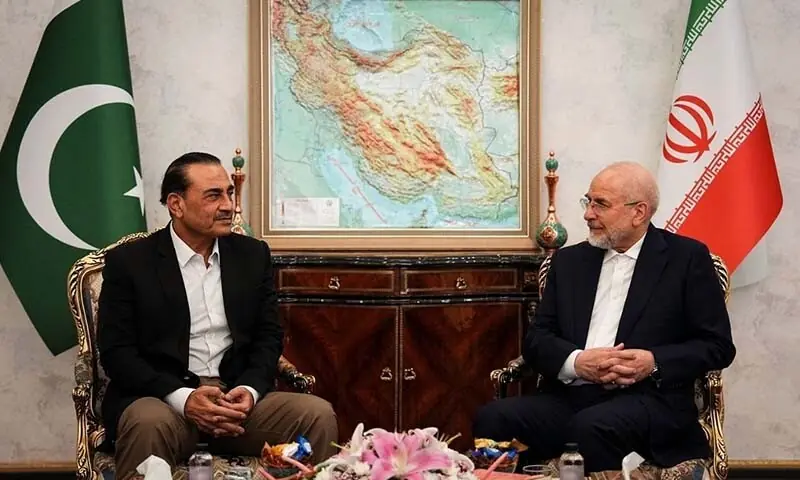
Field Marshal Syed Asim Munir, who serves as both chief of defence forces and chief of army staff, and Interior Minister Mohsin Naqvi met with their Iranian counterpart, Eskandar Momeni, soon after touching down in Tehran, according to Iranian state media. Pakistan’s military media office, in a statement issued before the delegation’s departure, described the trip as part of the country’s continuing effort “to promote regional peace and stability.”
The visit is Munir’s fourth to Tehran since fighting between Iran and the United States began in February, and comes as Pakistan tries to keep alive a mediation role that has grown more difficult to sustain as the conflict wears into its seventh month. He traveled to Iran in April and May as part of the country’s diplomatic efforts, and returned in July to attend the funeral of Iran’s Supreme Leader, Ayatollah Ali Khamenei, who was killed in the opening strikes of the war.
Esmaeil Baqaei, a spokesman for Iran’s foreign ministry, told reporters in Tehran on Sunday that the field marshal would lead an official delegation to the Iranian capital, describing the trip as an effort “to strengthen bilateral cooperation between Iran and Pakistan and to continue Pakistan’s good offices in support of peace and security in the region.” Baqaei said Munir was expected to hold talks with senior Iranian officials during his stay, and separately told the Iranian broadcaster IRIB that ties between Tehran and Islamabad had reached “one of their strongest stages.” He said the visit was not connected to a separate trip by Oman’s foreign minister, who was due in Tehran Tuesday, though he added that both visits would touch on regional security matters.
The Pakistani delegation landed hours before the US Treasury Secretary Scott Bessent was scheduled to detail a new round of US sanctions at a Monday afternoon news conference in Washington, an announcement the administration has cast as a decisive economic escalation. Bessent, writing in the Financial Times on Sunday, described the moment as the start of “an economic D-Day” and said the measures would amount to “the single greatest financial offensive ever marshaled against an adversary.” He has said the sanctions would target not just Iranian entities but also the foreign banks, companies and governments that continue to do business with Tehran.
Iranian officials have dismissed the threats. The country’s top security official said Sunday that Tehran would “neutralize” the economic pressure and warned that any country joining the sanctions effort would be treated as a party to the conflict. Iran’s president, Masoud Pezeshkian, called over the weekend for a return to the diplomatic framework brokered by Pakistan earlier this year, saying the current standoff — what he called a state of “neither war nor peace” — served no one.
The war between Iran and the United States began February 28, when American and Israeli forces launched a wave of strikes on Tehran that killed Khamenei along with several senior Iranian officials, plunging the country into a leadership crisis before his son, Mojtaba Khamenei, was elected supreme leader roughly a week later. Fighting continued for weeks before a ceasefire, brokered with Pakistan’s help, took hold April 8. The two countries went on to sign the Islamabad Memorandum of Understanding in June, an interim framework that set a 60-day window for negotiations over sanctions relief and the future of Iran’s nuclear program.
That window closed August 17 without a final agreement. Baqaei has said the memorandum did not include a binding deadline and that the negotiating period could be extended by mutual consent, and Pakistani officials have continued to describe the framework as a viable basis for future talks. But with no new round of negotiations scheduled, and Washington moving to tighten the economic vise on Tehran, Pakistan’s diplomatic options have narrowed.
Control of the Strait of Hormuz has emerged as the most immediate flashpoint in the standoff. Iran has held the waterway, a critical corridor for global oil and gas shipments, since the war’s early weeks, and has said it will not reopen it until the United States lifts its naval blockade of Iranian ports, ends oil sanctions and unfreezes Iranian assets held abroad. Shipping through the strait has slowed to a near halt, and Iranian officials have warned they would consider detaining or seizing tankers that attempt to cross without authorization — a threat that has kept pressure on global fuel prices for months.
For Pakistan, the balancing act has grown more delicate as the conflict has dragged on. Islamabad shares a long border and deep historical ties with Iran, but also depends on strategic and economic relationships with Washington and Gulf capitals that have aligned themselves against Tehran. Three Pakistani sources told Reuters that President Trump spoke by phone with Munir last week, ahead of the field marshal’s trip, with one source saying the central request from Washington was for Pakistan to use its standing with Iranian leaders to push Tehran back toward the negotiating table.
Islamabad has said for weeks that it is pursuing “all-out efforts,” through both direct and indirect channels, to bring the two sides back into talks. Monday’s meeting in Tehran, coming as it did just hours before the US Treasury’s announcement, suggested that effort was still underway — even as the diplomatic window for reaching a settlement appeared, by any measure, to be closing.
Copyright © 2021 Independent Pakistan | All rights reserved