By Staff Reporter
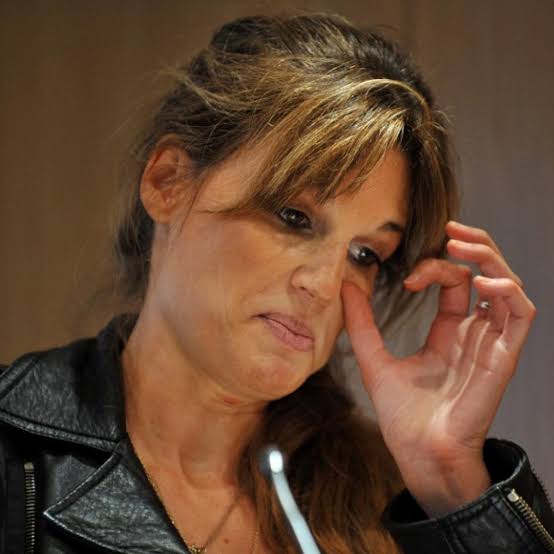
ISLAMABAD: Jemima Goldsmith, the British socialite and former wife of jailed ex-prime minister Imran Khan, called on the British government on Monday to intervene in her ex-husband’s treatment, saying Pakistan is defying its own Supreme Court and that the matter has become “a human-rights emergency.”
In a post on the social platform X, Goldsmith pressed Prime Minister Andy Burnham and Foreign Secretary Ed Miliband directly, asking how much longer Britain would “remain silent.” Khan, the cricketer-turned-politician who led Pakistan from 2018 to 2022, has been imprisoned since August 2023 on corruption charges his party says were politically engineered after his ouster.
“For three years the father of my two sons, and Pakistan’s former Prime Minister, Imran Khan, has been brutally penalised by his political opponents,” Goldsmith wrote, adding that he has “endured 3 years of solitary confinement.” She said his family has been denied contact with him for nearly 10 months, and that he has been cut off from books, lawyers, and doctors.
Her appeal came four days after Pakistan’s Supreme Court ordered the government to move Khan from Adiala Jail in Rawalpindi to Shifa International Hospital, a private facility, for examination by a multidisciplinary medical board. Instead, authorities transferred him to the Pakistan Institute of Medical Sciences, a public hospital — a decision that infuriated Khan’s party and set off a legal battle that shows no sign of resolving.
A contempt petition follows a disputed transfer
Khan’s Pakistan Tehreek-e-Insaf party filed a contempt of court petition in the Supreme Court on Saturday, accusing the government of defying the Aug. 18 order in four distinct ways: failing to transfer Khan to Shifa International, failing to constitute the ordered medical board, failing to have him examined by that board, and failing to include his personal physician, Dr. Faisal Sultan, in his care.
The petition, filed by Khan’s sister, Uzma Khan, along with attorney Uzair Bhandari and PTI Secretary-General Salman Akram Raja, followed Khan’s early Friday morning transport to PIMS, where doctors declared him “medically fit” before he was returned to Adiala Jail. It asks the court to issue show-cause notices and compel the personal appearance of officials found in violation of its order. The government’s stated justification — security concerns tied to crowds outside the hospital — does not hold up, the petition argues, as a reason to bypass a private facility.
PTI’s lawyers leaned on precedent, citing a Supreme Court ruling in the case of Adnan A. Khawaja that placed responsibility for compliance with court orders squarely on the chief executive — in this instance, the prime minister. The petition contends the same reasoning applied in the 2012 case that saw then-Prime Minister Yousuf Raza Gilani held in contempt, and should apply again now.
The government, for its part, is not backing down. A day after the Supreme Court’s order, it filed its own review petition, arguing the ruling was “discriminatory in nature” and asking the court to withdraw it entirely. Filed through Islamabad Chief Commissioner Syed Waqar Hussain, the petition contends that moving a convicted prisoner to a private hospital exceeded the court’s jurisdiction and ignored procedures set out in the Pakistan Prison Rules of 1978 — specifically Rule 197, which the government says requires advance authorization from the inspector general before transferring a prisoner to a hospital outside the prison system, except in emergencies.
“The Order under review suffers from errors of law floating on the surface of the record,” the government’s petition states, adding that the statutory provision “escaped notice” of the court.
The dispute traces back to a medical board report and a filing from the Adiala Jail superintendent submitted to the court a week earlier, which recommended more frequent family visits to help manage Khan’s blood pressure and anxiety.
Sons say they have been shut out for months
The fight over Khan’s medical care has unfolded alongside a separate, monthslong effort by his two sons, Kasim and Sulaiman, both British citizens, to see their father — an effort that has largely failed.
Speaking to CNN in London earlier this month, on the third anniversary of their father’s imprisonment, the brothers said they had not seen him since November 2022 and had received no recent word on his condition, saying his doctors and lawyers, like his family, have been kept from him for seven months. Kasim said the pair applied for visas in January and have received no response.
“We’re trying, we’d like to go, but nothing’s coming through,” Kasim told CNN, saying there was “no reason” the two should be barred from entering the country. The brothers said that each time they spoke publicly about their father’s imprisonment, obtaining travel documentation became harder.
Pakistan’s Ministry of Information disputed the account, telling CNN that both brothers hold National Identity Cards for Overseas Pakistanis, which allow visa-free entry, and calling their claims “misleading” and an attempt at “political point-scoring.” The brothers have said their cards expired and were never renewed — a detail CNN reported the ministry did not address.
In March, Kasim Khan addressed the United Nations Human Rights Council directly, telling the body’s 61st session that his father has been held for more than two and a half years in a small cell designed for solitary confinement, under constant surveillance.
“We go months without any contact, and the last time I spoke to him was a brief phone call,” Kasim told the council. “When we recently tried to travel to Pakistan to visit him, the government deliberately refused to process our visas. Denying a prisoner’s children the right to see him is collective punishment.”
He called on the council and the U.N.’s human rights office to press Pakistan for his father’s immediate release and compliance with a finding from the U.N. Working Group on Arbitrary Detention. He also described his father’s case as part of a broader pattern of political repression in Pakistan since 2022, and called the country’s 2024 elections “rigged” — an assessment that reflects PTI’s long-standing position, and that Pakistani officials reject. He argued that Pakistan’s own commitments under the European Union’s GSP-plus trade framework, which ties preferential access to human rights conventions, were being violated by his father’s detention, isolation, denial of medical care, and blocked family visits, along with the prosecution of civilians in military courts.
“But my father’s life demands that we take action,” Kasim said. “We cannot stand by as his health deteriorates and he is kept away from us.”
Goldsmith invokes UN rules, Oxford ties, and a prior refusal from London
In her statement Monday, Goldsmith leaned on the U.N.’s Nelson Mandela Rules, the international framework governing the treatment of prisoners, which holds that solitary confinement beyond 15 consecutive days constitutes torture. “He has endured this treatment not for 15 days, but for three years,” she wrote.
She said Pakistan’s Supreme Court has already ordered comprehensive medical treatment, access to Khan’s personal doctor, regular family visits, and twice-weekly calls with his sons — orders she said are being ignored. “Yet those orders are being defied,” she wrote. “This is no longer simply a Pakistani political matter. It is a human-rights emergency.”
Goldsmith, who was married to Khan from 1995 to 2004, pointed to his decades-long relationship with Britain: his years at Oxford University, where he captained the university cricket team, and his subsequent seasons in English county cricket. “His relationship with this country stretches back more than half a century,” she wrote, also citing his establishment of Pakistan’s first free cancer hospital and a university.
She said she has appealed to the British government before, without success. Referring to an earlier exchange with David Lammy, who served as foreign secretary before Miliband, Goldsmith wrote that Lammy had told her in writing that Britain would not intervene if her sons — British citizens — were arrested during a visit to see their father.
She closed by invoking Britain’s standing as a member of the Commonwealth alongside Pakistan. “Britain has a long and proud tradition of standing against arbitrary detention, inhumane treatment and the denial of fundamental rights,” she wrote. “Those principles mean very little if we invoke them only selectively and neglect them when inconvenient.”
Neither the British government nor Pakistani officials had responded publicly to Goldsmith’s latest appeal as of Monday evening. Khan, 73, remains at Adiala Jail, where he is serving his sentence in a corruption case tied to roughly £190 million and still faces pending charges under Pakistan’s Anti-Terrorism Act related to protests that turned violent on May 9, 2023.
Copyright © 2021 Independent Pakistan | All rights reserved