By Staff Reporter
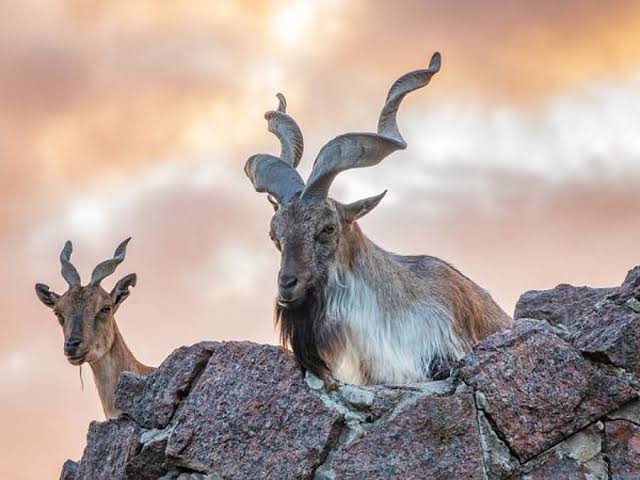
GILGIT: The mountainous northern territory of Gilgit-Baltistan will put hunting permits for three markhor, the national animal of Pakistan, up for auction next month, part of a wildlife program that generates millions of dollars a year for remote Himalayan communities but that has struggled to recover from a wave of unrest tied to the assassination of Iran’s supreme leader.
The territory’s Parks and Wildlife Department announced this week that it will auction rights to hunt three Astore markhor, 14 blue sheep, and 100 Himalayan ibex as part of the 2026-27 trophy hunting season, with bidding scheduled for Sept. 10 at the Forest Complex in Jutial, a suburb of Gilgit city. A fourth markhor permit carried over from last year’s unsold inventory, according to the auction notice, leaving the three fresh permits as the marquee items on the block.
The base price alone signals what is at stake. Bidding on each markhor permit will open at $200,000, department officials said, with blue sheep permits starting at $25,000 and ibex permits at $11,000. In a region where the annual per capita income lags far behind the rest of Pakistan, a single successful auction can mean six-figure sums flowing into village conservation funds.
Under the territory’s 2019 trophy hunting guidelines, the hunts themselves will run from Oct. 15 through April 10, 2027, confined to designated community conservation areas where local wildlife committees, not the government alone, oversee the animals and share in the proceeds. Wildlife officials said the size of this year’s quota, as in past years, was calculated from population surveys conducted annually by department biologists in the high-altitude ranges the animals inhabit.
The program has become one of the more closely watched conservation experiments in South Asia, credited by supporters with turning poachers into gamekeepers by giving mountain communities a direct financial stake in keeping herds of markhor, ibex, and blue sheep alive. But the initiative heads into its new season still absorbing the financial fallout from a chaotic year, one shaped less by wildlife economics than by geopolitics half a world away.
Dr. Zakir Hussain, the territory’s chief conservator for parks and wildlife, said the department collected roughly 350 million rupees, or about $1.24 million, from last season’s permit sales — well short of a 550 million rupee target. Two markhor permits, five blue sheep permits, and 10 exportable ibex permits went unsold or unused entirely, he said, a shortfall that cost the program roughly 200 million rupees, or about $710,000, in lost revenue.
The reason, Hussain has said, traced back to the assassination of Iran’s Ayatollah Ali Khamenei in a joint American and Israeli strike on Tehran in late February. In Pakistan, where the killing set off days of street violence, the reaction proved especially fierce in Gilgit-Baltistan, a territory with a large Shiite Muslim population. Protests turned deadly in both Gilgit and Skardu, curfews were imposed, and the Pakistani army was deployed to restore order — conditions that led American and other foreign hunters, who make up the bulk of the program’s bidders, to cancel or postpone their trips altogether.
The unrest could not have come at a worse moment for a hunting season that runs through the winter and into early spring, precisely when many of the permits are typically exercised. The disruption compounded a separate controversy that has simmered within the territory for two years: a series of steep increases to the baseline prices the government sets before bidding even begins.
Ikram Beg, who owns a shop selling hunting equipment and outfitting gear, said the increases have hit the broader tourism economy that has grown up around the hunts — outfitters, porters, lodges, and guides among them.
“Over the last two years, the Wildlife Department has repeatedly increased trophy hunting baseline price by more than 300 per cent without adequately considering the recommendations of key stakeholders,” Beg said.
Beg is among a group of business owners and tour operators in the territory who have spent the past two years pressing the department to reconsider the pricing formula, arguing that pushing base rates too high risks pricing out the very hunters the program depends on and, with them, the revenue that flows to local communities. Department officials, for their part, have pointed to strong winning bids in recent years as evidence that demand remains robust even at higher starting prices, though last season’s cancellations complicated that argument considerably.
Copyright © 2021 Independent Pakistan | All rights reserved