By Staff Reporter
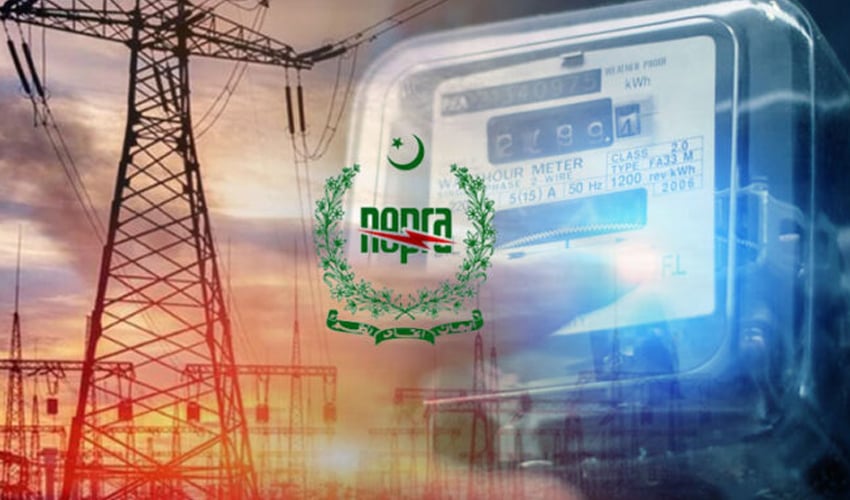
ISLAMABAD: The power regulator said it won’t approve a special industrial tariff incentive package unless the government first consults with industry, adding a new obstacle to energy policy as consumers brace for a fresh round of fuel-cost increases tied to expensive liquefied natural gas imports.
The National Electric Power Regulatory Authority said it would reject the incentive package if finalised without industry input, a warning delivered at a public hearing where the regulator also weighed a request to pass roughly Rs36.5 billion in additional fuel costs on to consumers in September bills.
The hearing, held before Nepra members Maqsood Anwar Khan, Amina Ahmed and Ghulamullah Shaikh, centred on a request from the Central Power Purchasing Agency-Guaranteed, which represents Pakistan’s power distribution companies, to recover higher generation costs from July through the country’s monthly fuel adjustment mechanism. CPPA-G said actual fuel costs climbed to Rs9.6112 per unit in July from a reference cost of Rs7.0929, and is seeking Nepra’s approval to pass the roughly Rs2.52-per-unit gap on to consumers.
CPPA-G Chief Executive Officer Rehan Akhtar told the hearing the increase stemmed largely from what he called the highest-ever volume of spot-market RLNG cargo purchases in a single month, a consequence of Qatar’s contracted cargoes being suspended after the closure of the Strait of Hormuz. The cost of RLNG-based power generation surged to Rs47.4 per unit in July, more than double the prior month’s level, as the country turned to costlier spot cargoes following the disruption to Qatari supply tied to the US-Iran conflict.
Akhtar said the situation is set to worsen before it improves. RLNG prices climbed roughly another third in August, he told the hearing, an increase that will show up in consumer bills in October. Nepra reserved its decision on the July surcharge request rather than ruling immediately.
If approved, the adjustment would add about Rs36.5 billion to bills across all of Pakistan’s power distribution companies, including former Wapda distribution utilities and K-Electric, in September. The Karachi Chamber of Commerce and Industry estimated the increase could work out to roughly Rs6 per unit for consumers starting Sept. 1, once a separate Rs1.52-per-unit quarterly adjustment for the third quarter — expected to be filed with Nepra shortly — is layered on top. Compounding the impact, a Rs1.98-per-unit relief credit from the April-June quarterly adjustment is set to expire around the same time, removing an offset consumers had been receiving. The KCCI called on the government to substitute domestically available furnace oil for LNG where possible and to remove the petroleum levy on furnace oil.
The proposed increase marks a reversal from a year earlier. In July 2025, consumers received a refund of Rs1.79 per unit under the same adjustment mechanism.
Industry Groups Press Grievances Over Coal, Furnace Oil and Stalled Tariff Review
The hearing drew sustained criticism from industrial representatives, most of them based in Karachi, who used the session to press a list of longstanding complaints about how the government has managed the incremental industrial support package and adjacent tariff mechanisms.
Representatives argued that the industrial support package tied to incremental power consumption has failed to benefit most industries and should have been revisited after six months, as the government promised when it introduced the program. Instead, they said, it has remained unchanged for nine months. They said Nepra had directed Pakistan’s Power Division to complete an incremental tariff review, in consultation with industry, within six months of the directive — a consultation industry representatives said has not taken place.
Nepra member Amina Ahmad said the Power Division had submitted its review of the incremental package but acknowledged it was “unfortunate” that industrial consumers said they had not been heard in the process. She said the regulator would decline to open the review request and would return it to the Power Division unless the government resubmits a proposal reflecting comprehensive consultation with industry.
Industry representatives also raised concerns over tariff rebasing that took effect Jan. 1, arguing the government lowered cost benchmarks at the time specifically to reduce its budgeted subsidy obligations, only for fuel costs to rise afterward — leaving consumers to absorb an additional Rs206 billion through subsequent fuel-cost and quarterly adjustments. The KCCI separately estimated that roughly Rs250 billion in subsidy costs has been shifted onto consumers as a result of the government’s decision to lower reference values.
Several participants also questioned the government’s continued export of furnace oil at subsidized rates even as it imposes a substantial petroleum levy on furnace oil sold domestically. They argued there is little economic justification for the export policy, noting the cost gap between RLNG and furnace oil is only about Rs3 per unit once the levy is factored in. They called for petroleum levy revenue collected on furnace oil to instead be redirected toward reducing industrial power rates — a step they said the prime minister had originally promised.
Akhtar said the proposal to redirect furnace-oil levy revenue toward lower industrial rates has merit and is under government consideration, but cautioned it would be difficult to implement given constraints tied to Pakistan’s IMF program.
Other participants questioned coal-import volumes by power producers, singling out the Port Qasim Power Plant, arguing the purchases were unnecessarily costly for consumers. They pressed Nepra to enforce a more transparent and competitive procurement process for coal purchases going forward.
Akhtar told the hearing that the lack of contracted LNG cargoes has had a compounding effect on the power system: beyond driving up RLNG imports for Punjab-based power plants needed to preserve grid stability, it has also forced greater reliance on imported coal-based generation to cover the resulting shortfall.
He also defended — while questioning the timing of — the government’s decision to stagger refueling of the Karachi Nuclear Power Plant’s K-III unit to help offset the generation shortfall, saying the move ran counter to consumer interests given how circumstances had shifted. The 1,100-megawatt K-III unit is now scheduled to return to full generation by Aug. 31, rather than undergoing a previously planned outage from April 20 to June 20.
Copyright © 2021 Independent Pakistan | All rights reserved