By Staff Reporter
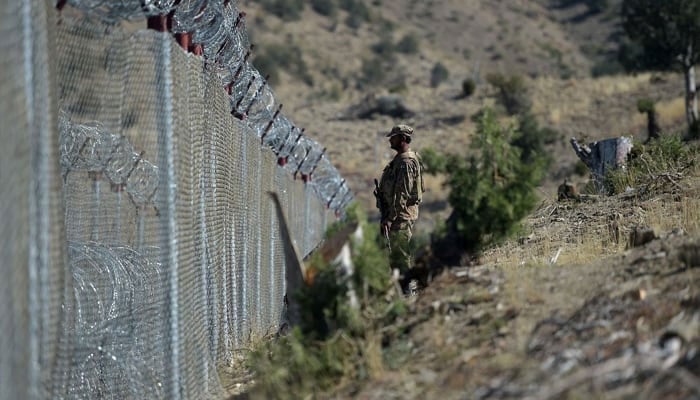
ISLAMABAD: Security forces killed 15 militants during a 36-hour operation to repel an infiltration attempt along the country’s border with Afghanistan, in the latest flashpoint in a relationship between the two neighbours that has grown increasingly strained over cross-border attacks.
The Inter-Services Public Relations (ISPR), the army’s media wing, said troops detected the group attempting to cross into Pakistan opposite North Waziristan district, in Khyber Pakhtunkhwa province, on the night between 31 August and 1 September. Security forces “responded professionally and with patience” before engaging the militants, the statement said, describing the operation that followed as “precise and skillful”.
The ISPR said all 15 militants killed belonged to “Fitna al-Khawarij”, the state’s official designation for the outlawed Tehreek-e-Taliban Pakistan (TTP). Pakistani officials have increasingly used the term “khawarij” — a reference to a historical sect regarded as having deviated from Islam — to describe the group, framing its campaign against the militants in explicitly religious as well as security terms.
A sanitisation sweep conducted after the engagement recovered a substantial quantity of weapons and ammunition from the dead militants, the ISPR said, adding that the find further exposed “the nefarious designs of khawarij and their facilitators seeking to disrupt peace and stability in the country”. The military said a follow-up operation was continuing in the area to track down any remaining fighters.
Islamabad has repeatedly accused India of backing the TTP, an allegation New Delhi rejects. The ISPR statement described those killed as “India-sponsored”, a characterisation the military has applied with growing frequency to terrorist activity along the Afghan frontier.
Renewed criticism of Kabul
The ISPR used the incident to press Pakistan’s long-standing complaint that Afghanistan’s Taliban regime has allowed militants to operate from its territory. The border clash, the statement said, “once again vindicated” Pakistan’s position on what it called the “abject failure of the Afghan Taliban regime to deny the use of Afghan soil” to militant groups for cross-border attacks.
“The Afghan Taliban regime has consistently failed to ensure effective border management and honour its international obligations,” the ISPR said.
Kabul has consistently denied the accusation, insisting it does not harbour militants or permit its territory to be used to stage attacks on Pakistan. The dispute has become one of the central sources of friction between the two governments since the Taliban returned to power in Kabul in 2021, with Islamabad accusing its neighbour of sheltering TTP fighters and Afghan officials countering that Pakistan’s security problems are internal in origin.
The military said its counter-terrorism campaign, conducted under the banner “Azm-i-Istehkam” and endorsed by the Federal Apex Committee on the National Action Plan, would “continue at full pace” to root out what it called foreign-sponsored terrorism.
President Asif Ali Zardari praised the security forces’ conduct of the operation in a statement issued by the Presidency. “The resolve of the security forces to defend the borders of the beloved homeland and protect peace and stability is commendable,” he said, adding that “no permission will be granted to terrorist elements operating under foreign patronage to spread unrest in Pakistan”.
Part of a wider pattern of violence
Thursday’s announcement came days after separate operations elsewhere in Pakistan’s restive west. On Monday, the military said security forces had killed 12 militants following an attack on a convoy of vehicles linked to the Reko Diq copper and gold project in the Chagai area of Balochistan. On the same day, two further militants were reported killed during what the army described as an intelligence-based operation in the province’s Washuk district.
The incidents underline the scale of the security challenge facing Khyber Pakhtunkhwa and Balochistan, the two provinces bordering Afghanistan that have borne the brunt of a marked rise in militant violence since the Taliban takeover in Kabul four years ago.
Data compiled by the Centre for Research and Security Studies, an Islamabad-based think tank, shows the two provinces accounted for nearly 96 per cent of all violence-related deaths recorded nationwide in the second quarter of 2026. Khyber Pakhtunkhwa alone recorded 475 fatalities, or just over 61 percent of the total, while Balochistan accounted for a further 265 deaths, or 34 percent. Khyber Pakhtunkhwa also recorded the highest number of violent incidents of any province, with 151 attacks representing 57 per cent of the national count, followed by Balochistan with 94 incidents, or 35 percent — figures that mark the province out as the country’s principal centre of militant activity.
The renewed violence has deepened diplomatic tensions across the region. Pakistan has repeatedly pressed Kabul to act against TTP fighters it says are using Afghan territory as a base, while accusing India separately of backing militant groups active in Khyber Pakhtunkhwa and Balochistan — a claim New Delhi denies. India, in turn, accuses Pakistan of supporting militancy in the Indian-administered part of Jammu and Kashmir, an allegation Islamabad rejects. None of the claims made by any of the governments involved has been independently verified.
Copyright © 2021 Independent Pakistan | All rights reserved