By Staff Reporter
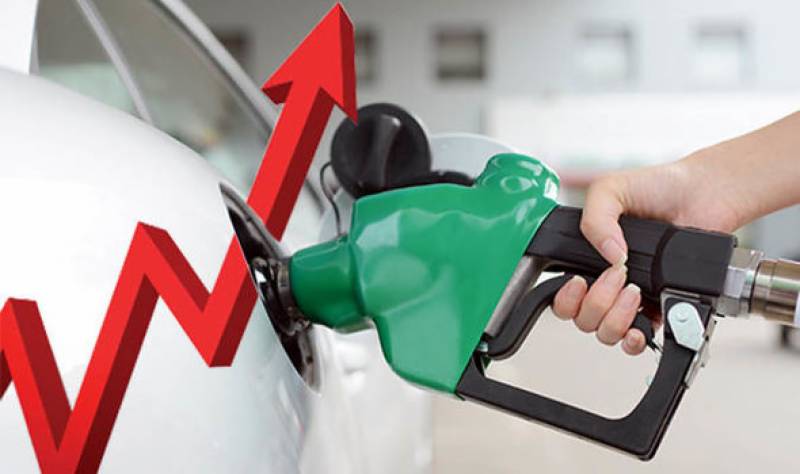
ISLAMABAD: The government raised gasoline and diesel prices on Wednesday for the eighth consecutive day, extending the longest streak of daily increases since the country moved to round-the-clock oil pricing, as fresh attacks on Gulf energy infrastructure threatened to choke off two of the world’s key crude corridors at once.
The Petroleum Division set petrol at Rs391.22 a liter effective Thursday, up Rs6.88, while high-speed diesel rose Rs5.62 to Rs421.45, according to an Oil and Gas Regulatory Authority. Wednesday’s increase followed Tuesday’s revision, which had lifted petrol to Rs384.34 and HSD to Rs415.83. Over the past six days alone, petrol has risen Rs20.42 a liter and diesel Rs23.41; for the first 16 days of September, petrol is up 12.5% and diesel 14%, taking the monthly gain to Rs48.43 a liter for petrol and Rs56.46 for HSD.
OGRA attributed the increases to elevated international petroleum prices amid continued global uncertainty, with rates revised in line with Platts benchmarks, premiums and other factors. The federal government’s petroleum levy — a fixed charge that does not fluctuate with the price of crude — has itself been a moving target this year, having climbed as high as Rs117 a liter on petrol in May before Islamabad cut it in response to public backlash; the combined tax and levy burden on both fuels has stood at roughly Rs114 a liter on petrol and Rs100 on diesel in recent weeks, though the exact split shifts with each government review.
A War That Hasn’t Ended, and a Second Front Opening
The price pressure traces to a conflict that began Feb. 28, when the United States and Israel launched strikes on Iran that killed Supreme Leader Ali Khamenei, in an operation aimed at Tehran’s nuclear and missile programs. Iran retaliated by closing the Strait of Hormuz — the narrow Gulf passage that had carried roughly a fifth of the world’s seaborne oil and a fifth of global liquefied natural gas — and the Islamic Revolutionary Guard Corps has enforced that closure since early March, warning vessels that none would be allowed through. A U.S. campaign to reopen the strait by force, backed by Israel, began in mid-March, followed by a U.S. naval blockade of Iranian ports in April.
A Pakistan-mediated ceasefire and a memorandum of understanding in June brought a formal halt to large-scale fighting, but the truce has proven fragile: both sides have since traded strikes over alleged violations, and Hormuz traffic has not meaningfully recovered. Independent tracking has put daily crossings at a small fraction of pre-war levels in recent weeks, effectively sustaining the closure months after the ceasefire took hold. Core disputes — Iran’s nuclear program, the future status of the strait, and sanctions relief — remain unresolved.
The squeeze has now spread beyond Hormuz. Yemen’s Houthi movement, aligned with Iran, declared a maritime embargo against Saudi Arabia in July and has targeted the kingdom’s exports through the Bab al-Mandeb Strait at the mouth of the Red Sea, gaining control of Yemen’s Red Sea coast and the strategic Mayun (Perim) island along the way. Then, on Sept. 11, Saudi Arabia was forced to shut its East-West pipeline — the 745-mile conduit that had become the kingdom’s primary workaround for bypassing Hormuz entirely, carrying crude from its eastern fields to the Red Sea port of Yanbu — after drone strikes launched from Iraq damaged the line and injured dozens of people. Riyadh said it would not immediately retaliate, at Baghdad’s request, but reserved the right to respond. No group had claimed responsibility for that strike as of this week.
The timing has left Saudi Arabia with few good options: its primary export route through Hormuz remains largely closed, its main bypass pipeline is offline, and Houthi control of the Bab al-Mandeb approaches complicates efforts to move stockpiled western crude out even via longer routes around Africa’s Cape of Good Hope.
Islamabad’s Daily Pricing Regime
Pakistan’s own pricing mechanism has tightened in step with the conflict. The government moved from fortnightly to weekly fuel-price reviews shortly after the Feb. 28 attacks, then to daily reviews on July 17, when Petroleum Minister Ali Pervaiz Malik cited continuing volatility tied to the renewed U.S.-Iran hostilities. Pump prices peaked domestically on April 3, when petrol hit a record Rs458.41 a liter and diesel Rs520.35, before easing back — only to resume climbing through the current eight-day run.
Relief for Small Vehicles
Prime Minister Shehbaz Sharif on Sept. 14 announced a subsidy program aimed at shielding lower-income consumers, offering Rs100-a-liter relief to owners of motorcycles, rickshaws and vehicles up to 800cc. “In this hour of difficulty, we will not leave the public alone,” the Prime Minister’s Office said in a statement announcing the scheme, which also covers the three-wheelers known locally as Qingchis.
An estimated 10 million motorcycle and scooter owners qualify for the discount on up to 20 liters monthly, worth up to Rs2,000 per beneficiary; roughly 800,000 rickshaw owners receive the same allowance. About one million owners of cars up to 800cc are eligible for relief on 30 liters monthly, a maximum Rs3,000 benefit. The government put total beneficiaries at 11.8 million people, with a projected monthly cost of Rs24.6 billion — Rs20 billion for two-wheelers, Rs1.6 billion for three-wheelers and Rs3 billion for small cars. Fuel retailers have pushed back on aspects of how the subsidy is being implemented at the pump, though the specifics of their objections were not immediately clear.
Petrol and diesel remain Pakistan’s largest fuel-tax revenue sources, with combined monthly sales of 700,000 to 800,000 tons against roughly 10,000 tons of monthly kerosene demand. Petrol consumption is concentrated in private and small-vehicle transport, leaving middle- and lower-middle-income households most exposed to price swings, while diesel’s reach into heavy trucking, power generation and large-scale industry means increases tend to filter into broader transport and electricity costs across the economy.
Copyright © 2021 Independent Pakistan | All rights reserved