By Staff Reporter
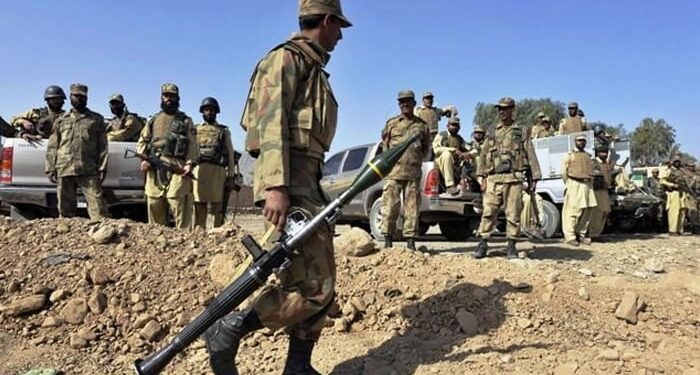
QUETTA: Pakistan’s military said on Sunday that security forces had killed more than 71 militants across Balochistan province over the previous 96 hours, in a serious blow to terrorists backed by India and sheltered by Afghanistan’s Taliban government.
The toll, announced by the Inter-Services Public Relations (ISPR), the army’s media wing, spans a cluster of operations that began on 21 September in the Shaban area near Quetta and fanned out to the districts of Nushki and Mand. ISPR said 33 militants were killed during the initial push into Shaban and Ziarat, an area it said had been identified through intelligence as containing multiple militant hideouts. A further 23 were killed as the operation was “intensified” over the following three days. Separately, the military said 11 fighters were killed in an intelligence-based raid in Nushki on Friday, and another six in Mand, where it said a substantial haul of weapons and ammunition was also seized.
The figures built steadily over the week. ISPR had put the Shaban death toll at 13 on Tuesday, 22 by Thursday, and 33 by Sunday, with the wider provincial total climbing in step as further operations were reported.
Pakistan’s military uses two terms for the groups it is fighting in Balochistan. “Fitna al Khawarij” refers to the outlawed Tehreek-i-Taliban Pakistan, while “Fitna al Hindustan” is the label Islamabad has applied since last year to separatist groups it says are backed by India. ISPR said the wider push in Balochistan was intended to strike “Indian-sponsored Afghan proxies”, and accused the Taliban government in Kabul of allowing its territory to be used to plan attacks on Pakistani soil.
Attack on tribal leader’s home
The offensive has unfolded against a backdrop of rising violence elsewhere in the province. On Saturday, at least eight suspected militants and one member of a pro-government tribal militia were killed after dozens of gunmen attacked the residence of Ghulam Nabi Shambani, the district council chairman in Dera Bugti and a tribal leader with ties to the province’s chief minister, Sarfraz Bugti.
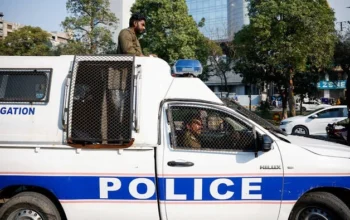
Police in Quetta said the attackers struck the house and a nearby gas company installation in the Loti area, and that the Bugti Peace Force, a tribal militia aligned with the state, fought them off in a battle lasting several hours; seven suspected attackers were later arrested. Local tribal sources put the militant death toll considerably higher, at 13, saying the gunmen returned for a second assault after initially retreating and were pursued as they tried to flee. A member of the peace force, named locally as Fazal Khan, was killed, and three others were wounded.
In a separate incident the same night, a tribal leader named Ghulam Nabi Siyahpad was shot dead by unidentified gunmen in the Naal area of Khuzdar district, further south.
A province under strain
Balochistan, Pakistan’s largest province by area but its poorest and least developed, has been gripped by a separatist insurgency for two decades and sits along sensitive, largely unpoliced borders with both Iran and Afghanistan. It has also emerged as a principal target for the Pakistani Taliban’s renewed campaign against the state.
The frequency of attacks in the province has been rising. Monthly tracking by the Pakistan Institute for Conflict and Security Studies recorded 89 attacks in Balochistan in August, up seven per cent on the 83 logged in July. More broadly, data compiled by the Armed Conflict Location & Event Data project shows attacks nationwide have nearly quadrupled since 2022, from 658 that year to 2,425 in 2025, with Tehreek-i-Taliban Pakistan attacks alone rising more than sevenfold over the same period, from 118 to 838.
Balochistan has absorbed some of the deadliest single incidents of that surge. On the final day of 2025, gunmen attacked civilians in the districts of Gwadar and Kharan, killing 18 people, among them women, children, labourers and elderly residents. In August, at least 30 people, including 27 police officers, were killed when militants the government attributes to “Fitna al Hindustan” ambushed a police convoy in the Kach Mangi area of Ziarat, setting off a gun battle that stretched over several hours; several civilians and police officers were abducted in the assault’s aftermath. That attack triggered the joint operation by the army, the paramilitary Frontier Corps and Balochistan police that has continued, in various forms, ever since — and from which the current Operation Shaban push has grown.
Copyright © 2021 Independent Pakistan | All rights reserved