By Staff Reporter
ISLAMABAD: Pakistan has carried out fresh airstrikes on terrorist camps and safe havens inside Afghanistan, killing at least 22 militants, according to the Information Ministry on Thursday, in an operation targeting groups Islamabad blames for attacks on Pakistani soil.
The information ministry said the strikes were “well-planned and calibrated” and aimed at camps and safe havens at two locations. In a statement posted on X, it said they were carried out “in continuation” of Operation Ghazab lil Haq, the military campaign Islamabad launched against Afghanistan in February.
The ministry said the targets were destroyed “with precision” and that “initial reports” pointed to 22 militants killed. Large quantities of weapons and ammunition stored at the sites were also destroyed, it said. It did not name the locations. It said “maximum precautions” had been taken to ensure there was no collateral damage.
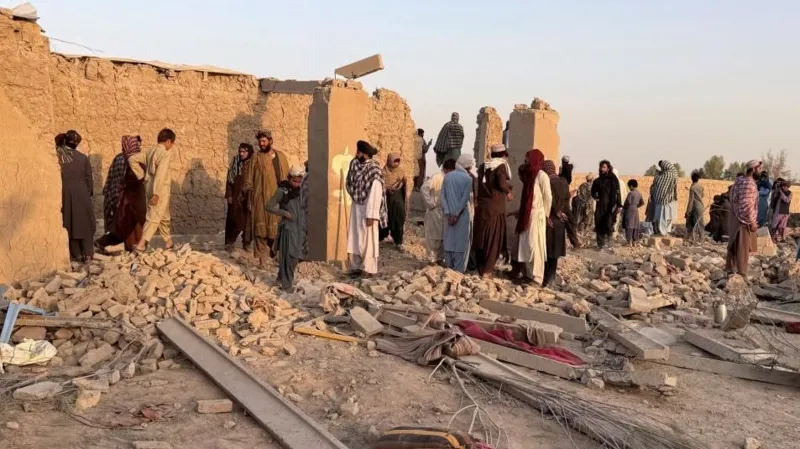
Kabul gave a very different account. Zabihullah Mujahid, the Taliban government’s chief spokesman, said Pakistani aircraft bombed civilian homes on Wednesday night in the Chugam area of Shultan district in Kunar province and the Safar area of Garmser district in Helmand. He said nine civilians, including women and children, were killed, 11 others were injured, and three houses were destroyed.
Mujahid condemned the attacks as an “act of aggression” and warned that Afghanistan would give an “appropriate response”.
The ministry said the strikes targeted groups the Pakistani state calls Fitna al-Khawarij and Fitna al-Hindustan. Fitna al-Khawarij is Islamabad’s label for the banned Tehreek-e-Taliban Pakistan (TTP). Fitna al-Hindustan is the term the government uses for armed groups in Balochistan. Pakistan designated those groups with that name last year, accusing India of sponsoring a proxy war through them.
The ministry said Pakistan had “always strived” for peace and stability in the region but that the safety of its citizens was its “foremost priority”. It described Afghanistan as “a hub of terrorism” and said the threat to Pakistan “emanates from Afghanistan”. It added that Ghazab lil Haq, conducted under the national counter-terrorism vision known as Azm-e-Istehkam, would continue “at full pace” to “wipe out the menace of foreign-sponsored and supported terrorism”.
The latest operation follows a series of increasingly direct confrontations between Islamabad and Kabul. A militant attack on a police facility in north-western Pakistan last month, which killed 24 people, rekindled tensions.
Pakistani reports said 23 people died in a bombing at a mosque inside the Police Lines compound in Kohat during Friday prayers. Fifteen of the dead were police personnel, and eight attackers were killed in the clearance operation that followed. Ittihadul Mujahideen Pakistan, led by the Afghanistan-based commander Hafiz Gul Bahadur, claimed responsibility. The next day a captain and a lieutenant were among six security personnel killed in an exchange of fire in Hangu district.
Pakistan responded on 21 September with “calibrated” air strikes on hideouts near the Afghan border, along with intelligence-based ground operations. The government said the strikes killed more than 28 militants and that 37 died in total across the air and ground operations.
Two days later, on 23 September, Pakistan said its air defences shot down eight drones that entered its airspace from Afghanistan. Security sources said four came down near the Torkham border crossing and four in mountainous terrain near Kohat. On 24 September, information minister Attaullah Tarar said Pakistan had struck 10 locations in Afghanistan used to launch and store drones, calling the action “deliberate, precise, calibrated and proportionate”.
The Foreign Office said on Sunday that it had delivered a demarche to the Afghan side over the drone incursions, a protest that was conveyed on 26 September. The information ministry also rejected an Afghan defence ministry claim last week that a Pakistani post had been destroyed near Spin Boldak, on the frontier between Balochistan and Kandahar.
Afghanistan’s defence ministry said on Sunday that its forces had killed 28 fighters and wounded 32 after a group it said included Islamic State militants crossed from Pakistan.
The human cost of the fighting is rising. The UN Assistance Mission in Afghanistan said last week it had documented more than 1,100 civilian deaths and injuries in Afghanistan from cross-border violence this year. Pakistan denies striking civilians, while Afghanistan denies harbouring militants.
Ghazab lil Haq began on the night of 26 February after what Pakistan called unprovoked cross-border firing by Afghan Taliban forces. It came months after a ceasefire in October 2025 that followed clashes at several border points. Despite repeated rounds of talks, the two sides have not resolved the central dispute over militant groups operating from Afghan soil.
Pakistan says cross-border attacks, particularly in Khyber Pakhtunkhwa and Balochistan, have risen sharply since the Taliban returned to power in Kabul in 2021. Islamabad says its repeated appeals to the Taliban administration to dismantle sanctuaries linked to the TTP have gone unheeded.
A UN Security Council-mandated monitoring report covering 16 December 2025 to 9 June 2026 said continued Afghan Taliban support for the TTP had contributed to a rise in the frequency and lethality of attacks in Pakistan. It said Kabul had taken some initial steps to rein in the group. The report also pointed to growing operational and facilitation links between the TTP, al-Qaeda, Islamic State-Khorasan and the Baloch Liberation Army. Member states told the monitors that BLA militants had trained alongside TTP members at facilities in Afghanistan. An earlier UN report, in 2023, found that the TTP had established a new base in Khyber Pakhtunkhwa.
Copyright © 2021 Independent Pakistan | All rights reserved