By Staff Reporter
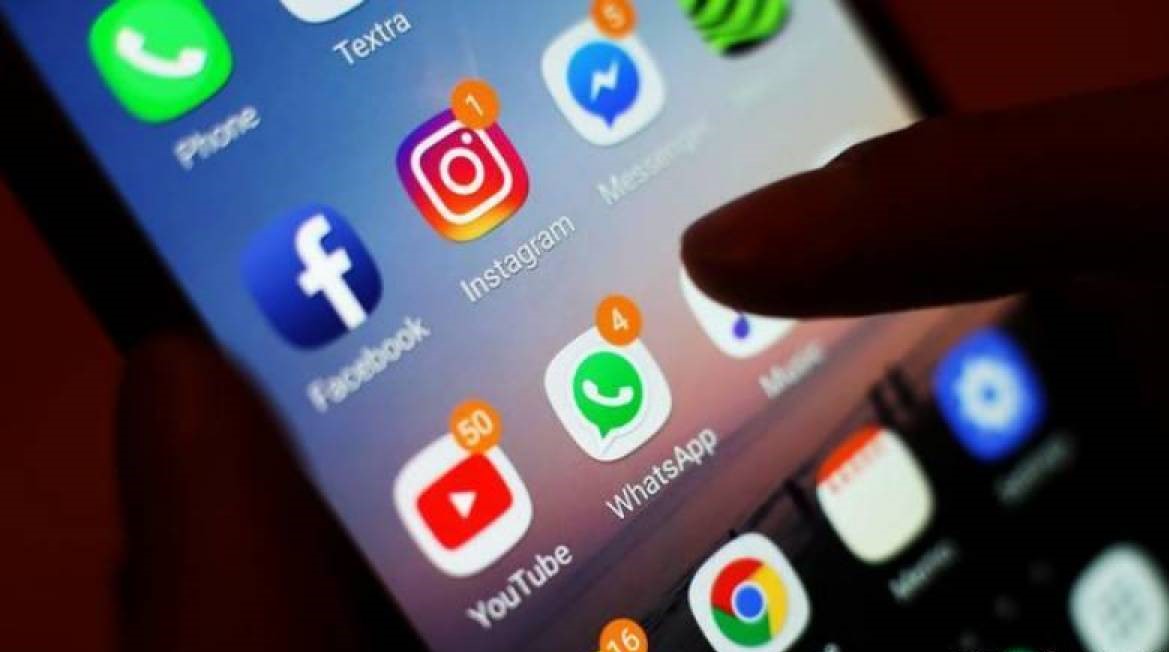
ISLAMABAD: Pakistan’s telecoms regulator has told the Islamabad High Court that it has no legal authority to impose mandatory age verification or to stop children under 16 from using social media.
In a detailed report submitted on Thursday, the Pakistan Telecommunication Authority (PTA) said no law in the country prohibits children below that age from using social media. It said it could not create an age-verification system through administrative action alone and that a new legal and policy framework was needed to protect children from online harm.
The report was filed in response to a writ petition brought in August by Waqas Nasir, who is asking the court to direct the federal government to introduce legislation and a comprehensive regulatory framework for social media use by under-16s.
The petition, filed under Article 199 of the Constitution through lawyers Muhammad Jalal Haider and Yahya Farid Khwaja, was first heard by Chief Justice Sarfraz Dogar, who issued notices to several ministries and regulators. It argued that heavy, unsupervised use of social media exposes children to cyberbullying, harassment, grooming, exploitation, sexually explicit or violent material, addictive use patterns and financial scams. The petitioner said the state should respond with a comprehensive legal and regulatory mechanism. The court sought replies from the relevant ministries and authorities, including the PTA, on 31 August.
“Beyond its legal mandate”
The PTA said it accepted the importance of protecting children online. But it said the relief being sought, a universal minimum age for social media accounts, went beyond its existing legal mandate. It described itself as a statutory regulator that may exercise only the powers Parliament has given it.
The authority also pointed to a change in the regulatory landscape. Under the Prevention of Electronic Crimes (Amendment) Act 2025, it said, “a new body – the Social Media Protection and Regulatory Authority (SMPRA) – is set to replace the PTA regarding the regulation of social media platforms”.
Until the SMPRA is officially notified, the PTA said, it continues to work under the original 2016 Peca framework on a “best-efforts basis”. Its mandate on content removal and blocking has become “transitory in nature”, it added. The new authority, which will handle complaints about illegal content and forgery, is expected to be operational soon, the PTA told the court. It said action against cybercrime and immoral content now falls to the National Cyber Crime Investigation Agency (NCCIA).
Platforms outside local law
The report set out why, in the PTA’s view, regulating content on social media is so difficult. It said major platforms including Facebook, Google and X, formerly Twitter, operate as “Over the Top” services. They are neither licensed by the PTA nor registered in Pakistan and so are not bound by local codes of conduct.
Regulators have two broad routes, the PTA said: approach the operators directly, or take technical action. Requests made to the companies are often judged against their own “Community Guidelines”, which may not match Pakistani law. The PTA said it had asked the companies to comply locally and to appoint a grievance officer, and had received no response.
On the technical side, the PTA said most platforms use HTTPS encryption. “This security protocol prevents third-party monitoring from identifying specific resources or individual pieces of content being accessed within an encrypted connection,” it said. “Consequently, blocking a specific URL on an HTTPS platform is nearly impossible without blocking the entire website, which would disrupt access to legitimate content as well.”
The report also said artificial intelligence, while making digital interactions easier, brings “certain challenges” that add to the difficulty of regulating content in a fast-changing environment.
Blocking figures
The authority defended its record. It told the court it had reviewed more than 1.789 million links and URLs and blocked more than 1.577 million, an overall blocking rate of 88.20 per cent.
By platform, it said it had acted on 88.68 per cent of links on TikTok, 87.34 per cent on YouTube, 79.52 per cent on Instagram and 78.57 per cent on Facebook. On X the figure was 48.42 per cent.
By category, the PTA said it had blocked more than 1.066 million websites and links relating to immoral content, more than 203,000 relating to anti-Islam material, and more than 46,000 judged to be against national security.
On child protection, the PTA said it was running awareness campaigns on digital literacy and online safety with the United Nations Children’s Fund (Unicef), TikTok, Meta and the GSM Association. It said a toll-free helpline, 1121, had been activated for reporting online abuse and exploitation of children, and that Instagram had introduced a “Teen Accounts” safety feature for users in Pakistan.
Request to the court
The PTA asked the court to dismiss the petition to the extent that it seeks relief beyond the authority’s statutory mandate. Any allegation of failure, it said, must be measured against specific statutory duties, which at present do not include setting a minimum age of 16 for social media users.
The Ministry of Information and Broadcasting, the Ministry of Interior and the National Commission on the Rights of the Child have also filed replies. Their contents were not immediately available.
The case is one strand in a growing argument in Pakistan over children’s access to social media. In July 2025 the Senate saw the introduction of a bill that would have banned under-16s from creating accounts, with fines of up to Rs5m for platforms and the PTA tasked with deleting existing accounts held by minors. It has not become law. Senators raised the issue again in January this year, this time proposing restrictions for under-18s. The Punjab Assembly has also passed a resolution calling for restrictions on accounts for under-16s, subject to parental or guardian consent and reliable age verification.
A separate petition brought by a 12-year-old in Islamabad earlier led the same court to direct the PTA and the Pakistan Electronic Media Regulatory Authority to report on age-verification mechanisms and on progress towards the proposed Social Media Protection and Regulatory Authority.
Copyright © 2021 Independent Pakistan | All rights reserved