By Staff Reporter
ISLAMABAD: The International Monetary Fund has credited Pakistan with keeping fuel flowing without straining the budget through six months of conflict between the US and Iran, but the two sides remain at odds over how to deal with a Rs3.6 trillion gas-sector debt, according to local media reports.
IMF staff have asked authorities to speed up groundwork for managing the growing gas circular debt, and for delivering targeted subsidies to households below the poverty line.
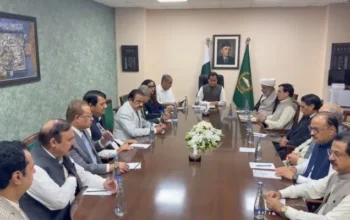
The mission, led by Iva Petrova, began discussions with Finance Minister Muhammad Aurangzeb on the fourth review of Pakistan’s Extended Fund Facility and the third review of the Resilience and Sustainability Facility. Completing both reviews could open the way to about $1.2 billion in combined financing, roughly $1 billion under the EFF and $200 million under the RSF. Pakistan received $1.32 billion in May after the IMF board completed the third EFF review.
The Fund acknowledged that Pakistan had managed petroleum prices without adding to the budget burden or facing product shortages, Dawn newspaper reported. The IMF noted that some other regional countries had faced supply shortages, higher costs to their budgets or state-owned companies, or both.
The IMF had initially questioned a Rs65 billion to Rs70 billion rise in power-sector circular debt, which stood at Rs1.675 trillion at the end of June 2026. It later recognised that the sector had “overperformed” on efficiency targets, including bill recoveries and loss reduction. The increase stemmed mainly from about Rs95 billion in lower disbursements by the Finance Ministry for the tariff differential subsidy. The ministry endorsed those figures but said the budgeted subsidy exceeded what was needed for the units actually supplied.
Power debt could have fallen further had K-Electric paid about Rs200 billion on time rather than holding up the payment through litigation, according to the report. The high court and an appellate tribunal upheld the National Electric Power Regulatory Authority’s decision on the matter, although KE could still pursue other legal remedies. IMF staff were reportedly convinced, at least on the comparable numbers.
The two sides are expected to settle practical plans next week for paying subsidies in cash to poor power consumers through the Benazir Income Support Programme, replacing subsidised tariffs. Local media reports said strong revenue collection and readiness to move electricity subsidies to BISP had put Pakistan on a positive footing in the talks, with first-quarter revenue exceeding target.
Gas Sector ‘Far From Ready’
Gas is a harder problem. Initial discussions on shifting gas-sector subsidies from consumer tariffs to BISP-based direct transfers concluded that the “gas sector is far from ready given data and ownership-related challenges.”
Meter records are the main obstacle. Consumers often leave names and property ownership unchanged for decades to avoid fresh security charges and other formalities, making it hard to identify poor households from meter data. The problem is worse in the commercial sector, where titles often stay the same while premises change hands on “pagri.” Documentation in the power sector, with a considerably larger consumer base, is far more advanced.
IMF staff are not yet convinced that the groundwork is workable, though the Fund has consistently insisted on targeted gas subsidies. It has advised further work with consultants on a mechanism for the longer term.
That makes a uniform tariff tied to the roughly Rs1,700 per million British thermal units that the Oil and Gas Regulatory Authority has set as the average prescribed price look premature. The Petroleum Division, led by Minister Ali Pervaiz Malik, has pushed for uniform rates covering the actual supply cost of Rs1,700 to Rs1,750 per mmBtu for the two gas utilities. It argues they would reduce cross-subsidies from industry and curb debt.
The division blames the protected domestic category, with prices of Rs200 to Rs350 per mmBtu, for widening the pricing gap. Only four of 12 consumer slabs cover supply costs in winter, it said, and rates stay below breakeven for about eight months of the year even after substantial fixed charges.
Gas circular debt has risen to about Rs3.6 trillion, Dawn reported, including roughly Rs1.8 trillion of principal and an almost equal amount of accrued interest and late payment surcharges. Local media reported that the principal includes Rs216 billion in tax refunds that should not ideally be part of circular debt payments.
Write-Off Dispute
The Express Tribune reported that the talks hit a deadlock over fuel prices and the IMF’s demand that Pakistan write off Rs1.4 trillion of gas companies’ receivables. It said the Fund wants any subsidy delivered through a targeted mechanism. In earlier talks, the IMF asked Pakistan to write off inter-corporate debt and waive late-payment surcharges estimated at Rs1.7 trillion.
The Petroleum Division rejected that, saying the federal government cannot go back on its commitments to gas distribution and exploration companies. It has proposed settling the Rs3.6 trillion through tariff differential claims of the Sui gas companies, which would then pay Oil & Gas Development Co., Pakistan Petroleum Ltd. and Government Holdings Pvt. The plan calls for a net cash injection and for using incremental dividends only for those three companies, given the government’s major shareholdings.
The IMF has questioned whether using Rs850 billion of gas company dividends is fiscally neutral. It also asked how the proposal handles leakage to minority shareholders, and whether projected inflows, including petroleum development levy and LNG-related savings, are realistic. The government has said it will present a three-year clearance plan that relies on about Rs840 billion in dividends and Rs270 billion from the petroleum levy. Dawn reported that a Petroleum Division proposal to raise the levy by a couple of rupees to fund part of the debt has not found favor at relevant government forums and has not been taken up with the Fund.
Raising gas prices was another option, but the government declined because it would hit all consumers regardless of income. A meeting with the IMF’s fiscal affairs department did not take place because of the Finance Ministry, according to the report. The Tribune said Prime Minister Shehbaz Sharif formed a committee on petroleum-sector reform and that meetings with the IMF from March to July produced no solution.
Fuel Relief Under Scrutiny
The Petroleum Division told the IMF that current pump prices are unfair. It put the pre-tax import cost of petrol at roughly Rs250 a liter, against a consumer price of Rs390. It attributed the gap to taxes of nearly Rs110 and margins of Rs27.
The IMF’s response was that setting priorities is the government’s job. It noted that Pakistan had pledged to refrain from introducing any fuel subsidy or cross-subsidy scheme, a commitment the IMF said was breached last month. Authorities said the compensation scheme for motorcyclists and small-car owners won’t end early but probably can’t run beyond three months. The IMF believes its cost may exceed the Rs75 billion estimated for that period.
Petrova urged Pakistan this week to channel fuel relief through the national social safety net and raised concern over slow progress on state-owned enterprise reforms. The mission also flagged Pakistan’s continued failure to meet spending targets for education and health.
The mission is due to stay about two weeks, with policy-level talks on the next tranche expected in the first week of October. A detailed session on the gas debt plan is slated for next week after an earlier meeting was postponed, the Tribune said.
Copyright © 2021 Independent Pakistan | All rights reserved