By Staff Reporter
ISLAMABAD: Pakistan has condemned a drone attack on a power distribution station that supplies electricity to the Prophet’s Mosque in Medina, calling it a “grave provocation” and reaffirming its support for Saudi Arabia as fighting in Yemen intensifies.
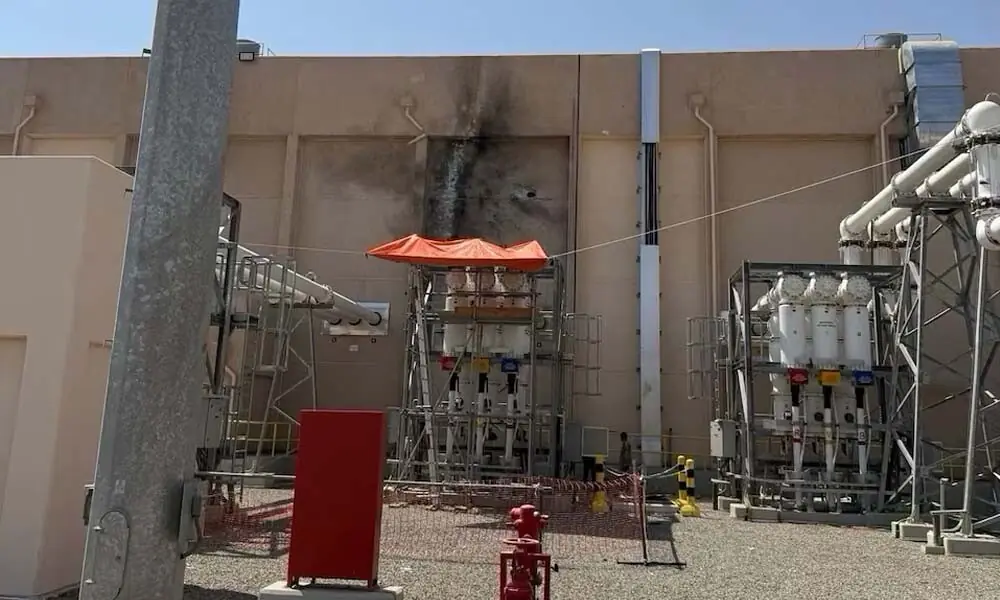
The Saudi-led military coalition in Yemen has blamed the Iran-backed Houthi movement for the strike, which hit the Taibah station in the early hours of Tuesday. The Houthis deny any involvement. The coalition’s account does not report damage to the mosque itself or any casualties.
In a statement on Friday, Pakistan’s Foreign Office described the attack on civilian infrastructure as “reprehensible” and a matter of deep concern for millions of Muslims worldwide. It called for an “immediate and unconditional” end to what it termed reckless actions, which it said also threatened regional peace and security.
The sanctity of the two holy mosques in Mecca and Medina, and the safety of worshippers and pilgrims, had to be respected “under all circumstances”, the ministry said. It pledged “unwavering solidarity” with Saudi Arabia and backed the kingdom’s sovereignty, territorial integrity and security. Islamabad, it added, had worked and would continue to work for lasting peace and stability in the region.
What the coalition says happened
Coalition spokesman Maj Gen Turki al-Maliki said a drone struck the Taibah electricity distribution station at 5.11am local time on Tuesday 29 September. He said one transformer was put out of service but the wider electricity network was unaffected.
Maj Gen al-Maliki said an investigation and a review of the drone’s wreckage established that the Houthis planned and carried out what he called a “cowardly terrorist act”. He described it as part of repeated Houthi attempts to target the Two Holy Mosques and provoke Muslims around the world. The coalition said it would continue taking measures to deter the group and protect the holy sites and their visitors.
A Houthi military source, quoted by the Houthi-run Saba news agency, dismissed the accusation as a “lie”. The source said it was meant to distract from Saudi Arabia’s failure to substantiate an earlier claim that the Houthis had targeted Mecca.
That earlier claim came in September, when Saudi Arabia said it had intercepted and destroyed a Houthi drone south of Mecca before it could enter restricted airspace over the city. The coalition called it a “red line” and said it was the second Houthi attempt to target Mecca since 2017. The Houthis denied targeting Mecca or any other Islamic holy site.
Condemnation across the region
Turkey said the attack on civilian infrastructure in Medina threatened Saudi Arabia’s sovereignty and security and that such “provocative attacks” must cease immediately. Qatar called it a “grave assault on the sanctity of Islamic holy sites” and said Saudi security was an integral part of Gulf security.
The Arab League called the attack “an unacceptable transgression” and a dangerous escalation. Al-Azhar, the Cairo-based centre of Sunni learning, said targeting Medina “provokes the sentiments of Muslims worldwide”. The UAE, Bahrain, Kuwait and Jordan also condemned the strike, and the Gulf Cooperation Council described it as a serious escalation. Pakistani media have reported that the Organisation of Islamic Cooperation, which has 57 member states, has also condemned recent incidents involving Mecca and the Medina region.
Fighting inside Yemen has continued. Late on Thursday, Yemen’s government-aligned military said it had carried out a “high-value targeting operation” in the Houthi-held capital, Sanaa. It also said it struck 11 targets in Saada and 27 in Taiz.
On Friday, a spokesman for the Yemeni armed forces said the air force had carried out 20 strikes in three hours on Houthi positions in Taiz governorate, targeting vehicles, equipment and troop movements. The military’s claims about its targets and the scale of the operations have not been independently verified.
Pakistan’s defence commitments
The attack puts a spotlight on Pakistan’s obligations to Riyadh. The two countries signed a Strategic Mutual Defence Agreement in September 2025, under which an attack on either is to be treated as an attack on both. Pakistan and Saudi Arabia are also party, with Turkey, to the Mecca Defence Alliance, signed on 7 August, which applies the same principle to all three members.
The countries’ military leaders met in Riyadh last month and expressed a shared determination to “immediately translate” the alliance’s commitments into effective military cooperation. On Wednesday, Pakistan’s defence minister, Khawaja Asif, said his country was “there to help” Saudi Arabia in any conflict.
On Thursday, the Pakistani military spokesman, Lt Gen Ahmed Sharif Chaudhry, said Islamabad’s commitment to Saudi security and the holy mosques was “absolute”. He declined to disclose operational arrangements under the alliance or to say whether additional Pakistani troops had been deployed.
The strike on Medina comes during the most serious fighting between Saudi Arabia and the Houthis since a UN-brokered truce largely halted cross-border attacks in 2022. Hostilities resumed this year after the Houthis declared a naval blockade on Saudi Arabia in July and began attacking Saudi territory and shipping. Houthi forces have also made significant territorial gains along Yemen’s Red Sea coast. Saudi Arabia has responded with air strikes in Yemen and has backed government forces trying to push the Houthis back.
Copyright © 2021 Independent Pakistan | All rights reserved