By Staff Reporter
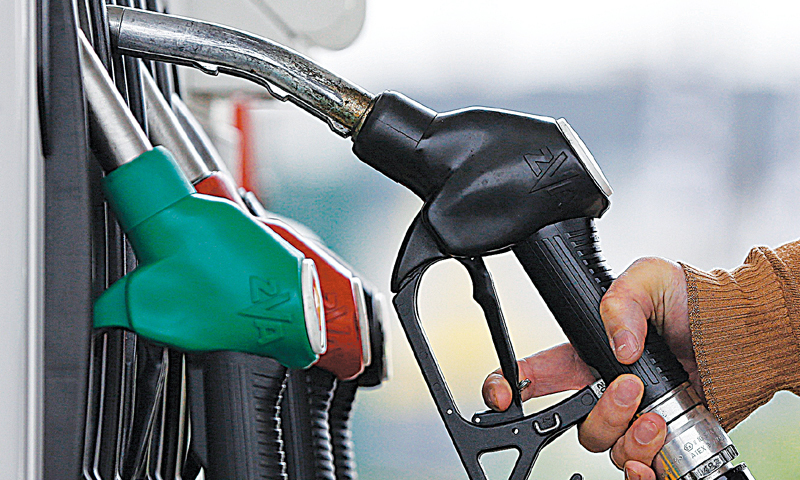
ISLAMABAD: Pakistan cut petrol prices and raised diesel again on Thursday, though Brent crude settled at its highest close since May 4 after Houthi attacks on Saudi Arabia.
The government lowered petrol by 1.60 rupees to 377.71 rupees a liter and raised high-speed diesel by 1.64 rupees to 391.75 rupees, according to a Petroleum Division notification. The prices apply on Friday. Taxes and duties make up 114 rupees of each liter of petrol and 100 rupees of diesel.
The previous day’s notification, covering Oct. 22, cut petrol by 2.71 rupees and raised diesel by 31 paise. That left petrol at 379.31 rupees and diesel at 390.11 rupees. Petrol is now at its lowest of October, based on the daily notices published this month.
The moves run against the direction of crude. Brent rose 4% to settle at $113.17 a barrel, and West Texas Intermediate was at $99.29 in New York.
Yemen’s Iran-aligned Houthis struck several targets in Saudi Arabia on Wednesday, killing at least one person at a civilian airport in Dammam and two at an oil field. Saudi authorities said operations at the Shaybah field, which produces about 1 million barrels a day, were unaffected. Saudi Aramco told staff to evacuate its Dhahran headquarters and work remotely, Reuters reported, citing six people familiar with the matter.
Tamas Varga, an analyst at PVM Oil, said attacks on ships in the Strait of Hormuz and on Saudi infrastructure outweigh reports that regional exports have recovered. “No de-escalation is anticipated until the US midterm elections,” he said. Morgan Stanley estimated Middle East crude exports at about 17 million barrels a day last week, against an average of about 18 million in the 12 months before the war, according to Kpler.
Pakistan imports most of its petroleum, so swings in global prices reach pump prices quickly. Diesel peaked at 520.35 rupees on April 3, up from 281 rupees before the US-Iran war began on Feb. 28. Petrol hit 458.41 rupees the same day, having started its climb from about 266 rupees in the first week of March. Today’s prices sit about 25% below the diesel high and 18% below the petrol high. They remain roughly 39% and 42% above their starting levels. Brent reached as high as $120 a barrel in April.
The government has changed how it prices fuel as the conflict dragged on. It announced weekly revisions from early March and in April introduced targeted relief to provide subsidized fuel. On July 17, Petroleum Minister Ali Pervaiz Malik said prices would be set daily after renewed hostilities between Iran and the US made global markets more volatile. The cabinet and Prime Minister Shehbaz Sharif gave the Oil and Gas Regulatory Authority responsibility for the daily decisions, based on international market trends.
On Sept. 13, Sharif announced a relief scheme offering 100 rupees off each liter of petrol for motorcycles, three-wheeler rickshaws and cars with engines up to 800cc. It covers an estimated 11.8 million people. About 10 million two-wheeler users and 800,000 three-wheeler users can claim relief on 20 liters a month, for a maximum monthly benefit of 2,000 rupees. Another 1 million owners of cars up to 800cc get relief on 30 liters a month, worth up to 3,000 rupees each.
On Sept. 17, the government reintroduced austerity measures, effective immediately, according to a Cabinet Division notification. Shops, markets, shopping malls, bazaars and grocery stores must close by 9 p.m. every day. Marriage halls and similar venues close by 10 p.m. Restaurants, cafes and standalone fruit and vegetable shops can stay open until 11 p.m., and takeaway and home delivery are exempt. Fuel allocations for official vehicles have been cut by 50% for three months.
Petrol and diesel are the government’s main fuel revenue earners, with combined monthly sales of about 700,000 to 800,000 tonnes, against roughly 10,000 tonnes of kerosene. Petrol mainly serves private transport, rickshaws and two-wheelers, so price changes hit the middle and lower-middle classes. Diesel powers heavy transport, power plants and large generators, which spreads its effect across the economy.
Notes for your desk
- The $113.17 Brent settlement and the Friday early-trade figure come from a secondary aggregator. Reuters had Brent on track for its highest close since May 4. Please check the settle against the Bloomberg terminal before filing.
- Pakistani price trackers label some daily prices by announcement date rather than effective date. The Oct. 22 and Oct. 23 figures match Dawn’s notification coverage, but the “lowest of October” claim for petrol rests on those trackers.
- The percentage moves above are my own arithmetic from the peak and starting prices in your text.
- I left out a dollar conversion because I had no confirmed rupee rate. Bloomberg style would normally add one in the second paragraph.
Copyright © 2021 Independent Pakistan | All rights reserved