By Staff Reporter
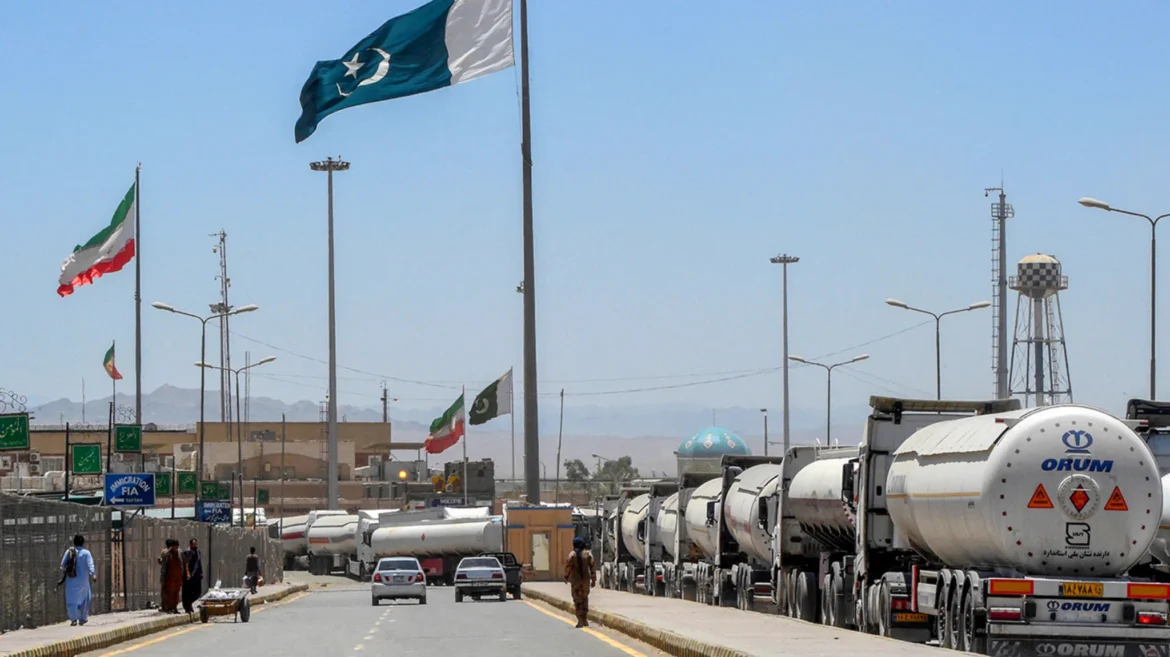
QUETTA: Pakistan reopened its Gabd-Rimdan crossing with Iran to commercial traffic on Saturday, freeing liquefied petroleum gas tankers and food trucks that had been stranded for a week, Dawn newspaper reported.
Border officials are clearing cargo carrying a consignment note dated Oct. 16 or earlier at the crossing, known as Gate 250, in Gwadar district. Trade stopped on Oct. 17, when the Commerce Ministry withdrew an Oct. 3 order governing commerce with Iran through Gabd-Rimdan and Taftan, and the memorandum gave no reason.
Mir Naveed Jan Kalmati, president of the Gwadar Chamber of Commerce and Industry, said trade resumed on Saturday morning.
“Pakistan has opened the border with Iran at Gabd-Rimdan this morning and allowed trucks and other vehicles to move toward Iran and Pakistan with import and export goods,” Kalmati said.
He said the restored flow would bring immediate relief to traders and transporters stranded on both sides, and he expects it to ease a nationwide LPG shortage and bring down high energy and food prices.
The halt hit household fuel supplies hard. Pakistan imports about 7,000 metric tons of LPG a day from Iran, according to the Pakistan LPG Association, and more than 4,000 tons enters through Gabd-Rimdan alone. Local media reported that the price of a 12-kilogram cylinder rose to about 7,000 rupees from 4,500 rupees within days, and reached 8,200 rupees in some parts of the country.
The crossing had opened briefly on Wednesday for Pakistani exports of perishable goods, but traders said LPG imports remained suspended through Friday.
Local administrators reviewed the security situation and deployed additional forces to protect trade convoys before Saturday’s reopening, Dawn newspaper said. On Thursday, unidentified gunmen attacked the backlog of freight vehicles parked near the closed crossing, setting dozens of trucks ablaze and damaging several others.
The military said Friday that security forces killed 10 militants in operations in Gwadar city and around the Gabd crossing after attempted attacks on Oct. 22. It said one civilian died, a few vehicles were damaged, and no security personnel were lost, and it described the attackers as members of an India-sponsored group. Pakistan’s armed forces use that label for Baloch militant organisations.
Pakistan and Iran gave different explanations for the suspension. Officials in Balochistan, the province where the crossings sit, called it a temporary step to address security concerns and curb smuggling. Iran’s Foreign Ministry cited technical issues and said consultations on resuming trade were under way.
The Quetta Chamber of Commerce and Industry told members to stop placing new orders with Iran until further notice. It said about 2,000 trucks were stuck on both sides of the border.
The halt raised questions about whether US pressure played a role. Pakistan has mediated between Washington and Tehran since the war on Iran began on Feb. 28, and the US has blockaded Iran’s southern ports. Al Jazeera reported that an April order from the Commerce Ministry had allowed third-country goods to be trucked to Iran along six routes ending at Gabd and Taftan.
Foreign Office spokesman Sajjad Haider Khan said Friday that Pakistan adheres to all applicable sanctions regimes and values its strategic partnership with the US. Asked about the crossings, he said he had no direct knowledge of conditions on the ground. Army chief Field Marshal Asim Munir visited Tehran earlier in the week and discussed border issues with Iranian officials.
Javad Heiran-Nia, who heads the Persian Gulf Studies Group at a Tehran research center, told Al Jazeera that a prolonged closure could lead Iran to question whether Pakistan can keep productive ties with Tehran while cooperating with Washington’s pressure campaign.
Official trade between the neighbours totalled about $2.8 billion in the fiscal year 2023-24, including roughly $684 million of Pakistani exports, according to the Federation of Pakistan Chambers of Commerce and Industry. Since March, the two governments have simplified customs procedures and designated Taftan as a customs station. In August, they agreed to keep border crossings open around the clock.
Security in the border region has worsened. The Pakistan Institute for Conflict and Security Studies counted 225 attacks by armed groups nationwide in September, the most in a month in 12 years, Al Jazeera reported. Across the border in Iran’s Sistan-Baluchestan province, attacks on security forces have also continued this month.
Officials didn’t say whether trade had resumed at Taftan, the other crossing covered by the suspension.
Copyright © 2021 Independent Pakistan | All rights reserved