By Staff Reporter
ISLAMABAD: Pakistan cut petrol prices by 5.45 rupees a liter to 369.06 rupees and diesel by 3.68 rupees to 391.52 rupees for Wednesday, passing on a slide in global crude and a one-month cost-sharing arrangement with domestic refiners.
The Oil and Gas Regulatory Authority issued the notification Tuesday, with the new prices taking effect at midnight on Nov. 4. Petrol had sold at 374.51 rupees, and diesel at 395.20 rupees. Diesel now costs about 22 rupees more per liter than petrol.
Ogra’s pricing sheet shows how the figures were built. Petrol’s import cost uses a seven-working-day average of the Platts Arab Gulf gasoline price, at $115.49 a barrel, plus a $25.52 premium that covers freight and margin. It is converted at 276.91 rupees to the dollar, the central bank’s average rate. Diesel is priced off Dubai crude at $112.20 a barrel, adjusted for an Aramco premium, freight and a diesel crack spread of $38 a barrel. Because the formula relies on rolling averages, Ogra says the full effect of a change in daily international prices takes seven working days to reach pump prices.
Taxes remain a large part of the pump price. The petroleum levy is 80 rupees a liter on both fuels, and there is a 5-rupee climate support levy. Customs duty adds 26.15 rupees on petrol and 15.68 rupees on diesel. Neither fuel carries sales tax. Petrol’s levy is effectively cut to 65.29 rupees through the refinery arrangement.
Under that arrangement, announced Monday for 30 days, refineries will bear a cumulative Rs15 billion through the levy, according to the government. That allows a 14.71-rupee reduction in the consumer price of petrol. Ogra’s sheet says refineries will surrender the amount at 49.02 rupees a liter on their sales to oil marketing companies. The mechanism builds on a revision made Friday, when the government directed refineries to surrender the gap between import and ex-refinery prices as a levy. The import price is based on the actual cost of the relevant Pakistan State Oil cargo. If that is unavailable for a given day, the premium, incidentals and customs duty of the last available cargo may be used. For the 30 days, refineries are entitled to an ex-refinery price calculated with those components fixed at March 7 levels, before the war began.
The cuts followed a fall in global oil prices. Brent futures fell $1.63, or 2%, to $103.14 a barrel at 8:44 p.m. Pakistan time, on course for its lowest close since Oct. 7. West Texas Intermediate fell 67 cents to $95.79, headed for its lowest close since Oct. 14. Traders weighed talks to end the wars in Ukraine and Iran against worries about further supply disruption from recent attacks in both conflicts.
Neither negotiation looks close to a conclusion. A senior Iranian official told Reuters that Iran and the US remain far from a deal, while Qatar, the mediator, is trying to head off renewed escalation after the US midterm elections. The US struck Iran’s Qeshm Island overnight, though one American official described the strikes as limited. Russia has confirmed three-way talks with Ukraine and the US in Abu Dhabi on Nov. 10-11, even as it bombarded Ukrainian energy infrastructure and Ukraine hit a refinery in Yaroslavl. Brent remains well above the roughly $79 at which it settled in early August.
Petroleum Minister Ali Pervaiz Malik said at a press conference in Islamabad that the government had averted a petrol price increase on Friday with refiners’ support, and hinted at the latest reduction. “Even better news will come before us,” he said. He was joined by Information Minister Attaullah Tarar, who said Prime Minister Shehbaz Sharif had ordered “maximum relief to low-income groups.” Malik said the government would pass on any fall in international prices and had extended Rs130 billion in subsidies under its public relief scheme. A fuel relief program offers targeted help to 13 million people. Tarar said funds had been obtained from oil refineries for the first time to ease the burden on the public.
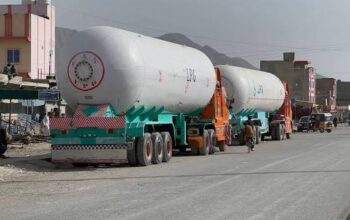
The government is also turning to liquefied petroleum gas. Malik said officials are working on a levy-sharing system for LPG similar to the one for petrol. Companies importing fuel will have to publish their prices on their websites. Pakistan imports about 70% of its fuel needs. He said complaints had come in from several cities of LPG selling for as much as Rs800 a kilogram, which he blamed on market players he accused of exploiting consumers. Pakistan has about 10 million gas connections, and households without piped gas rely on LPG. Local LPG production is between 2,000 and 2,500 tonnes. The government plans to widen competition in the sector, distribute LPG quotas fairly in hard-to-reach areas, and explore assistance for vulnerable consumers through the Benazir Income Support Programme. Malik also said regional disruption had complicated imports of liquefied natural gas, and that a strategy was being prepared for winter supplies.
The government also faces pressure from the opposition. Jamaat-e-Islami and officials held another round of talks Tuesday on relief for low-income consumers and agreed to continue negotiating in the coming days. The party has been pressing the government to abolish the petroleum levy since early September, and at least one earlier round ended without agreement on its demands.
Pump prices remain far above pre-war levels. Diesel peaked at 520.35 rupees on April 3, having started rising from 281 rupees after the US-Iran war began Feb. 28. Petrol peaked the same day at 458.41 rupees, up from 266 rupees in the first week of March. Today’s prices are about 20% below the petrol peak and 25% below the diesel peak, but still about 39% above where each started.
The government has leaned on rationing and administrative measures throughout. It moved to weekly price revisions in early March alongside conservation steps and announced targeted subsidized-fuel relief in April. On July 17, it shifted to daily pricing, with Ogra setting rates based on international market trends. Sharif announced a relief scheme on Sept. 13 for users of motorcycles, autos and vehicles of up to 800cc. The government has now reintroduced austerity measures, including a 9 p.m. closing time for markets and a 50% cut in fuel allocations for official vehicles for three months.
The two fuels reach different parts of the economy. Petrol is used mainly in private transport, small vehicles, rickshaws and two-wheelers, so its price matters most to the middle and lower-middle classes. Diesel is used in heavy transport, power plants and large generators, and its price spreads through the wider economy. Petrol and diesel are the main revenue earners, with monthly sales of about 700,000 to 800,000 tonnes, against about 10,000 tonnes of kerosene demand.
Copyright © 2021 Independent Pakistan | All rights reserved