By Staff Reporter
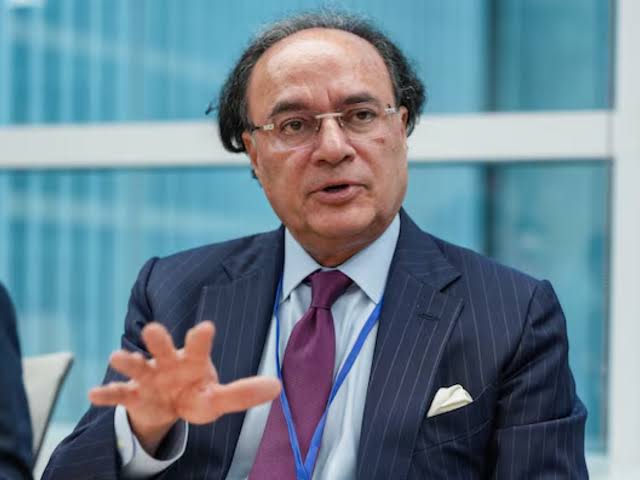
ISLAMABAD: Saudi Arabia has extended its $3 billion of additional financial support to Pakistan for a “reasonable period,” Finance Minister Muhammad Aurangzeb said on Wednesday, easing near-term pressure on Islamabad’s external accounts ahead of a December review of its International Monetary Fund program.
“Yes, its term has been extended,” Aurangzeb told reporters when asked whether the deposit had been rolled over. “It has been extended for a reasonable period.” He didn’t give a specific term.
The remarks are the most direct public confirmation yet. When the deposit matured in July, Aurangzeb said only that matters were “all good,” and neither the finance ministry nor the State Bank of Pakistan formally confirmed a rollover.
Saudi support has been central to Pakistan’s financing. The $3 billion was agreed in April and is expected to help the country shore up foreign-exchange reserves and meet external debt obligations. Aurangzeb announced the commitment that month in Washington. The Kingdom also moved its existing $5 billion deposit, previously subject to annual rollovers, out to 2028. Riyadh has also provided oil facilities and budgetary support.
Under the $7 billion IMF program, Saudi Arabia, China and the United Arab Emirates committed to keep a combined $12.5 billion of deposits with the State Bank until the program expires in September 2027. The UAE later withdrew part of its support, and Saudi Arabia filled the gap, lifting its total exposure to $8 billion. Gross official reserves were about $18.5 billion in mid-July, roughly three months of import cover.
Pakistan relies heavily on external financing to cover imports and debt payments, and the IMF program is aimed at restoring macroeconomic stability. Aurangzeb said the extension comes as the government tries to reduce its dependence on short-term external borrowing and prepare for large repayments in the coming years. He confirmed that the IMF executive board is expected to review the program in December. “It is [in] December,” he said, without giving a date.
Debt-servicing target
Speaking earlier to a Senate committee, Aurangzeb said Pakistan aims to cut external debt servicing to $3.5 billion in the next fiscal year, from an estimated $4 billion this year and $4.5 billion in the previous one. The central bank has separately put gross foreign debt servicing for the current fiscal year at $21.5 billion, about $12 billion of which is deposits held at the State Bank.
The government is trying to replace expensive short-term borrowing with longer-maturity financing, including international bonds and private placements, to reduce refinancing risk, he said.
“Our objective is very clear: we do not want to increase our external debt,” Aurangzeb said. “We are repaying short-term and expensive debt and replacing it with borrowing carrying maturities of five or ten years.”
Pakistan has struggled with high external financing needs for years, and repeated repayments and refinancing have strained reserves and the balance of payments. Aurangzeb said external debt rose by roughly $6 billion to $7 billion a year over the previous decade, from $45 billion in fiscal 2015-16 to more than $100 billion now. Over the past four years, he said, the annual increase has slowed to about $1 billion.
Bond plans
Pakistan is pursuing more Eurobond and yuan-denominated Panda bond sales, along with rupee-linked, dollar-settled bonds, to diversify funding, the minister said. In the first week of September it raised a record $3 billion in a two-part Eurobond, drawing nearly $6 billion in orders. The sale comprised $1.75 billion of 5.5-year notes at 7.5% and $1.25 billion of 10-year notes at 7.9%.
On a proposed $10 billion liquidity support facility from the US, Aurangzeb said Pakistan has made a request but will continue with its financing plans even if the facility doesn’t materialize. Reuters reported in July that Islamabad had asked US Treasury Secretary Scott Bessent for a five-year facility. Aurangzeb has said talks are under way but no agreement has been reached.
The government is also exploring financing with the US Export-Import Bank and the US Development Finance Corp. to support American exporters and investors in Pakistan. “That is real financing and real credit,” he said, distinguishing those arrangements from the proposed facility, which would provide assistance to the sovereign.
Islamabad is targeting an upgrade of its sovereign credit rating to B+ by the end of the current fiscal year or early in the next, with a longer-term aim of reaching the BB category, Aurangzeb said.
He told the committee public debt fell to 68.6% of gross domestic product by the end of June 2026, from 75.1% in fiscal 2022-23. Year-on-year growth in public debt slowed to 7.7% in the last fiscal year, the lowest in 20 years, he said.
He attributed part of the improvement to active liability management, including retiring expensive debt, buying back bonds before maturity and swapping existing liabilities. The government has retired, bought back or exchanged about Rs5.9 trillion ($20.9 billion) of debt, he said, including Rs3.6 trillion ($12.9 billion) of State Bank debt and Rs2.3 trillion ($8.2 billion) of market debt.
Central bank Governor Jameel Ahmad has said Pakistan will need further rollovers for deposits falling due in December 2026 and March 2027.
Copyright © 2021 Independent Pakistan | All rights reserved