By Staff Reporter
LAHORE: Pakistan’s Punjab government declared smog “not a political issue” on Wednesday, the same day its environment agency published an assessment blaming Indian Diwali fireworks for a surge in pollution across the province.
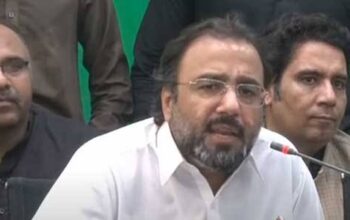
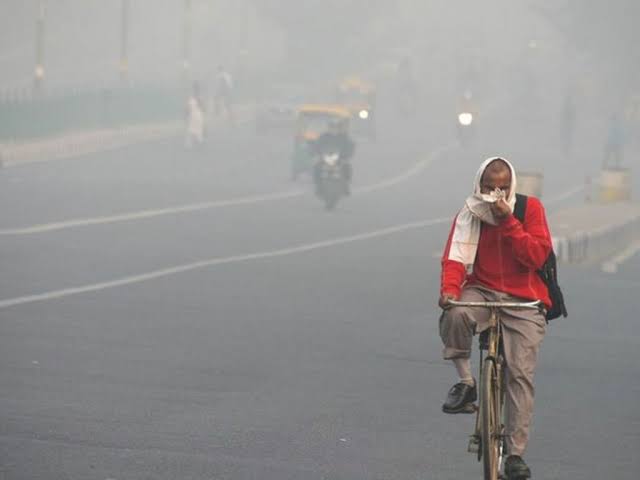
“Smog is not a political issue. It is a scientific, environmental and public health challenge,” senior minister Marriyum Aurangzeb told a press conference, while Lahore, Multan and other cities lay under a thick grey shroud.
Lahore topped the global ranking of major polluted cities on Wednesday night with an air quality index (AQI) reading of 358, well into the range the US scale classes as hazardous. New Delhi was second at 248. The Pakistani city, home to more than 13 million people, had recorded a reading above 600 on Monday, fallen to 263 on Tuesday and risen again since.
Aurangzeb had already attributed the smog to Diwali fireworks across the border. The Punjab Environment Protection Agency (EPA) went further on Wednesday, saying about half the province had been affected by air that originated in India during the preceding 24 hours. Its forward-trajectory modelling suggested air released on Diwali night could reach Lahore from Amritsar in about two hours, Faisalabad in 12 and Multan in around 11.
The agency pointed to a sharp east-to-west gradient across Lahore. The station at the Wagah border crossing recorded a 275 percent rise in PM2.5 concentrations, peaking between 3am and 4am, while Safari Park on the western side of the city registered 15 percent. Lahore’s overall AQI climbed from 366 on 8 November to 440 the next day, reaching its highest at 9am.
The EPA stopped short of calling cross-border smoke the sole cause. Local emissions and weather conditions also shape air quality, it said.
Others have been blunter about the limits of the argument. A separate assessment by the Pakistan Air Quality Initiative questioned whether Diwali fireworks were responsible for Lahore’s spike. Reports of its findings say it counted 16,714 likely crop-residue fires in Punjab between 1 October and Monday and blamed stagnant weather that let pollutants build up. Analysis reported in local media found Lahore’s average PM2.5 over the Diwali period was only about 10 per cent above the previous week.
Heavy smog also disrupted travel. On Tuesday evening a section of motorway from Shamkot to Abdul Hakeem was closed to all traffic, and heavy vehicles were stopped on the Sher Shah-Multan section towards Khanewal, a motorway police spokesperson told Dawn.
Aurangzeb used the press conference to defend her government’s record. Before 2024, she said, Punjab had no integrated system for smog mitigation, monitoring and enforcement. “Today, under Chief Minister Maryam Nawaz, Punjab has established an evidence-based, technology-driven system,” she said, describing round-the-clock monitoring, forecasting five to seven days ahead and coordinated action on industry, transport, agriculture and brick kilns.
She said Lahore’s AQI had exceeded 2,000 and reached about 2,400 on 11 November 2024, against a reading below 450 on the same date this year. Air pollution indicators across different areas had improved by 23 to 64 per cent, she said.
The comparison is with an exceptional year. Last November Punjab declared a health emergency, and Lahore peaked at 1,591 at 10am on one day while Multan’s reading crossed 2,000 twice. Prof Abdul Qadir, an environmental sciences specialist at the University of Punjab, said smog had worsened gradually since 2015 and “we experienced its highest level in 2024”. The city’s reading was back in the high 300s on a November day in 2025.
Abdullah Nayyar, director-general of the EPA, said the number of air-quality monitoring stations in the province had risen from two to about 81 over two years. He said October was the cleanest month in five years and that “we have had the lowest stubble-burning cases in nine years this season so far”, with action taken in more than 320 verified cases, a 35 per cent fall on the same period last year.
More than 8,000 brick kilns have been converted to lower-emission zigzag technology, he said, and industrial compliance with emissions rules has risen to around 90 per cent. The EPA tested about 2.5 million vehicles last year, and Lahore’s transport department has tested more than 150,000 so far this year. About 2,000 electric buses are running across the province, with a target of 5,000 by next year, and a scheme to distribute around 100,000 electric bikes is planned.
Experts argue enforcement is still too weak. “Lahore’s basic problem behind smog is fossil fuel-burning. We are burning coal, diesel and petrol,” Prof Qadir said. He said he had seen crop residue being burned along the Sialkot-Lahore motorway even though the government has given farmers machinery to mix stubble into the soil, and called for investment in clean-energy mass transit.
In hospitals, doctors report more patients and sicker ones. Dr Mohammad Irfan Malik, professor of pulmonary critical care and sleep medicine at the University of Lahore, said his clinic had seen a significant rise in outpatient visits and admissions, including patients needing intensive care. “Smog has definitely aggravated the symptoms,” he told Arab News.
Dr Malik said air quality had stayed poor on about 260 days a year in Lahore and other major cities in recent years, so the problem was no longer confined to winter. “Smog is an invisible killer throughout the year in our major cities,” he said. He identified PM2.5, particles under 2.5 microns across, as especially dangerous because they can reach the bloodstream. Children, older people, pregnant women and anyone with heart or lung conditions should limit time outdoors when air quality worsens, he advised, and should wear masks and check readings before leaving home.
Delhi’s data gap
Across the border, the Diwali smog was severe enough to exceed what India’s monitoring equipment can measure. Particulate analysers installed when the National Air Quality Index was introduced in 2015 were calibrated for concentrations of up to 1,000 micrograms per cubic metre of PM2.5, which is 66 times the World Health Organisation’s recommended daily maximum of 15.
Official data for Delhi failed to capture the full scale of the pollution for several hours overnight on Sunday into Monday, as fireworks pushed levels past that ceiling. Readings returned about eight hours after the fireworks peaked. They then showed 879 micrograms per cubic metre at Mandir Marg, more than 58 times the WHO limit, according to IQAir, which cited a city government station. Indian government data showed firecrackers accounted for nearly 55 per cent of PM2.5 in the capital on Monday.
Opposition politicians accused the ruling BJP of deliberately switching off monitoring around Diwali. “The government which shuts down air quality monitoring stations on the night of Diwali, the government that does data fraud, how will you trust such a government?” said Saurabh Bharadwaj, Delhi president of the Aam Aadmi Party. Ajay Maken, a senior Congress lawmaker, asked: “If Diwali night’s PM2.5 (toxic particulates) is not in the record, who will answer for that air?”
The Central Pollution Control Board (CPCB) rejected the charge of deliberate under-reporting. In a statement late on Tuesday it said its automated validation system “treats hourly readings beyond the calibrated range as outside range, and such readings are not used in the computation”.
Delhi’s monitoring network was questioned after last year’s festival too, when the Supreme Court was told that only nine of 37 air quality monitoring stations in the capital were operational on Diwali.
Prof Qadir said neither government could solve the problem alone. “No government can control or minimize pollution on its own,” he said. “We cannot completely blame any country. There must be transboundary coordination among South Asian countries. We have to develop environmental and smog diplomacy to control this problem.”
Copyright © 2021 Independent Pakistan | All rights reserved