By Staff Reporter
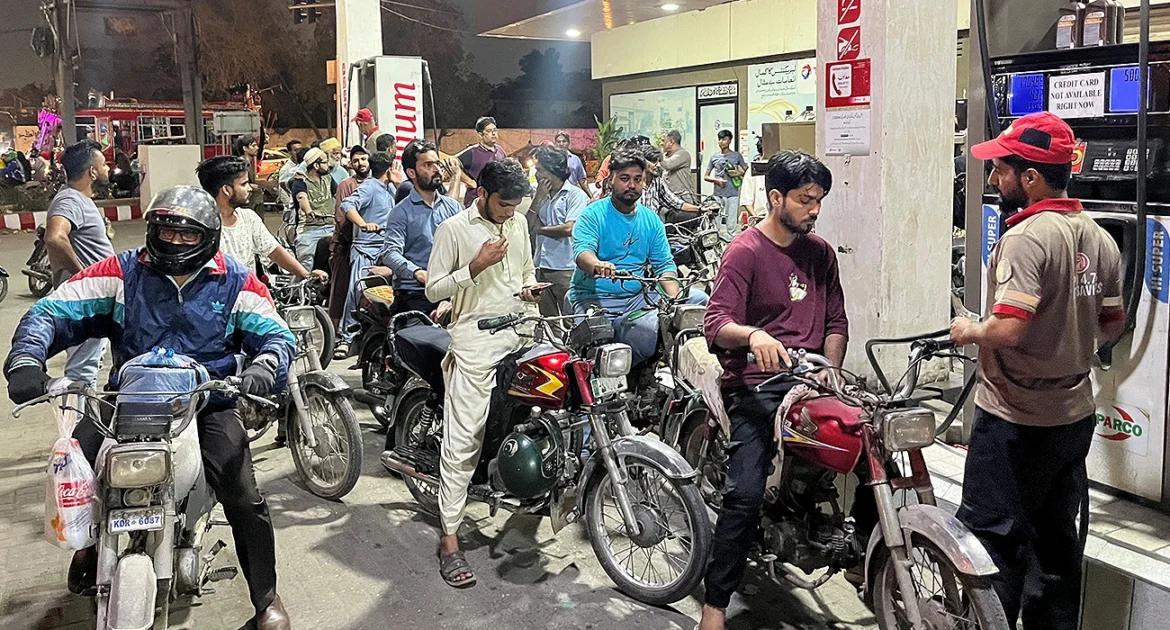
ISLAMABAD: Pakistan cut petrol and diesel prices for Friday, extending a pullback from the peaks reached in April after the US-Iran war began, with global crude retreating on signs of renewed diplomacy.
The government lowered petrol by 3 rupees a liter to 332 rupees and high-speed diesel by 4 rupees to 360 rupees, according to a notification from the Oil and Gas Regulatory Authority. The new prices take effect on Nov. 13. The cuts take petrol and diesel about 28% and 31% below their April 3 highs, though both remain roughly a quarter or more above where they stood when the war started.
Ogra has also begun posting petroleum prices on its website every day, a step meant to improve transparency and pass changes in international oil prices to consumers more quickly. The government decided to move to daily reviews because of volatility in global crude tied to renewed hostilities in the Middle East. The petroleum minister has said the cabinet and the prime minister gave the regulator responsibility for setting prices each day based on international market trends. The daily price rests on a seven-day average of international market prices. Taxes and duties still account for a large share of the pump price: 114 rupees a liter on petrol and 100 rupees on diesel.
Under an arrangement announced Nov. 2 and lasting 30 days, oil refineries are bearing a cumulative cost of 15 billion rupees through the petroleum levy. That allows a 14.71-rupee reduction in the petrol price at the pump. Local refiners produce about 30% of the country’s petrol. Refineries must deposit the difference between the two prices into the levy account and share daily petrol sales data and payment receipts with the Petroleum Division and Ogra for verification.
Diesel has fallen from a peak of 520.35 rupees a liter on April 3. It began climbing from 281 rupees after the US-Iran war broke out on Feb. 28. Petrol peaked at 458.41 rupees on the same day, having started its rise from about 266 rupees in the first week of March.
Pakistan had revised prices weekly from early March, alongside measures to conserve fuel against possible supply disruptions. It announced targeted relief in April to provide subsidized fuel. Since July 17, it has adjusted prices almost daily after swings in international markets following renewed hostilities between Iran and the US.
On Sept. 17, the government rolled out the Prime Minister’s Fuel Relief Scheme nationwide, covering owners of motorcycles, rickshaws and vehicles of up to 800cc. Officials said 27 billion rupees in relief had been provided under the scheme so far. The government has also reintroduced austerity measures in response to higher fuel costs. Markets must close by 9 p.m., and fuel allocations for official vehicles have been cut by 50% for three months.
The latest cuts follow a drop in crude. Brent fell about 5% on Monday to roughly $93 a barrel on prospects of an Iran deal. Reports of a possible US-Iran nuclear understanding and renewed diplomatic efforts eased fears of prolonged disruption to Middle East supplies. That follows a rally earlier this month. Brent was trading near $104.50 on Nov. 3. The benchmark had previously climbed to four-year highs on concern that Washington could resume strikes on Iran after the US midterm elections. Goldman Sachs raised its December Brent forecast to $105 this month, citing escalating geopolitical risks to supply. The US Energy Information Administration lifted its 2026 Brent average forecast to $97.44 a barrel.
Petrol is used mainly in private transport, small vehicles, rickshaws and two-wheelers, so price changes hit the middle and lower-middle classes. Diesel is used mostly in heavy transport, power plants and large generators, so its price reaches the public more broadly through freight and electricity costs. Petrol and diesel are the biggest revenue earners among petroleum products, with combined monthly sales of about 700,000 to 800,000 metric tons. Kerosene demand is only about 10,000 tons a month.
Copyright © 2021 Independent Pakistan | All rights reserved