By Staff Reporter
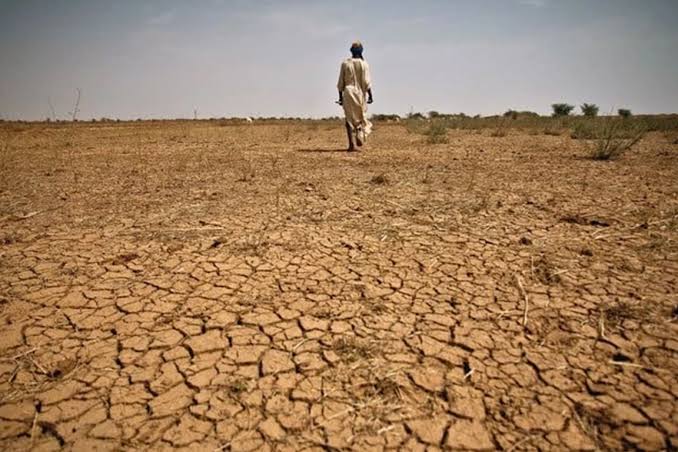
ISLAMABAD: Pakistan’s disaster authority issued a high alert on Tuesday for parts of four districts in southern Sindh, warning that prolonged drought is destroying crops and raising the risk of food insecurity.
The alert covers Umerkot, Tharparkar, Mirpurkhas and parts of Sujawal, where many rural households depend on rain-fed farming and livestock for their living. Parts of Chagai and Washuk in neighbouring Balochistan are also experiencing drought, the National Disaster Management Authority (NDMA) said, adding that the situation was being monitored continuously.
“Water shortages are severely affecting agricultural activity and crop production in the affected areas,” the authority’s National Emergency Operations Centre said in an advisory, warning that the decline in output was increasing the risk of food insecurity.
The centre blamed below-average rainfall, prolonged dry spells, rising temperatures and a shift in monsoon patterns. Temperatures in affected parts of Sindh were running between 1C and 3C above normal, it said.
The NDMA has directed the relevant departments to make effective use of available water and to take precautionary measures to protect farming and rural communities. It also advised residents to follow official instructions and take steps to protect their crops and livestock.
The warning follows the Sindh government’s decision on 7 November to declare Tharparkar drought-affected. Chief minister Murad Ali Shah took the step after a briefing on conditions across all seven of the district’s subdistricts, where officials estimated that 85 to 90 per cent of cultivated crops had been destroyed or rendered unproductive.
Officials told the meeting that Tharparkar’s seven subdistricts received only 1mm to 36mm of rain in September. Poorly distributed monsoon rains left crops and pasture unable to mature. An earlier assessment identified millet, sesame, sorghum, pulses and guar among the crops affected.
The strain was visible before the declaration. The Express Tribune reported in mid-October that families in Tharparkar were once again packing up and migrating with their livestock in search of water and food, as crops failed and fodder ran short.
The Sindh government has since ordered repairs to drinking-water facilities and emergency supplies of fodder in Tharparkar. Officials were also directed to restore defunct reverse-osmosis water plants. The provincial disaster authority has ordered a joint assessment of food, water, health and livestock needs in Tharparkar and Umerkot, with a focus on remote communities. The provincial government is also preparing a special relief package for farmers in the district.
Sindh and Balochistan have borne the brunt of several major droughts in Pakistan. The 1998-2002 drought was among the country’s worst in recent history, affecting about 2.1 million people in Balochistan alone, according to the World Bank. Pakistan recorded another major drought from 2018 to 2020.
The two provinces were also among the worst hit by the 2022 monsoon floods, which affected 33 million people nationwide, killed more than 1,730 and caused more than $30bn (£23bn) in damage and economic losses, according to a government-led assessment. Researchers at World Weather Attribution found that human-caused warming had probably intensified the extreme rainfall.
Earlier that year, an intense spring heatwave struck Pakistan and neighbouring India. A separate World Weather Attribution study found that climate change made an event of that severity about 30 times more likely.
Copyright © 2021 Independent Pakistan | All rights reserved