By Staff Reporter
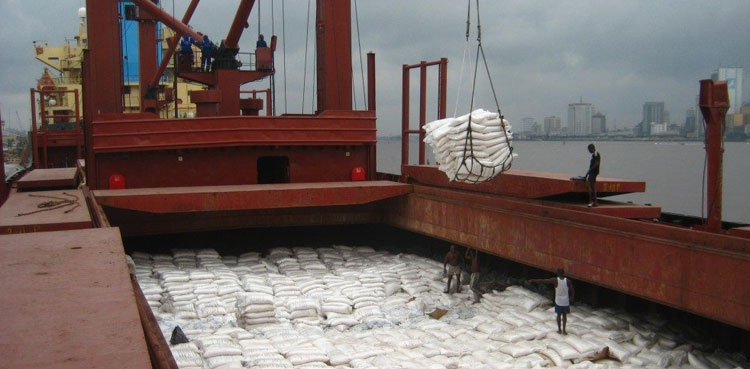
Pakistan on Friday cleared a further 416,000 tonnes of sugar for export, its third approval in four months, through a cabinet committee item that never went to the relevant ministries, days before the International Monetary Fund’s board is due to consider $1.2 billion in new money for a government that promised to leave the sugar trade.
The Economic Coordination Committee approved the shipment as an additional agenda item. The chairman, Finance Minister Muhammad Aurangzeb, has the authority to table such items. The practice also denies the ministries that would normally comment on a proposal any chance to do so. A participant in the meeting said Aurangzeb stressed the need to deregulate the sector, then allowed the export anyway. Authorities insist the crushing season is about to start and there is no shortage.
The sequencing deserves attention. An industry participant quoted by local media said that an in-principle decision to export 600,000 tonnes was taken months ago and delivered in tranches to avoid media attention. The arithmetic fits. The ECC approved 108,000 tonnes of imported sugar in August, 200,000 tonnes of local sugar in mid-September and now 416,000 tonnes, for 724,000 in total. Strip out the imported stock and local exports come to 616,000 tonnes, close to the 600,000 figure plus the extra 16,000-tonne quota for Sindh. Officials say the matter was settled at the level of Deputy Prime Minister Ishaq Dar before it reached the committee.
The IMF asked for the opposite. Pakistan agreed in September 2024 to phase out state intervention in sugar by June 2026. Reports in January said the Fund had set a March 2026 deadline for deregulation, with the federal government required to exit the sector entirely by June, while provincial legislation had yet to move forward. Finance Secretary Imdadullah Bosal blamed the missed condition on the refusal of one province. He did not name it, but the Sindh government has rejected wholesale deregulation of cane pricing and wants to keep the Sugar Factories Control Act. Islamabad’s inability to bring a province along is real. It is also a convenient explanation for a government that has found exports easier to approve than reform.
The government’s own draft policy paper makes the case against its own practice. Over the past decade Pakistan exported 3.92 million tonnes of sugar and imported about 565,000 tonnes, earning roughly $1.6 billion from exports, or about $160 million a year. That is a small sum set against what the sector costs consumers. The draft concedes that zoning rules, administered prices and discretionary trade curbs have distorted incentives, produced volatile output and left mills running at about 60% of capacity. Retail prices have risen about 16% a year on average over five years, with episodic spikes near 28%. Sugar takes about 3.91% of a typical household’s annual budget, according to the Ministry of Industries.
The supply picture is not obviously one of surplus. Last year’s output of 5.8 million tonnes, valued at about Rs1.1 trillion, fell short of annual consumption of about 6.3 million tonnes. Approving 724,000 tonnes of exports against a 500,000-tonne gap invites the same cycle Pakistan has run before. In that cycle the state exports, prices climb, and officials then import at a cost. The food security ministry itself admitted to the ECC that an earlier export decision, together with a 15% drop in production, had pushed prices to Rs220 a kilogram. The 108,000 tonnes shipped in August were leftover stock from 300,000 tonnes the government imported last year, after waiving about 53% in import taxes. In other words, Pakistan imported sugar with tax relief and then exported what was left.
Consumers have good reason for scepticism. Last year the official price of Rs181 a kilogram became close to impossible to find in shops as open-market prices climbed back toward Rs200. This time a steering committee said it would develop a mechanism to keep prices from rising despite the exports. No such mechanism has been described publicly. Imports offer little relief. There is no formal ban on them, but effective protection is about 55%, made up of customs duty, additional customs duty, sales tax, additional sales tax and income tax, plus a provincial cess of 0.85%. Sugar also remains on the first schedule of the Export Policy Order, which means nothing leaves without federal permission.
The politics are the part the Fund has already described. Its Governance and Corruption Diagnostic Assessment, released in November last year, spoke of an “intertwined relationship between economic elites and state regulators.” The report also noted that a significant number of the roughly 90 licensed mills are owned by political party leaders and current or past legislators. Pakistan says it wants a market. The sector’s biggest beneficiaries sit close to the people who decide the rules.
That leaves the IMF in an awkward spot. The board could meet in late November, once Pakistan aligns state-enterprise laws with the SOE Act, to approve the next $1 billion tranche under the Extended Fund Facility. The Fund has tolerated slippage before and will probably do so again. But every waiver weakens the credibility of the next condition, and sugar has become the clearest test of whether Pakistan’s reform commitments bind anyone. The next scheduled test is the board meeting. A second is whether the retail price holds through the winter.
The same ECC meeting also loosened terms on subsidised credit. It waived the requirement that small and medium-sized borrowers sell 80% of output abroad up front, asking instead for exports equal to at least 50% of projected sales within four years. It also exempted borrowers under the long-term export financing facility from Pakistan Green Taxonomy compliance for the next four years of disbursements, until the framework is fully in place. The finance ministry argues that newly established businesses need time to set up production and find buyers, and that an 80% threshold would shut out viable projects. That is a fair point. It sits uneasily beside a $200 million climate-facility request on the IMF’s agenda, which suggests that the green conditions are the easiest ones for Islamabad to defer.
Pakistan has two sets of promises: those made to the IMF, and those made to the sugar sector. On Friday, the second set won again.
Copyright © 2021 Independent Pakistan | All rights reserved