By Staff Reporter
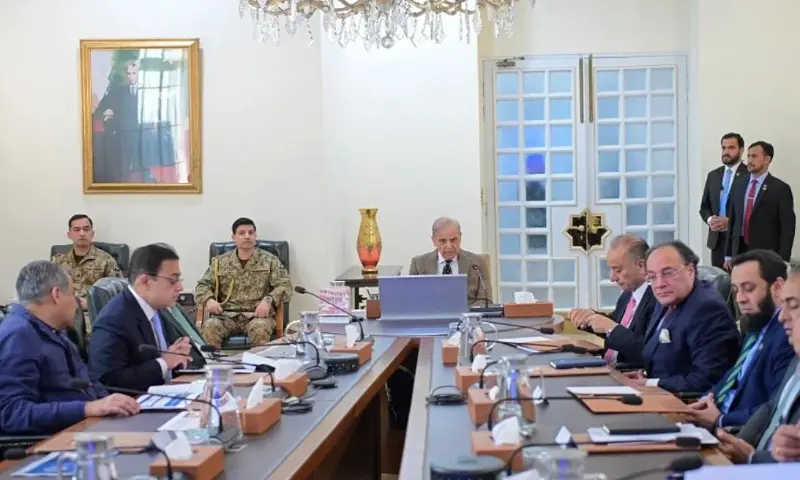
ISLAMABAD: Prime Minister Shehbaz Sharif on Wednesday approved a restructuring of the National Cyber Crime Investigation Agency (NCCIA) and gave ministers until the end of the week to report on reform proposals that include turning it into a national Pakistan Cyber Police.
Sharif ordered information technology and artificial intelligence specialists to be appointed to the agency and all its subordinate offices. He said the overhaul should centre on AI and other modern technology.
“Protecting the public from cybercrime is among the government’s top priorities,” he told a meeting convened to review the NCCIA’s performance, administrative structure and future strategy. “Restructuring of the NCCIA should be expedited to transform it into an effective, proactive and modern institution.”
He insisted that recruitment be strictly on merit. “The NCCIA should recruit the best available workforce strictly on merit.” He added that all available resources should be used to clear the backlog of pending cybercrime cases.
To scrutinise the agency’s proposals, Sharif formed a committee of four federal ministers: Mohsin Naqvi, Azam Nazeer Tarar, Muhammad Aurangzeb and Shaza Fatima Khawaja. It must submit its recommendations to him by the end of this week.
Officials told the meeting that one proposal would convert the NCCIA into a national-level Pakistan Cyber Police. They said a dedicated system for national security in relation to cybercrime had become operational, and that all possible measures were being taken to resolve cases under existing arrangements.
Media reports before the meeting described a plan, sent to the interior ministry by the agency’s director general, to rename the NCCIA as Cyber Police and run it jointly with provincial police. It would have a station in every district, headed by a station house officer in place of the current deputy director.
The review comes days after the agency’s biggest announced case. On Friday, the NCCIA said it had uncovered an extensive alleged financial network involved in illegal online gambling, fraudulent business operations and suspected money laundering, with transaction exposure it put at up to Rs1 trillion. The figure, however, needs careful reading.
Investigators in Karachi have so far traced Rs240 billion in transactions linked to the network and arrested five suspects. The agency has said the wider network’s activity could eventually reach Rs1 trillion, but it has not given a final calculation or said what period that covers. Officials say about $7 million in USDT cryptocurrency and a further Rs1 billion in cash and other assets have been frozen, and that 38 bank accounts, 40 individuals and 38 companies have been linked to the network.
The case has already met a legal challenge, with a lawyer for one company arguing that the agency’s jurisdiction is limited to cybercrime and does not extend to money laundering.
Earlier this month, the NCCIA called for stricter rules on company registration and bank account verification. It warned that loopholes in the current system were being exploited by illegal call centres, online betting operators and international fraud networks to launder money and defraud victims. According to figures cited by local media, more than 227,000 people have been defrauded over the past three years, losing Rs8.32 billion between them, with complaints rising 40 percent last year.
Also earlier this month, Naqvi asked the prime minister to help address an acute shortage of staff at the agency. Speaking in Lahore on 13 November, he said he would raise the staffing and resource gaps with Sharif and that plans for NCCIA police stations across the country were expected to be finalised within 10 to 15 days.
The agency is also still dealing with the aftermath of a scandal over its own conduct. The government replaced its director general in October 2025 amid corruption allegations against officers. Nine officials were booked in connection with an alleged network of bribery and abuse of authority.
Copyright © 2021 Independent Pakistan | All rights reserved