The energy-exporting emirate seems to be entering into a strategic partnership with energy-importing Pakistan, sweetened by investments in Pakistan’s strategic mega-ventures.
By Ahmer Kureishi
ISLAMABAD: The accords made by Prime Minister Shehbaz Sharif with the authorities in Qatar represent that country’s investment in Pakistan’s development and not debt, with initial commitments valued at around USD 3 billion, Independent Pakistan can report.
Investment from Doha will come in G2G (government-to-government) or FDI (foreign direct investment) mode. The Qatar Investment Authority is one of the world’s largest sovereign wealth funds.
Qatar’s choice of sectors for investment also seems astute: energy and communications, both strategically important to the nation’s economic progress.
Fair and square
Pakistan is looking to sell the LNG-fired power plants at Baloki and Hawellin Bahadur by December 2022. The government of Qatar has shown interest in investing in the two plants.
Qatar has shown interest in upgrading Islamabad and Lahore airports. Pakistan would like to upgrade Karachi as well. But the facilities will remain owned 100 percent by the government of Pakistan.
For instance, if Qatar can upgrade Islamabad International to its 100 percent capacity, Pakistan would like that. In return, Qatar will get concessions for a fixed term (probably of 30 years) to recoup its investment and a fair margin.
Pakistan plans to build a number of 8000 MW solar energy farms, which calls for investment. Qatar brings the investment and expertise for fair return and the proposal is a go.
But Pakistan is not transferring ownership rights in any public asset, officials say.
No assets pawned
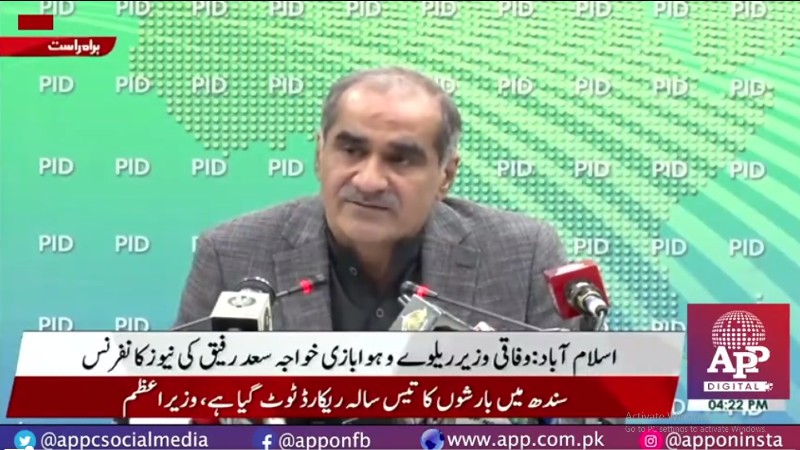
Minister for Railways Khawaja Saad Rafique addressing a presser webcast live via Twitter Friday afternoon lashed out sharply against those were politicking over national interests by inventing conspiracy theories and rumours of national assets being pawned.
The Kingdom of Saudi Arabia has its own designs on Pakistan. It has already allowed Pakistan oil supplies against deferred payment. Now King Salman has told his investment mandarins to invest USD 1 billion in Pakistan’s economy in short order. Likewise in some wind power projects, ports (upgradation of Karachi and Gwadar and uprating of Port Qasim), and railways.
He particularly quashed as lies rumours of stakes or shares in PIA, Roosevelt Hotel, or some airport being sold.
Separately, Pakistan is expecting investment to the tune of USD 2 billion from the UAE.
All these positive developments on the front of economy are a much-needed breather for Pakistan’s beleaguered economy. This should allow the prime minister some limited fiscal wriggle room to deal with the aftermath of the epic national disaster that has beset Pakistan in recent weeks, and continues to do so.
Disaster response must
It is now on PM Sharif to spearhead a national response incorporating all elements of national power and leveraging all civil and military agencies of the government.
The civil society, the political parties, the military, provincial governments and departments, district management and staff, volunteers and campaigners – everybody should be at one with him in this endeavour.
Only then can we begin to deal with the destruction wrought by the monsoon floods, particularly in Balochistan, Sindh, and southern Punjab.
Those on the ground say the magnitude of its destruction is much higher than the one wrought by the 2005 earthquake or the 2010 floods. The prime minister just cannot bungle this.
He must waste no time in rolling out a relief and rehabilitation program like none we have seen before both in terms of scale and efficiency, because such is the scale of the calamity.
PM Sharif’s core mission
Only then can the prime minister pivot to the core mission of his government: Putting the nation’s economy on an even keel. Without that task being accomplished, the grim ghost of default will inevitably return to haunt the country’s economy in a matter of months.
Copyright © 2021 Independent Pakistan | All rights reserved