By Staff Reporter
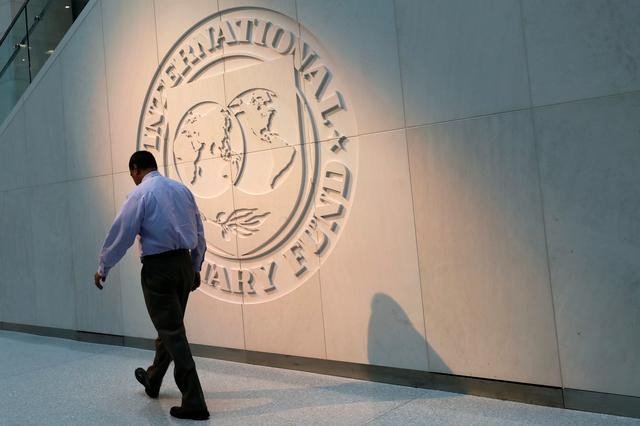
ISLAMABAD: The International Monetary Fund (IMF) Executive Board has scheduled meetings until May 17, with the notable exclusion of Pakistan on the agenda as the country’s ninth review under the Extended Fund Facility (EFF) programme remains pending.
The IMF Executive Board calendar available on its website indicates that the next meetings are slated for May 11, 15, and May 17, 2023.
However, Pakistan has not been included in the agenda. The country could be added if the ninth review under the EFF programme is declared a success.
Pakistan is struggling to reach a deal on the ninth review with the IMF to release funds critical to stablise the economy. A staff-level agreement to release $1.1 billion has been delayed since November. The tranche is part of a $6.5 billion bailout package that the IMF approved in 2019, which is due to end in June, prior to the budget for the next fiscal year.
The delay has exacerbated Pakistan’s economic problems, and to unlock the next tranche, the government is required to give an assurance that its balance of payments deficit is fully financed for the fiscal year ending in June.
The government said the United Arab Emirates, Saudi Arabia, and China have pledged to assist Pakistan, covering some of the funding deficit. The kingdom has confirmed support of $2 billion, while the UAE extended a $1 billion loan facility.
Fitch Ratings said last week the country faces a total of $3.7 billion in debt payments starting the current month. About $700 million of maturities are due in May and another $3 billion in June.
The government has also removed caps on the exchange rate, imposed taxes, raised energy tariffs, and scaled back subsidies to unlock the funding. It has also raised key interest rates to a record 21 percent.
Despite assurances from friendly countries regarding external funding, the International Monetary Fund (IMF) is reportedly showing a lack of confidence in Islamabad.
The current coalition set-up, led by Prime Minister Shehbaz Sharif and the last government of cricketer-turned-politician Imran Khan backtracked on the agreed reforms agenda soon after receiving the tranches., causing a potential strain in the relationship between Pakistan and the Fund.
The IMF wants to ensure that the government remains committed to the agreed path of fiscal consolidation as the country prepares for elections later this year. Historically, the biggest fiscal slippages in Pakistan occur in an election year, which is due in November.
Analysts said in the absence of IMF loans, funding will also not be available from international financial institutions which can affect the budget-making process.
Last week, the mission chief, Nathan Porter, said the IMF remains committed to working with Pakistani officials to conclude the ninth review once the necessary funding is in place and the agreement is finalized.
“IMF supports the authorities in the implementation of policies in the period ahead, including in the technical work to prepare the FY24 budget, which is to be passed by the National Assembly before end-June,” Porter said.
In the last review document, the IMF said “The proposed schedule for the ninth review was November 3, 2022, but was delayed due to the failure of the government to implement agreed time-bound conditions and structural benchmarks, as well as, violation of the spirit of the agreed seventh/ eighth review particularly with respect to controlling the rupee rate artificially without the necessary reserves to intervene in the market and extending unfunded electricity subsidy to exporters.”
Copyright © 2021 Independent Pakistan | All rights reserved