By Staff Reporter
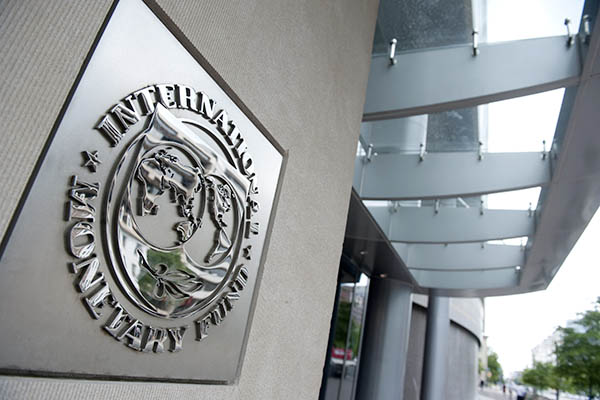
ISLAMABAD: Pakistan’s economic recovery remains fragile, with the International Monetary Fund warning of persistent vulnerabilities and structural challenges that require sustained reform efforts.
The IMF projected Pakistan’s economic growth to rise to 3.2 percent in the current fiscal year from 2.4 percent previously, with inflation expected to decline to 9.5 percent from 23.4 percent and unemployment to 7.5 percent from 8 percent
“A difficult business environment, weak governance, and an outsized role of the state hinder investment, which remains very low compared to peers, while the tax base remains too narrow to ensure tax fairness, fiscal sustainability and meet Pakistan’s large social and development spending needs,” the IMF said in an assessment post approval of a $7 billion Extended Fund Facility (EFF) program to support the country’s reforms agenda. The country, last Friday, received $1.0269 billion, the first tranche of the bailout.
“In particular, spending on health and education has been insufficient to tackle persistent poverty, and inadequate infrastructure investment has limited economic potential and left Pakistan vulnerable to the impact of climate change. Without a concerted adjustment and reform effort, Pakistan risks falling further behind its peers.”
Under the new 37-month EFF-supported program, key priorities include rebuilding policy-making credibility and entrenching macroeconomic sustainability through consistent implementation of sound macro policies and broadening the tax base. This will be achieved by advancing reforms to strengthen competition, raise productivity and competitiveness, and reform state-owned enterprises (SOEs) to improve public service provision and energy sector viability.
IMF Deputy Managing Director Kenji Okamura emphasized the need for sustained efforts to strengthen Pakistan’s resilience.
“The implementation of sound policies over the past year has been critical to restore economic stability, reduce near-term risks and rebuild confidence,” Okamura said. “Despite progress, significant structural challenges remain, and ambitious and sustained efforts are needed to strengthen Pakistan’s resilience and economic prospects. The authorities’ EFF-supported program provides a critical anchor to policies and structural reforms and provides a framework for partner financing.”
The EFF-supported program aims to rebuild policy-making credibility and entrench macroeconomic sustainability through consistent implementation of sound macro policies and broadening the tax base.
“Continuing fiscal consolidation in FY25 and beyond, through enhanced revenue mobilization and prudent expenditure management, is critical to securing fiscal sustainability and reducing the crowding out of private investment,” Okamura said.
“Increasing revenue mobilization by broadening the tax base, removing special sectoral regimes, and placing a fairer burden on previously undertaxed sectors (including industrialists, developers, and large-scale agriculture), will enhance fairness and efficiency and create needed space for essential investments in human capital, infrastructure, and social spending. Complementary institutional and structural reforms will focus on strengthening federal-provincial institutional arrangements, improving tax administration and compliance, and making public investment management more effective.”
The IMF official said timely energy tariff adjustments under the previous program have helped stabilize energy sector circular debt. Going forward, deep cost-side reforms are critical to securing the sector’s lasting viability and reducing its costs.
“The buildup in foreign currency reserves should continue, supported by inflows under the Extended Arrangement, as well as price discovery in the interbank market to help buffer external shocks, attract financing, and protect competitiveness and growth. Strong action to address undercapitalized financial institutions and, more broadly, vigilance over the financial sector is needed to ensure financial stability,” he added.
“Overcoming Pakistan’s longstanding structural challenges—most notably low productivity and economic openness, resource misallocation, and climate vulnerability—requires faster implementation of structural reforms. Reform priorities include advancing the SOE reform agenda; scaling back distortive incentives, promoting a level playing field for all business; strengthening governance and anti-corruption institutions; and continuing to build climate resilience.”
Pakistan secured the IMF’s backing after fulfilling the lender’s conditions and confirming $12 billion in bilateral loans from Saudi Arabia, China, and the UAE, plus $2 billion in external financing. The funding will help Pakistan address fiscal and external imbalances, while implementing structural reforms to boost growth.
The package, Pakistan’s 25th IMF program since 1958 and sixth EFF, requires Islamabad to implement tough economic reforms. These include overhauling the agriculture income tax, transferring fiscal responsibilities to provinces, and eliminating subsidies on electricity and gas.
Pakistan’s last $3 billion IMF program helped avert a sovereign default in 2023 amid a sharp decline in foreign exchange reserves, currency depreciation and record inflation.
Copyright © 2021 Independent Pakistan | All rights reserved