By Staff Reporter
ISLAMABAD: Pakistan’s Finance Minister Muhammad Aurangzeb signaled a return to global debt markets during a briefing with Moody’s, spotlighting a $1 billion financing deal from the Middle East and a steep drop in inflation as proof of the country’s economic rebound.
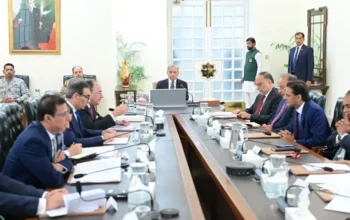
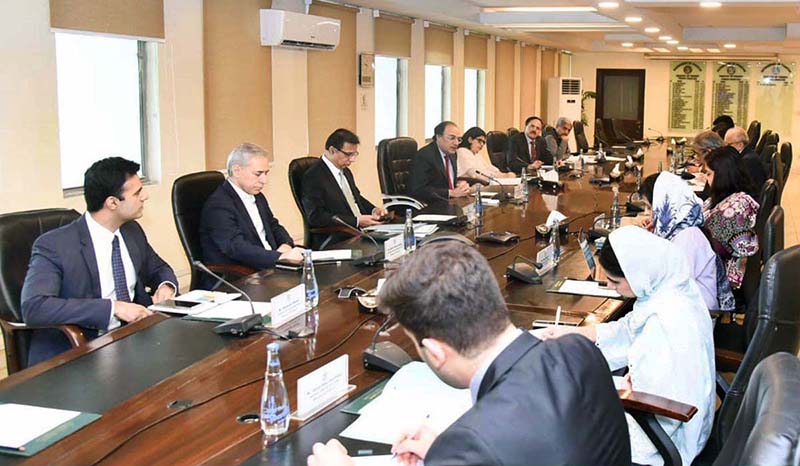
In a virtual meeting with Moody’s Rating Agency, Aurangzeb, flanked by top officials, laid out Pakistan’s economic progress and ambitious reform agenda. The session was a pitch to update the rating agency on the country’s stabilizing macroeconomic outlook and growing financial credibility.
“The Finance Minister apprised the Moody’s team of the significant strides Pakistan has made in stabilizing its economy and laying the foundations for sustainable and inclusive growth,” a government statement said. “He underlined the successful completion of the final IMF review under the Stand-By Arrangement, including the disbursement of the second tranche and progress under the Resilience and Sustainability Facility (RSF), as key milestones that have restored confidence in Pakistan’s economic management.”
The minister outlined a raft of structural reforms designed to cement long-term stability.
“These included prudent fiscal measures in the recently announced budget, tariff and trade liberalization geared towards export-led growth, and concerted efforts to rationalize expenditure,” the statement said. “The ongoing discussions with the United States on preferential tariff access were also noted as making encouraging headway.”
The meeting further outlined Pakistan’s re-engagement with global financial markets, including the successful arrangement of $1 billion in commercial financing from the Middle Eastern region, plans for an inaugural Panda bond, and Pakistan’s intent to explore the Eurobond and other international debt markets as credit ratings improve.
Minister Aurangzeb and his team presented compelling evidence of macroeconomic recovery, including a sharp reduction in inflation, a cut in the policy rate, stabilization of the exchange rate, a current account surplus, and a surge in foreign exchange reserves, crossing $14 billion by the end of June. “Improvements in remittance inflows and export performance were also cited as signs of resilience and renewed investor confidence.”
A significant portion of the briefing focused on Pakistan’s efforts to lift its tax-to-GDP ratio, a longstanding fiscal challenge. The Moody’s team received a comprehensive rundown of technology-driven tax administration reforms, including digitization and stepped-up enforcement measures.
Aurangzeb emphasized that the Prime Minister Shehbaz Sharif, who personally chairs regular tax reform meetings—, as taken direct oversight of the initiative. Measures to broaden the tax base, curb leakages, and boost compliance have already yielded a Rs2 trillion revenue increase this year, achieved through domestic efforts. The government, he added, is committed to hitting a tax-to-GDP target of 13 to 13.5 percent within the next few years.
Responding to questions from the Moody’s team, Aurangzeb reiterated Pakistan’s resolve to press forward with macroeconomic reforms. He highlighted ongoing work in privatization, the restructuring of state-owned enterprises (SOEs), and efforts to right-size the government—all aimed at enhancing efficiency and reducing fiscal drag.
The minister expressed confidence that Pakistan’s improving economic indicators and reform trajectory would earn positive recognition from rating agencies. Such acknowledgment, he suggested, would pave the way for deeper integration into international capital markets and reinforce external sector stability.
“Pakistan is ready to carry forward this journey of resilience, reform, and recovery to unlock long-term, inclusive, and export-oriented economic growth,” Aurangzeb affirmed, encapsulating the government’s vision for the future.
Copyright © 2021 Independent Pakistan | All rights reserved